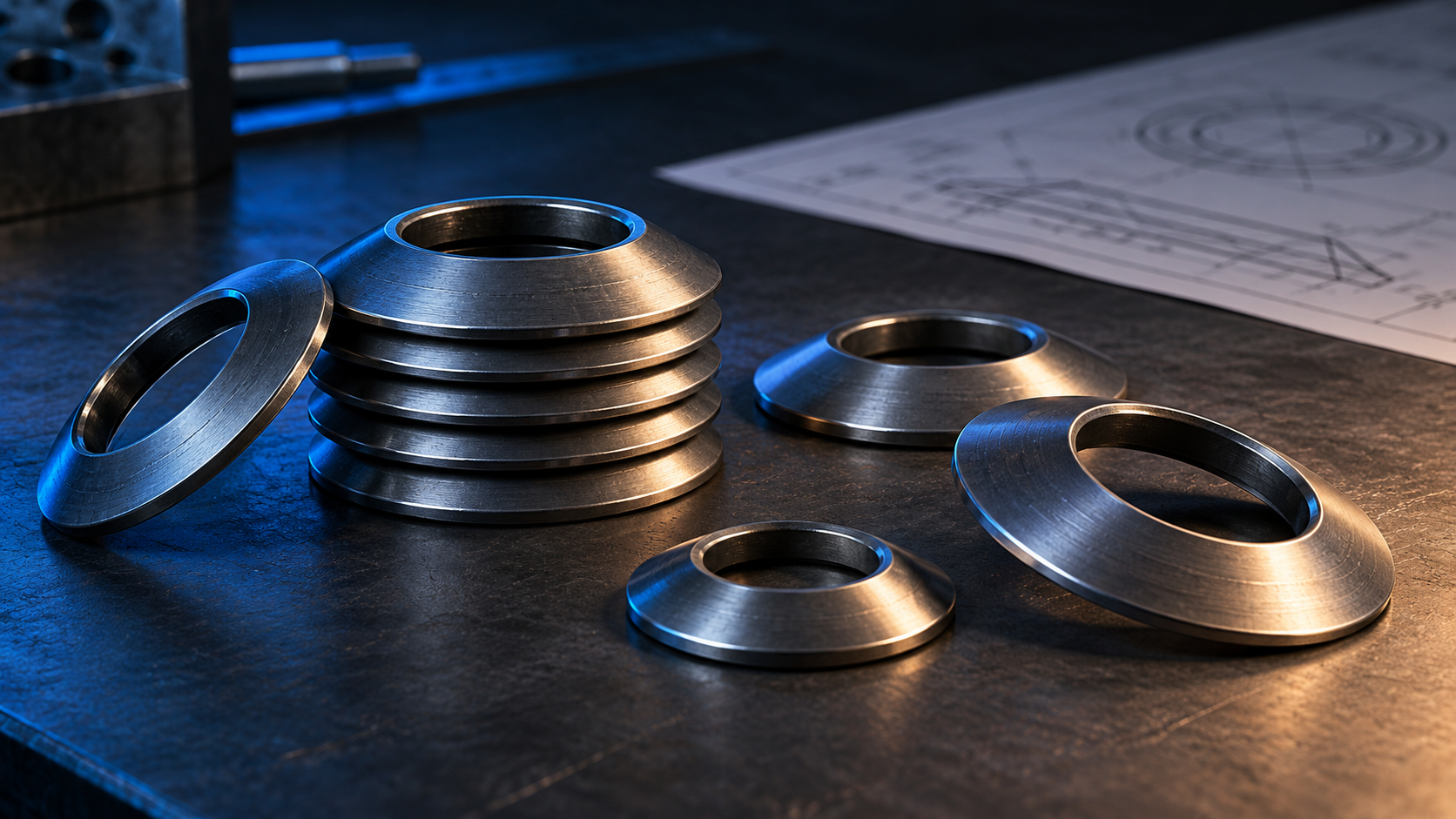
Retaining ring selection starts with the mounting location. First decide whether the ring sits in an outside shaft groove, inside a bore groove, or enters radially from the side. Then confirm the ring family, groove information, material and surface finish. The phrase retaining ring identifies a function, not a complete order specification.
A reliable choice therefore begins with the assembly geometry, not with a ring photo or a familiar synonym. The checklist below is designed for an industrial drawing review or RFQ.
The first question is where the retaining ring will work. A shaft ring and a bore ring are not interchangeable just because both limit axial movement. A radial-entry ring is a separate route again because the available installation access changes the selection.
| Assembly condition | Selection route | What to confirm |
|---|---|---|
| Ring sits on an outside shaft groove | DIN 471 external circlip | Shaft diameter, groove diameter, groove width, ring orientation and retained part |
| Ring sits inside a bore groove | DIN 472 internal circlip | Bore diameter, internal groove dimensions, insertion access and retained part |
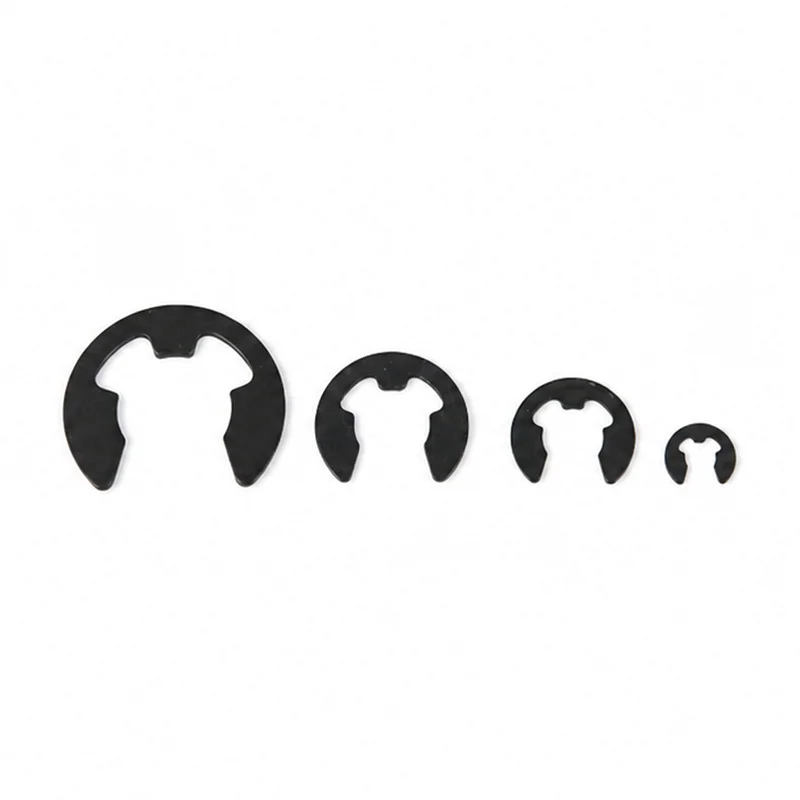
| Ring is pushed radially into a shaft groove | DIN 6799 E-type circlip | Radial access, shaft groove form, ring seating and installation tool clearance |
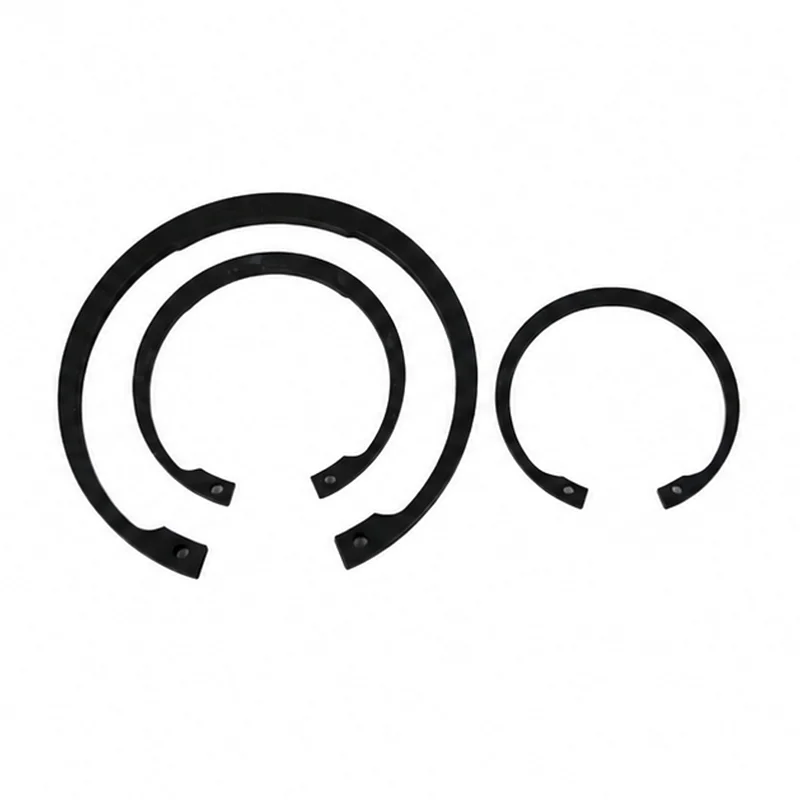
This location-first split prevents a common specification error: choosing a product because the name contains “snap ring” while leaving the shaft or bore condition unstated. Use the product page as a route to the appropriate family, then verify the drawing values for the actual assembly.
Once the location is known, identify the ring family. Industry product catalogs commonly separate tapered-section, constant-section, spiral-wound, radially installed and push-on forms. The choice should follow the load path, available access and groove design; a category label alone does not establish suitability.
Material and surface finish are separate decisions. TG Eugene’s DIN 471 and DIN 472 product pages describe product-specific spring-steel and stainless-steel routes, along with their stated heat-treatment and finish scope. That information should be checked against the part being quoted rather than copied as a blanket claim for every retaining ring.
For a standard product, the product route and the drawing should agree. If they do not, pause the order and resolve the mismatch instead of treating the nearest ring category as an acceptable substitute.
A useful RFQ should let the supplier identify the part without guessing the assembly. Include the following fields:
If the request only says “retaining ring” and gives a diameter, it is incomplete. The supplier still needs to know whether the diameter belongs to a shaft, a bore or a groove, and which retaining-ring family controls the drawing. Adding those fields early reduces the chance of a technically similar but unusable quotation.
For a starting point, the TG Eugene product catalog separates circlips, washers, pins and spring-steel strip. Use the category to locate the family, then confirm the selected product page and drawing requirements before asking for a quote.
A catalog match is only the starting point. Before releasing a purchase order, compare the selected ring against the assembly drawing and the supplier’s product-specific data. The shaft or bore diameter should identify the installation route, while the groove dimensions should show that the ring can seat as intended. If the drawing omits the groove or uses a different standard designation, ask for clarification before treating the part number as final. This check is especially important when an assembly uses an older drawing, an inch-based callout, or a supplier synonym for the same functional part.
Keep the verification record tied to the exact ring family. A DIN 471 shaft-ring check cannot be reused as proof for a DIN 472 bore ring, and an E-type ring image cannot establish a groove tolerance or load rating. Record the approved family, nominal size, material route, finish requirement and inspection documents in the same RFQ package. This gives purchasing, engineering and incoming inspection one consistent reference.
A retaining ring is a removable mechanical retainer that seats in or on a groove to limit axial movement of another component. The term does not by itself identify the shaft/bore location, ring form, standard, material or final groove fit.
Choose it in this order: mounting location, ring family, shaft or bore dimensions, groove requirements, material and finish, then inspection needs. If any of those inputs is missing, the specification is not ready for a reliable quotation. The final choice should be checked against the exact product route and drawing, not only against a generic “snap ring” label.