Retaining rings and snap rings are often used as overlapping buying terms for a removable ring that limits axial movement. The wording alone, however, is not a complete part specification. Before ordering, confirm whether the ring mounts on a shaft, inside a bore, or by radial entry, then match the groove, ring family, material, finish, and inspection requirements.
That distinction matters because a shaft ring cannot simply be substituted for a bore ring because both are called a snap ring. The fastest route is to treat the name as the starting point and the installation geometry as the decision point.
In everyday purchasing language, “retaining ring,” “snap ring,” and “circlip” can point to the same broad family. They describe a ring-shaped retaining component rather than one universal size or profile. Industry identification guides use the terms across several families, while the actual selection still depends on the shaft, bore, groove, and installation access.
For that reason, a request such as “snap ring, 25 mm” is incomplete until the buyer explains where the ring sits and which groove it must fit. The same nominal size language can lead to different parts when the application uses an external shaft groove, an internal bore groove, or a radial-entry ring.
| Route | Where the ring sits | What to confirm | Typical wording |
|---|---|---|---|
| External | In a groove on the outside of a shaft | Shaft diameter, groove geometry, ring section, installation access | External retaining ring, shaft circlip, DIN 471 |
| Internal | In a groove inside a bore or housing | Bore diameter, groove geometry, ring section, tool access | Internal retaining ring, bore circlip, DIN 472 |
| Radial entry | Placed onto a shaft from the side | Shaft groove, access direction, ring opening and seating condition | E-clip, E-type retaining ring, DIN 6799 |
| Other retaining families | Push-on, constant-section, spiral or application-specific arrangements | Load path, assembly method, space and the selected standard | Use the family name and drawing information |
These routes are not interchangeable descriptions. They are a practical way to keep the first specification decision aligned with the assembly. A supplier can then review the correct product family instead of guessing from the phrase “snap ring.” The useful snap ring types are separated by installation geometry, not by wording alone.
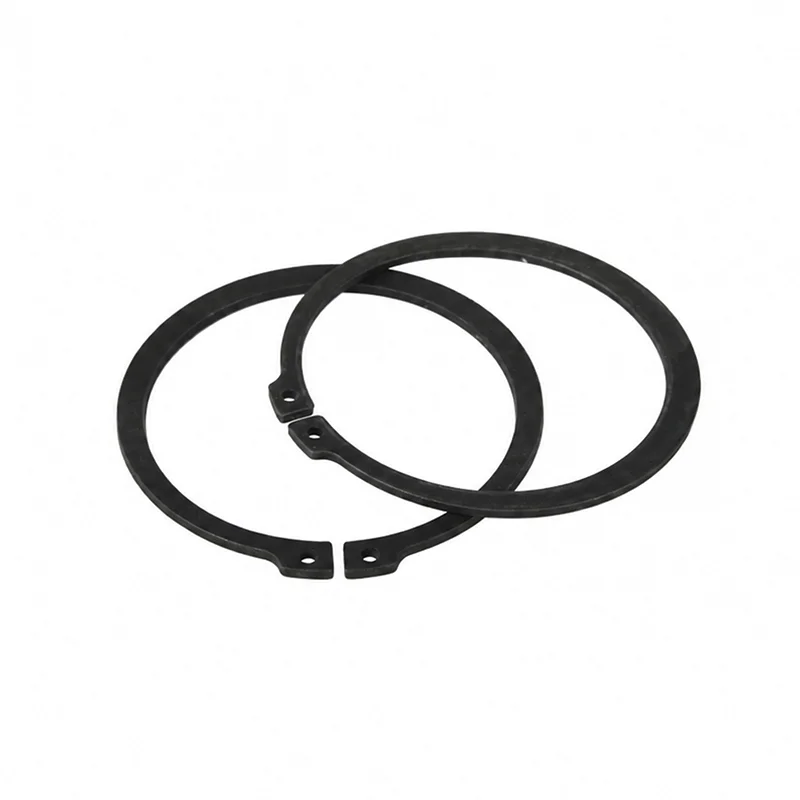
When the ring sits in an outside shaft groove, the request should identify the shaft-side geometry first. This is the external retaining ring route. TG Eugene’s DIN 471 external circlip route is the relevant product path for that arrangement. The product name helps identify the family, but final fit still depends on the drawing, groove, material, finish, and application conditions.
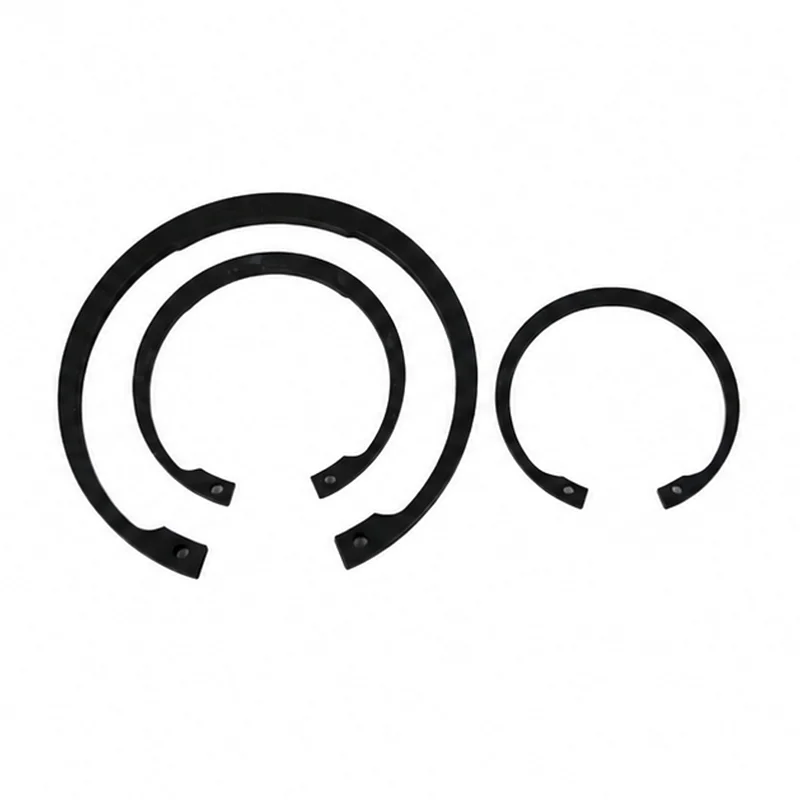
For a ring seated inside a bore, do not reuse an external-ring callout. This is the internal retaining ring route. TG Eugene’s DIN 472 internal circlip route is intended for the bore-side selection. Include the receiving bore, groove details, installation clearance, and the retained component when requesting a review.
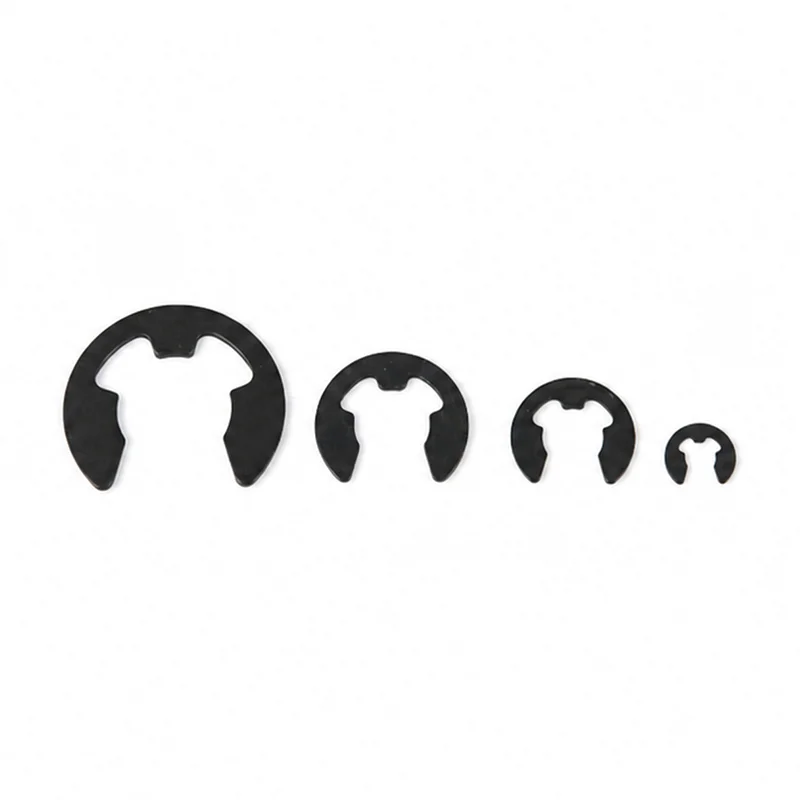
An E-clip or E-type retaining ring is installed from the side rather than by sliding a closed ring over the shaft end. That makes access direction part of the selection. If the assembly requires a side-entry ring, use TG Eugene’s DIN 6799 E-type circlip route and confirm the shaft groove and seating condition. Do not treat an E-type ring as an automatic substitute for an external shaft circlip.
After the installation route is clear, compare the ring family and product-specific material and finish. These retaining ring applications can call for spring steel, stainless steel, heat treatment, phosphating, or another finish, but a general term does not prove that a particular ring has a required property. Confirm the selected product page, drawing, inspection scope, and application environment together.
A useful RFQ does not need to be long, but it should remove the choices that cannot be inferred from the name. Send the following information:
For a broader product route, review the TG Eugene product range after the geometry is known. A supplier can then route the request to the correct retaining-ring family instead of treating every “snap ring” inquiry as the same component.
They can be overlapping terms in everyday purchasing language, and “circlip” is also commonly used. They are not a complete specification by themselves. The installation location, groove, ring profile, material, finish, and required inspection decide which part is suitable.
Use the broad term when describing the component family, but add the geometry immediately: external shaft ring, internal bore ring, or radial-entry E-clip. Add the applicable standard, nominal size, groove drawing, material, and finish when the request moves from research to quotation.