Dowel pins are used to locate, align, retain or repeat the position of mechanical parts. The correct choice is not determined by the name alone. Match the pin family to the locating task, hole fit, host material, service access and information required on the drawing or RFQ.
A solid locating pin, a resilient spring pin, a taper pin and a headed pin solve different assembly problems. Start with the function, then define the geometry and fit. This prevents a familiar term such as “precision dowel pin” from becoming an incomplete specification.
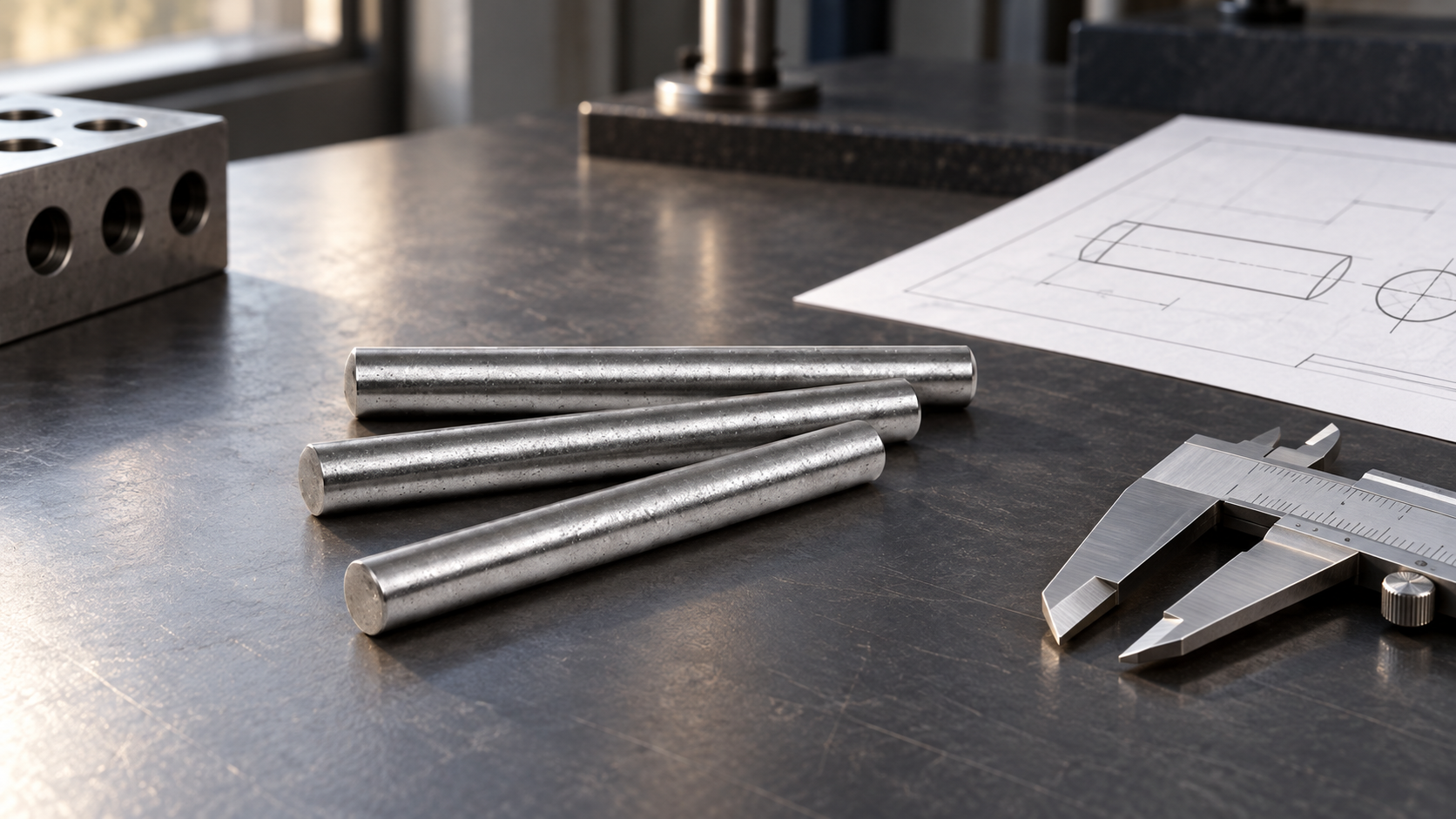
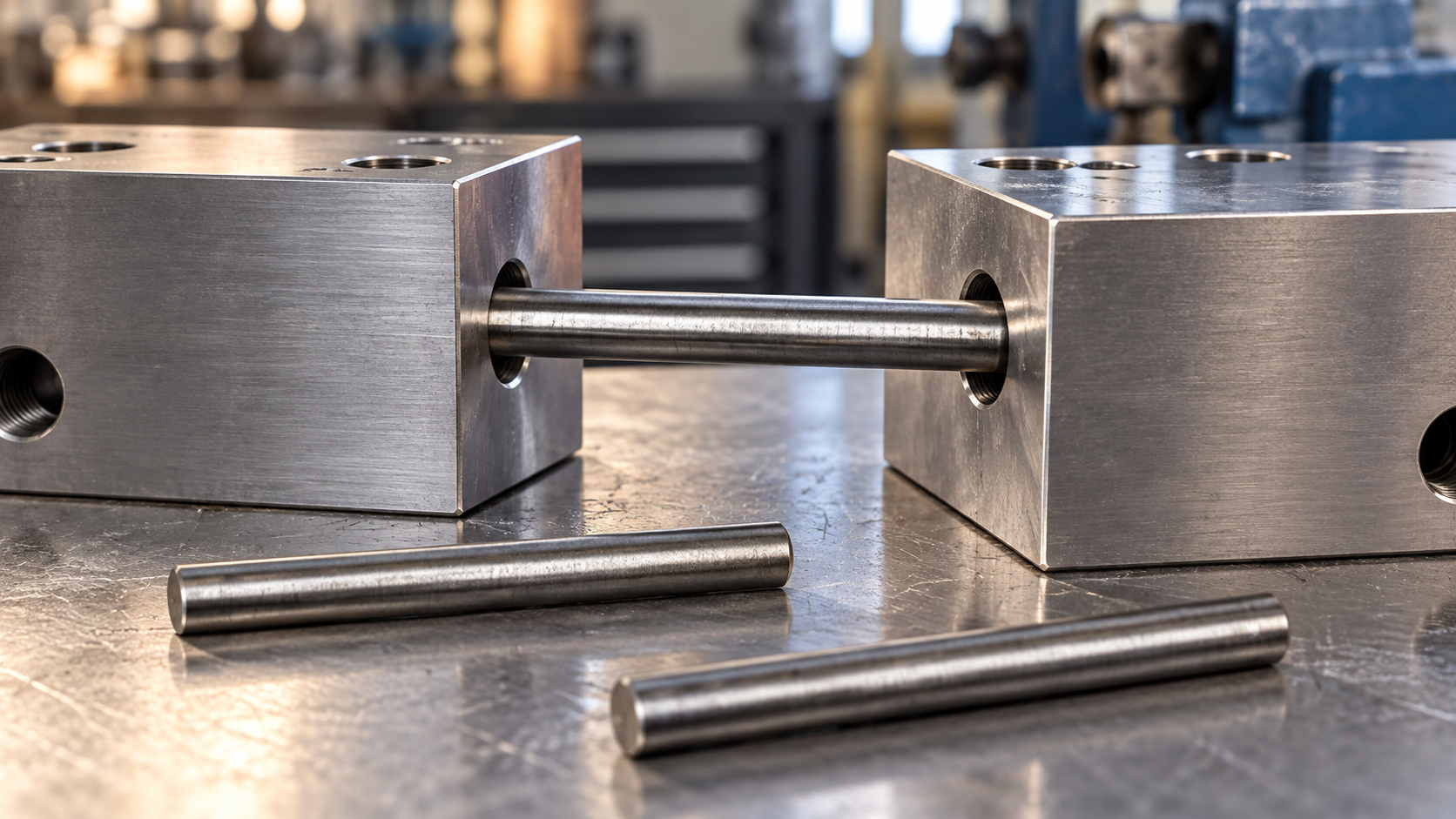
A dowel pin normally establishes a repeatable relationship between mating components. It may locate two plates, align a housing, preserve a datum after disassembly, act as a pivot, or help carry a lateral load in a joint designed for that purpose. The same word is used for parts with very different installation and removal behavior.
Before selecting a dowel pin, answer four questions:
| Pin family | Typical reason to consider it | Questions before release |
|---|---|---|
| Solid cylindrical pin | Controlled location, alignment or a rigid locating relationship | Pin and hole limits, retained side, insertion method and removal access |
| Spring or slotted pin | Resilient retention, easier installation or a hole system that needs compliance | Duty, hole condition, host material, slot orientation and service loading |
| Taper pin | A tapered locating or wedging relationship where the design calls for it | Taper definition, insertion depth, removal direction and matching hole |
| Headed or pull-out pin | Positive stop, exposed retention or planned blind-hole removal | Head clearance, threaded removal feature, access and mating-part envelope |
This table is a starting route, not a substitution for the released standard or drawing. A solid pin is not automatically better than a spring pin; it is better only when its rigidity, fit and installation process suit the assembly. A pull-out feature can be more valuable than extra interference when maintenance matters.
Pin diameter and hole diameter must be specified together. Review the actual limits, roundness, straightness, surface finish, positional accuracy, wall thickness and installation temperature. A close fit may require a controlled finishing process rather than a drilled hole alone, while a clearance hole may be intentional for service or thermal movement.
Do not use a larger interference as a universal fix for a loose joint. More insertion force can deform a thin host, damage a hole, make removal difficult or move the assembly away from its datum. The receiving material and the retained side are part of the fit decision.
For multi-pin location, check positional alignment as well as diameter. Two very tight holes cannot correct a center-distance error. Many designs need one primary location and a second feature that avoids over-constraining the parts, but the correct arrangement belongs to the drawing and tolerance analysis. These are practical dowel pin applications, not interchangeable catalog labels.
Dowel pin materials influence wear, installation response, corrosion protection and compatibility with the host. Keep the material grade, heat-treatment condition, surface finish and protective treatment as separate fields. “Steel dowel pin” does not by itself mean hardened, ground, corrosion-proof or interchangeable with another standard.
TG Eugene’s site lists a cylindrical locating-pin product described with 40Cr, bright-ground and unhardened qualifiers. Those details apply to that product page only; the page is used here as a product identity and image route, not as proof of a universal DIN/ISO mapping. If your drawing requires a different condition, state it directly in the RFQ.
Finish also needs a job-specific meaning. A ground surface may support diameter control, while protective oil may be intended for handling and storage rather than long-term environmental protection. State whether the part must be clean for assembly, compatible with a coating, or protected during shipping.
A through hole can allow a pin to be driven out from the opposite side. A blind hole removes that option, so the design may need an internal thread, exposed head, pull-out feature, or a planned maintenance tool. Choose removal access before freezing the fit.
For permanent location, define insertion depth, retained side and allowable installation force. For repeat assembly, record how the pin will be removed without damaging the hole. If the pin is expected to carry lateral load, the joint should be checked for shear, bending, bearing and host-material limits rather than rated from diameter alone.
| RFQ field | Why it matters |
|---|---|
| Pin family and applicable standard | Defines intended geometry and the tolerance family. |
| Nominal diameter and length | Defines engagement, fit and assembly envelope. |
| Material and condition | Separates grade, hardened, unhardened and corrosion requirements. |
| Hole limits and host materials | Defines the real assembly relationship instead of only the pin. |
| End form and surface finish | Controls entry, bearing length and surface interaction. |
| Removal and inspection method | Prevents a service problem from being discovered after release. |
Use the existing dowel pin sizes and fits guide for dimensional inputs, the dowel pin standards guide when confirming a standard family, and the listed cylindrical locating pin for a product-identity reference. If the material, fit or inspection route is not clear, provide the released drawing and mating-hole information for review instead of relying on a keyword alone.
No. Some are retained by a controlled interference, some use clearance in one component, and spring or tapered forms follow their own design logic. The drawing must define the intended fit.
There is no universal answer. A blind-hole assembly should be designed around a removal path, such as an internal thread, head or dedicated access feature, before the pin and hole are released.
Only after checking geometry, fit, load path, installation and service access. Similar names do not prove interchangeable dimensions or performance.