Stainless steel dowel pins can be useful when corrosion exposure, cleanliness or material compatibility matters, but “stainless” is not a complete specification. A stainless steel dowel pin still needs a defined grade family, fit, host material, surface condition, load path and inspection evidence.
This distinction matters for purchasing. A stainless grade chosen for corrosion may not provide the hardness, wear response or fit behavior needed by a locating joint. Conversely, a very hard pin may solve wear while creating a material or corrosion mismatch. Treat corrosion resistance as one decision in a larger pin-and-hole system.
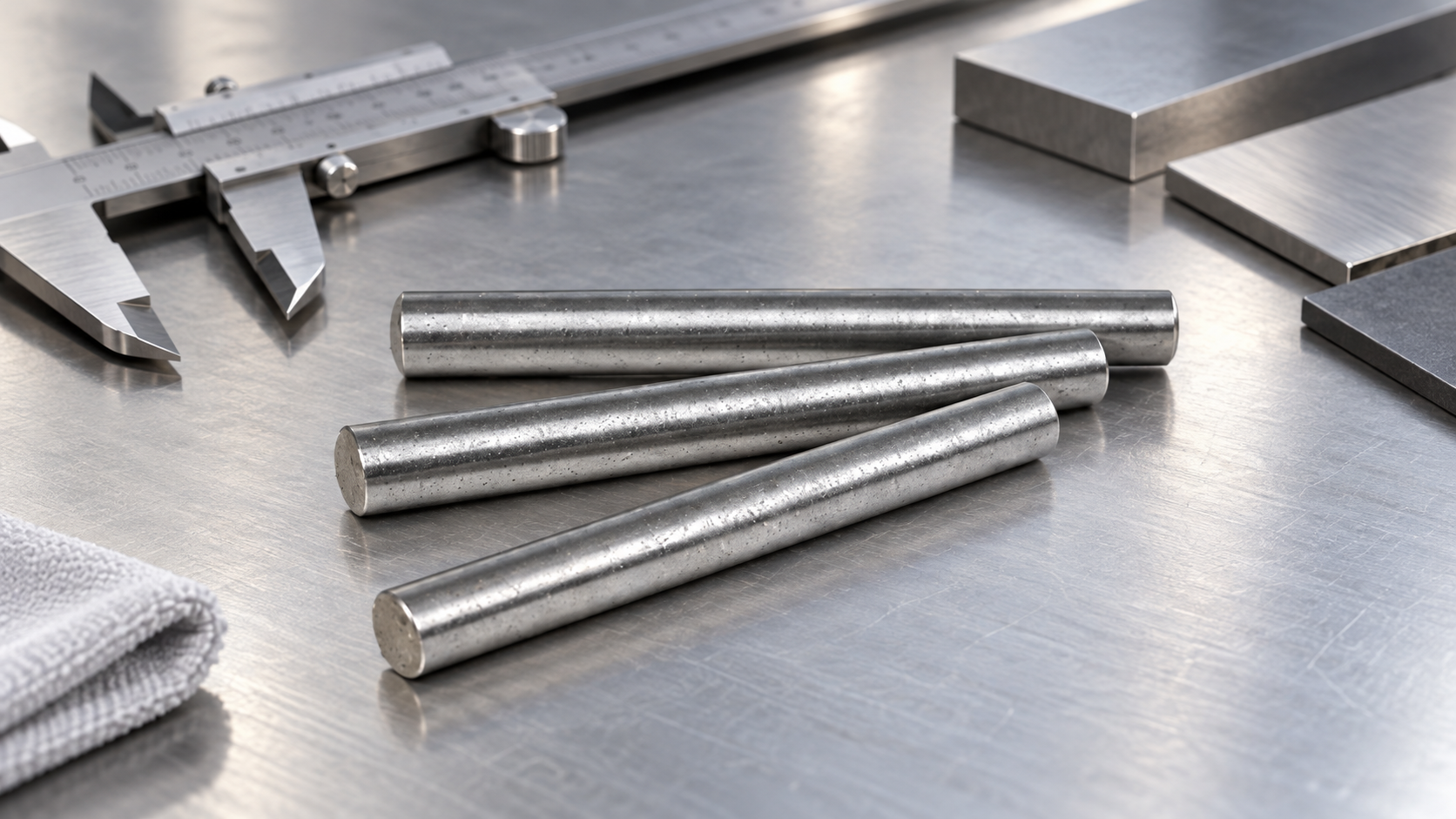
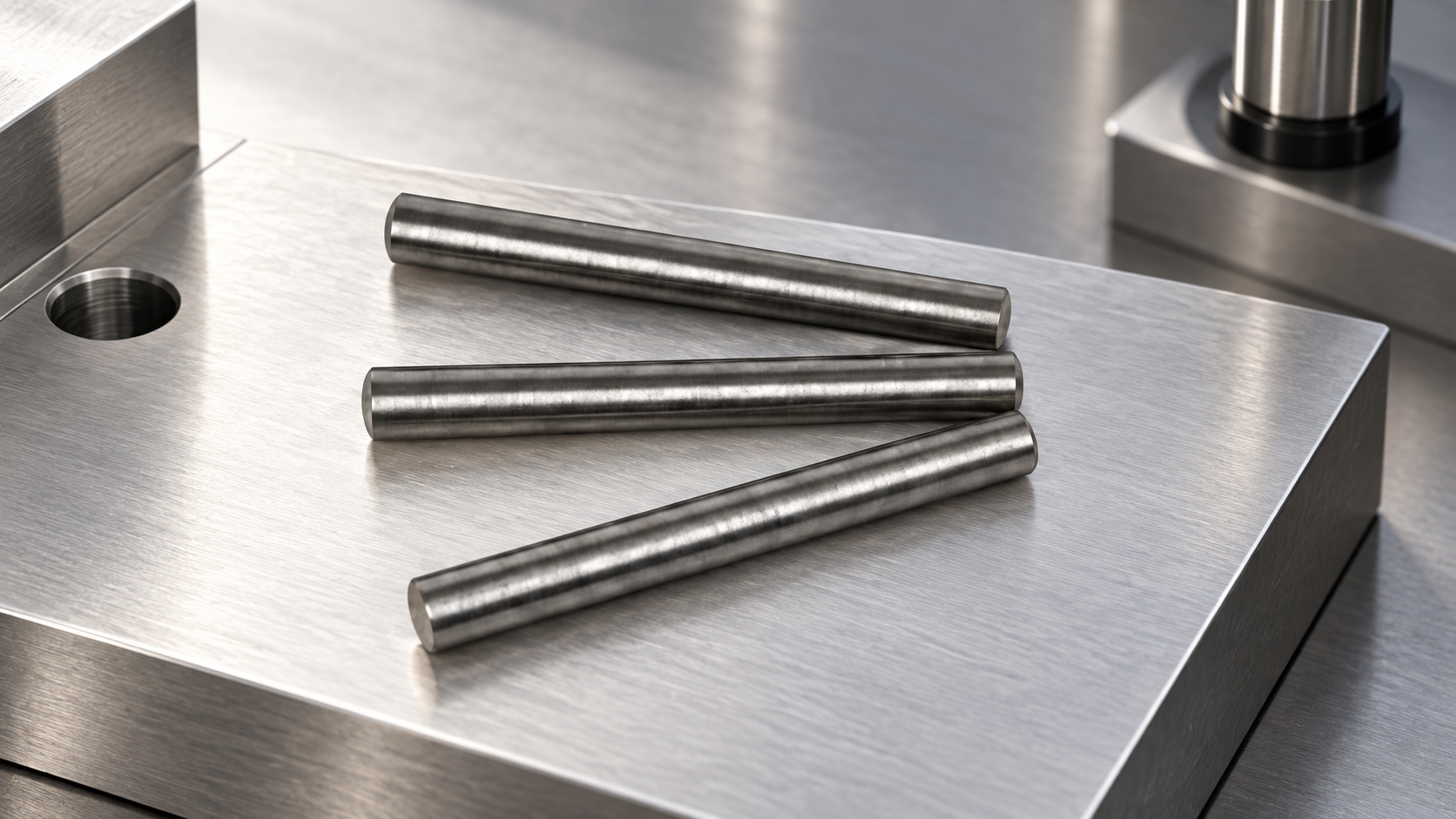
Start with the environment: humidity, washdown, salt exposure, process chemicals, outdoor storage, temperature and contact with dissimilar metals. Then identify the actual failure concern. If the risk is general surface corrosion, a stainless material may be considered. If the risk is galling, wear, particle generation or a tightly controlled locating fit, the grade and surface condition need a more specific review.
Stainless steel can improve corrosion resistance, but it does not make a joint immune to corrosion or eliminate crevices, deposits, galvanic effects or mechanical damage. The required environment and cleaning process belong in the RFQ rather than being replaced by the word “stainless.”
| Decision area | What to compare | What not to assume |
|---|---|---|
| Austenitic stainless | Corrosion behavior, machinability, work hardening and fit response for the selected grade | That every austenitic grade has the same strength or wear behavior |
| Martensitic stainless | Hardness, wear, corrosion trade-off and heat-treatment condition | That a hardened condition is interchangeable with a softer grade |
| 304/316-type comparison | Actual media, chloride exposure, cleanliness and supplier specification | That a grade name alone predicts service life |
| Plated or coated steel alternative | Coating durability, damaged areas, mating compatibility and inspection | That stainless is always the best or lowest-risk choice |
The grade examples above are selection categories, not a TG Eugene product claim. The supplied TG Eugene site facts verify a 40Cr bright-ground unhardened cylindrical locating-pin page, not a stainless solid-dowel SKU. Do not use that page to promise stainless availability, grade, hardness or corrosion performance. Confirm the requested material and evidence with the supplier before release.
Corrosion resistant dowel pins should be compared with coated or plated steel against the actual exposure, not against a marketing label. Ask whether the part sees standing moisture, chloride, cleaning chemicals, trapped contamination or repeated handling. Also consider whether a damaged coating exposes the base steel and whether the mating hole or adjacent hardware creates a galvanic couple.
Stainless may simplify one part of the corrosion strategy, but it can introduce different friction, galling or strength trade-offs. Coated steel may fit an existing locating system better when the coating, storage protection and inspection route are controlled. The correct decision is the one supported by the assembly environment, approved material condition and replacement plan.
Also separate the material decision from the documentation decision. A buyer may need a heat number, material certificate, dimensional report or surface-treatment record, but those documents do not automatically prove service life. State which evidence is required for incoming inspection and which results must be approved by the design authority.
A stainless pin fit must be checked against the actual hole limits, roundness, surface finish, host material and assembly method. Changing the pin material can change friction, galling risk, installation force and the way the host deforms. It can also change how the pin and hole behave after cleaning, heating or repeated assembly.
For a locating joint, define which component retains the pin and which component receives a controlled mating fit. Do not assume that a corrosion-resistant material permits a tighter interference. Excessive interference can damage the hole or make service impossible; insufficient control can allow movement and fretting.
Review dissimilar-metal contact where the environment can support galvanic corrosion. The pin, host, coating, fastener and fluid path should be considered together. A material comparison that ignores the host assembly is incomplete.
Specify whether the pin should be ground, passivated, supplied with a protective film, or delivered clean for a downstream process. The correct finish depends on the part, not on the adjective “stainless.” Record the required surface condition and how it will be checked.
Inspection may include material certification, positive material identification, diameter, length, end form, straightness, surface condition and fit verification. Add hardness only when it is relevant to the selected grade and approved drawing. A material certificate does not replace inspection of the finished diameter or the mating hole.
| RFQ field | Required decision |
|---|---|
| Material grade or approved range | State the grade family and whether substitutions require approval. |
| Environment | Describe fluid, chloride, humidity, cleaning and temperature exposure. |
| Pin and hole fit | Provide both pin limits and receiving-hole limits with host materials. |
| Surface and cleanliness | Define grinding, passivation, oil, coating and cleanliness expectations. |
| Inspection evidence | State which certificates, dimensional reports or material tests are needed. |
| Service condition | Note load, movement, wear, disassembly and replacement requirements. |
For context, compare this solid-pin material decision with the site’s stainless steel spring-pin guide; a spring pin has a different resilient geometry and should not be treated as a solid dowel. The dowel pin sizes and fits guide helps frame the dimensional request. Include the released drawing rather than asking for a generic “stainless pin.”
No. 316 may be considered for some more demanding chloride or chemical environments, but the actual media, temperature, cleaning, fit and host material must be checked. It is not a universal service-life guarantee.
Not as a general rule. Strength and wear depend on the grade, condition, geometry and fit. Corrosion resistance and mechanical performance must be specified separately.
Do not assume that the hole can remain unchanged. Review friction, fit, galling, host material, surface finish and installation force before approving the substitution.