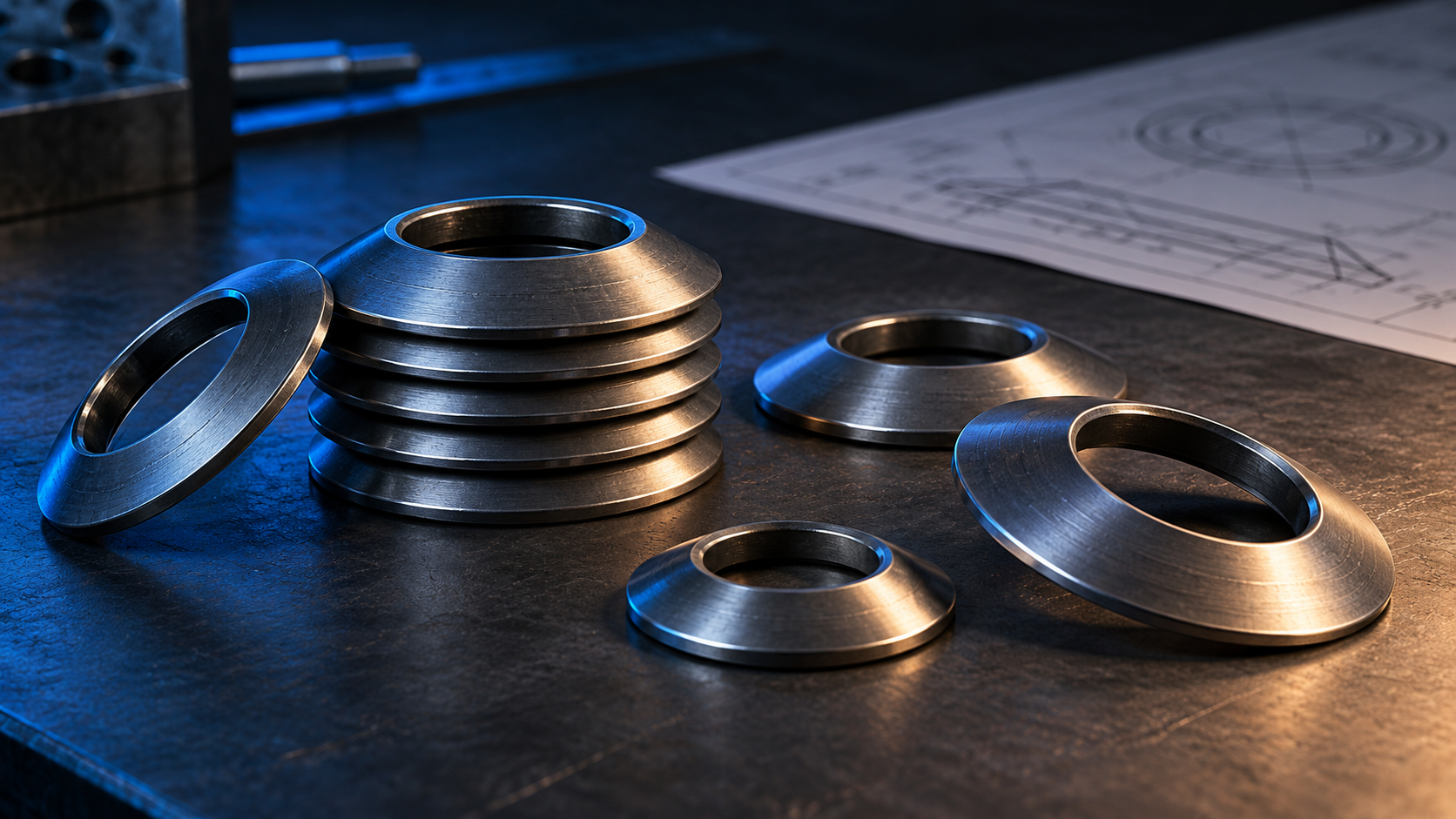
A DIN 2093 disc spring requirement is more than a size callout. Before ordering, the buyer should connect the standard reference to the material condition, forming route, heat treatment, hardness method, surface condition and inspection records. That link between the drawing and the evidence is what makes a disc spring specification usable.
This guide is for requirement review. It does not assign one hardness value, load curve or fatigue life to every DIN 2093 spring. Those values depend on the ordered geometry, material condition and acceptance plan.
DIN 2093 is the legacy search term buyers may still use. DIN Media lists DIN 2093:1992 as withdrawn, while DIN EN 16983 is the current disc-spring quality and dimensions reference. Confirm the edition and the applicable drawing before treating an older DIN 2093 callout as the complete requirement.
Start by identifying the applicable edition and the part family. A useful RFQ should state the nominal dimensions, quantity, intended loading and any drawing revision. It should also say which characteristics are acceptance characteristics rather than leaving the supplier to infer them from a general product name.
A product page can identify a DIN 2093 disc-spring route, but the page should not be treated as a batch certificate. The DIN 2093 Belleville disc spring product route is the right place to start a sourcing discussion; the order documents still need to define the actual part.
Disc-spring behavior comes from the relationship between strip or sheet material, forming and heat treatment. A material name by itself does not prove that a finished spring meets the required mechanical behavior. The supplier record should identify the material grade or condition, the lot, and the heat-treatment route used for the ordered parts.
For a technical review, ask three separate questions. What material was released for the lot? What forming and heat-treatment operations were applied? Which inspection result confirms the condition after those operations? Keeping these answers together prevents a common mistake: copying a material description into the RFQ while leaving the condition of the finished spring undefined.
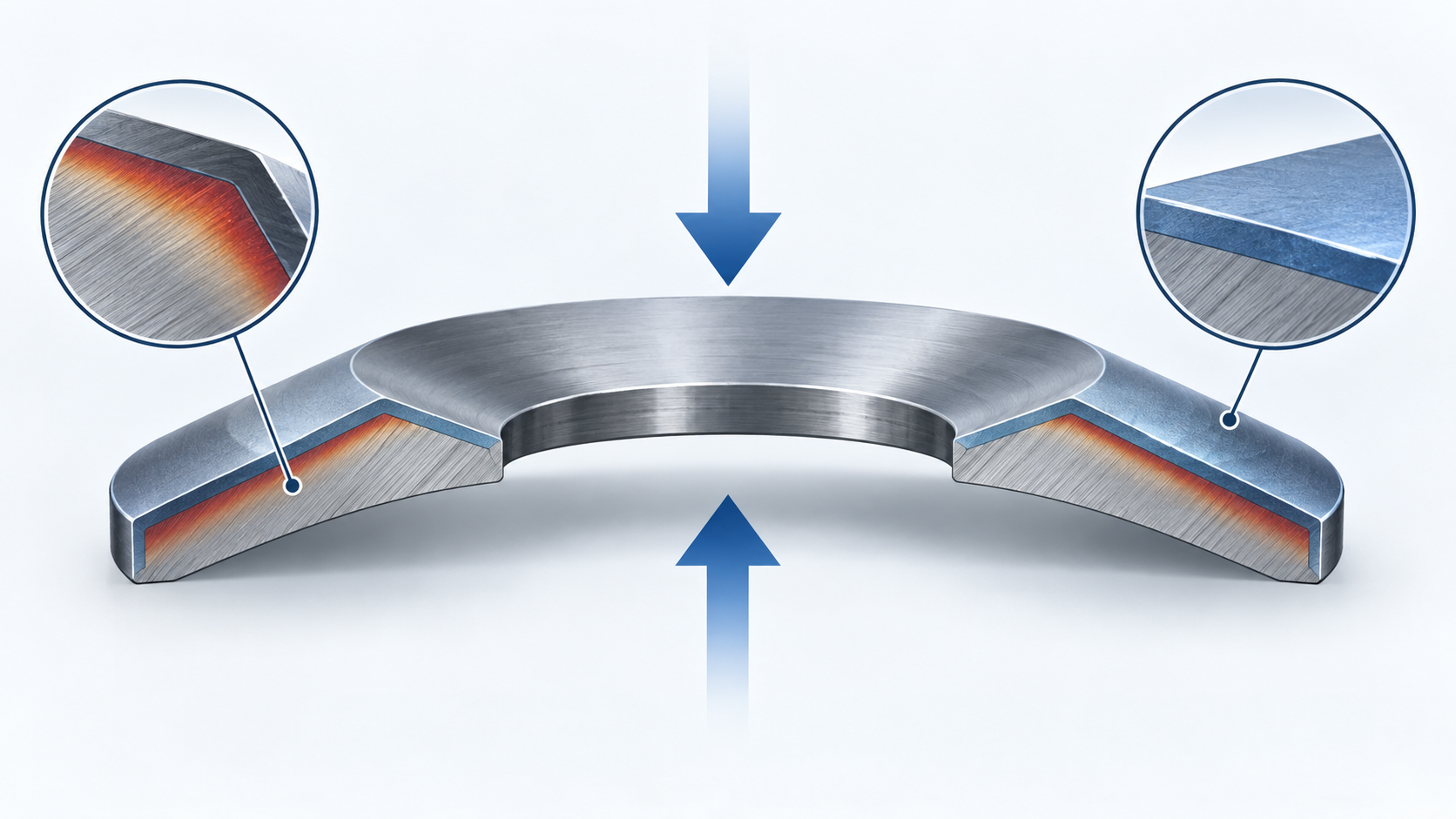
Hardness can help verify a material condition, but the reported value is incomplete without the test method and specimen condition. Thin, curved or small disc springs can make method selection important. A buyer should therefore request the scale or method, the test location, the specimen preparation and the reporting unit.
Do not insert a universal hardness range into a DIN 2093 article unless the exact material, thickness and applicable requirement have been verified. DIN EN ISO 6507-1 and DIN EN ISO 6508-1 are method references, not a substitute for the part-specific acceptance condition. If a converted value is shown, the original method should remain visible.
Surface protection is a separate purchasing decision. Confirm whether the order calls for a supplied surface, temporary oil protection, another finish or no additional treatment. Record the finish requirement in the drawing or purchase order and ask how it will be identified during inspection.
Corrosion evidence should identify the specimen, finish, exposure condition and criterion. A generic statement such as “corrosion resistant” is not equivalent to a test report. The same rule applies to coating or oil claims: they should describe the ordered condition, not imply that every spring in a product family has the same result.
A disc spring is selected as part of an assembly, so the requirement review should also record the working direction, support surfaces and any stacking arrangement that affects the intended result. The standard reference describes the product family; it does not remove the need to state how the spring will be installed or checked.
When the order uses the phrase disc spring material, ask whether it means the material grade, delivery condition or finished mechanical condition. The phrase spring steel heat treatment should likewise point to a record for the supplied lot, not a general statement copied from a catalog. This makes later review faster because the drawing, certificate and inspection report use the same vocabulary.
For a demanding assembly, the receiving packet may also need dimensional records, load or setting results, and evidence that the spring was handled without damage. These checks are not substitutes for the standard. They are the traceability layer that lets a buyer decide whether the delivered part matches the order.
This sequence gives the buyer a defensible question set without inventing a certificate or a performance guarantee. If the order needs a material, hardness or load-document review, send the drawing revision and acceptance plan through the TG Eugene service route.
ISO 6507-1 Vickers hardness test method is recorded in the article evidence map as the method reference for hardness reporting.