Stainless steel spring pins are not selected by material name alone. The final choice depends on the pin type, nominal size, receiving hole, joint function, environment, finish, and inspection plan. Stainless steel may address an exposure concern, but it does not automatically define the pin’s fit, load capacity, or service life. The related terms stainless steel roll pins and stainless spring pin still need a controlled drawing or RFQ.
Start with the environment. Record moisture, salt, cleaning chemicals, temperature cycling, storage conditions, and contact with dissimilar metals. These details help the engineering team choose a material family, but they do not replace the requirements for the pin and joint.
A complete material callout should identify the approved grade or material range, condition, finish, and required documentation. “Stainless spring pin” is a useful search term, not a complete purchase specification. If the material is selected to manage corrosion, define the exposure that drives the decision instead of relying on a broad label.
Next, identify the pin design. A slotted spring pin compresses as it enters the receiving hole, while a coiled pin has a different construction and load response. A solid dowel pin is a different part again. The same nominal diameter does not make these designs interchangeable.
Define the nominal diameter and length, then review the free outside diameter, chamfer, hole size, hole tolerance, host material, and joint access. The hole must support the intended installation and retention condition. A stainless material change cannot correct a hole that is too large, too small, damaged, or poorly aligned.
| Decision | What to define | Why it matters |
|---|---|---|
| Material | Grade or approved range, condition, finish, exposure, documentation | Controls the environment discussion and order evidence |
| Pin design | Slotted, coiled, solid, or another specified type | Changes installation and joint behavior |
| Fit | Nominal diameter, free OD, length, chamfer, hole size and tolerance | Controls seating and retention in the host parts |
| Verification | Dimensions, visual finish, material record, and assembly checks | Defines how the delivered lot will be accepted |
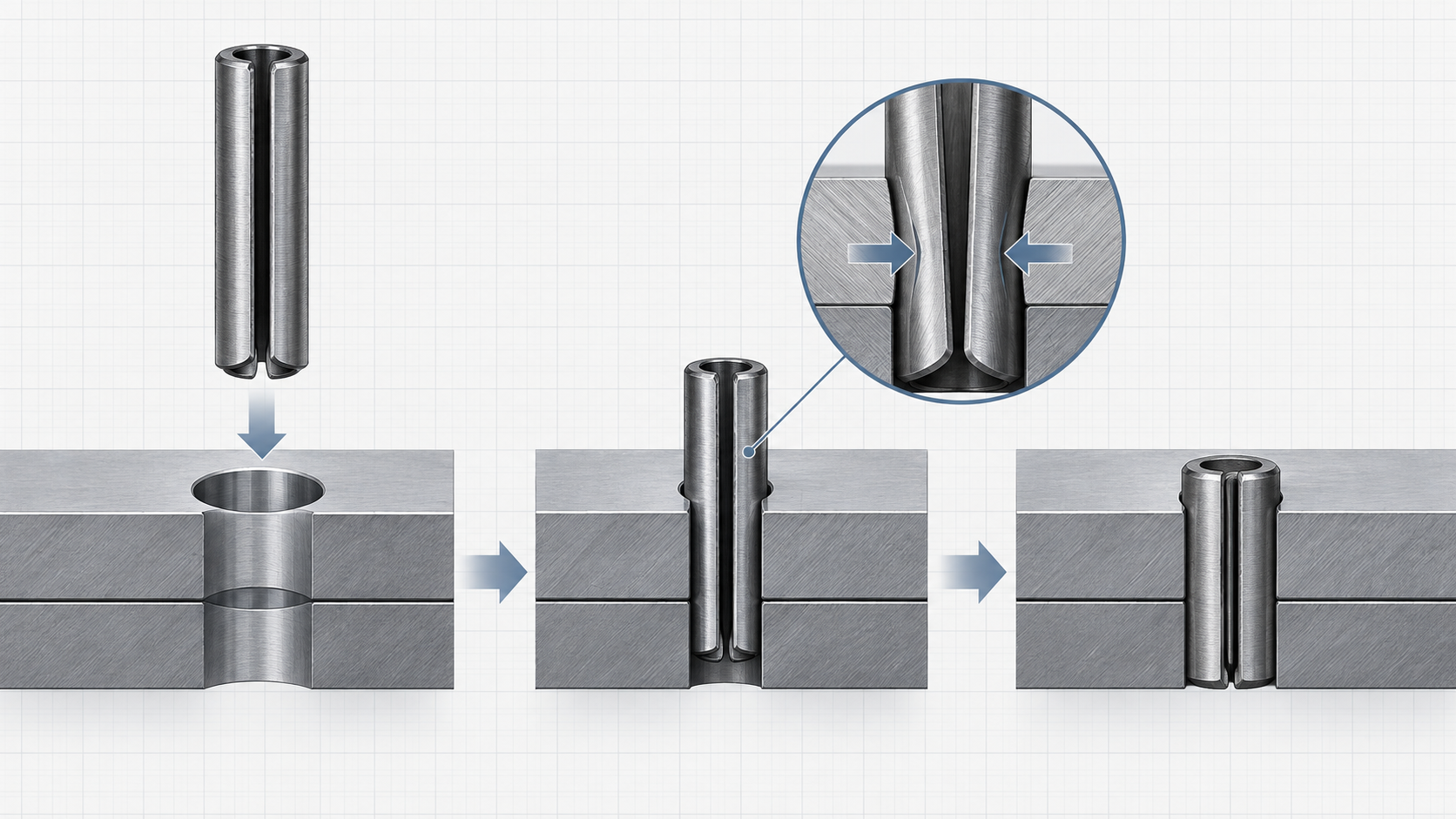
A spring pin can carry a joint load, but the required result depends on the joint geometry and the direction of force. Record shear direction, shock or vibration, repeated movement, joint separation, and the number of pins. Also record whether the pin is expected to allow a serviceable joint or remain permanently installed.
Do not transfer a load value from a different pin type, size, material condition, or hole fit. Stainless steel does not provide a universal load rating, fatigue life, or temperature limit. Those values require the exact part, assembly, environment, and verification method.
When the assembly uses a slotted pin, check the receiving hole and installation force together. The pin may need room to compress and align with the joint. Burrs, misalignment, a hard mating material, or a damaged hole can change the installation result even when the catalog size appears correct.
Compare the proposed material with the real environment, including cleaning fluids and the surfaces that touch the pin. A stainless choice may still need a finish or a controlled material pairing. Contact with a dissimilar metal can change the practical exposure, so include the mating components in the review.
For replacements, measure the installed pin and inspect the receiving hole before changing material. A stainless substitute may fit the envelope while changing spring response or installation behavior. Treat that change as an engineering decision, not as a visual upgrade.
Also check how the joint is serviced. If the pin must be removed during maintenance, record the access direction and the method that will be used. If it stays in a sealed or rarely opened assembly, record the installation condition and the inspection point that will confirm seating. These practical details help the material decision stay connected to the actual assembly.
For repeat orders, keep the approved drawing revision, material document requirement, and lot acceptance rule together. That record prevents a later buyer from changing the material or hole-fit assumption simply because the short name remains the same.
Eugene’s ISO 8752 slotted spring-pin product page is a starting point for the product family. Its listed 65Mn black-oxide scope must not be presented as stainless evidence. For a stainless requirement or a mixed material and fit review, use the Eugene service process and send the drawing, material, finish, quantity, inspection needs, and destination.
A reliable stainless spring-pin order connects material, pin type, hole fit, joint function, environment, and inspection. Confirm those items before release, and keep any load or corrosion claim tied to the exact part and test condition. The material name starts the discussion; the controlled drawing and acceptance record finish it.
Product scope reference: Eugene’s ISO 8752 spring-pin page is a first-party product-family route. Its listed 65Mn black-oxide scope is not stainless evidence; confirm the actual material on the approved drawing and order documents.