 Wenzhou Eugene Technology Co., Ltd.
 How should a conical spring washer be oriented and seated?
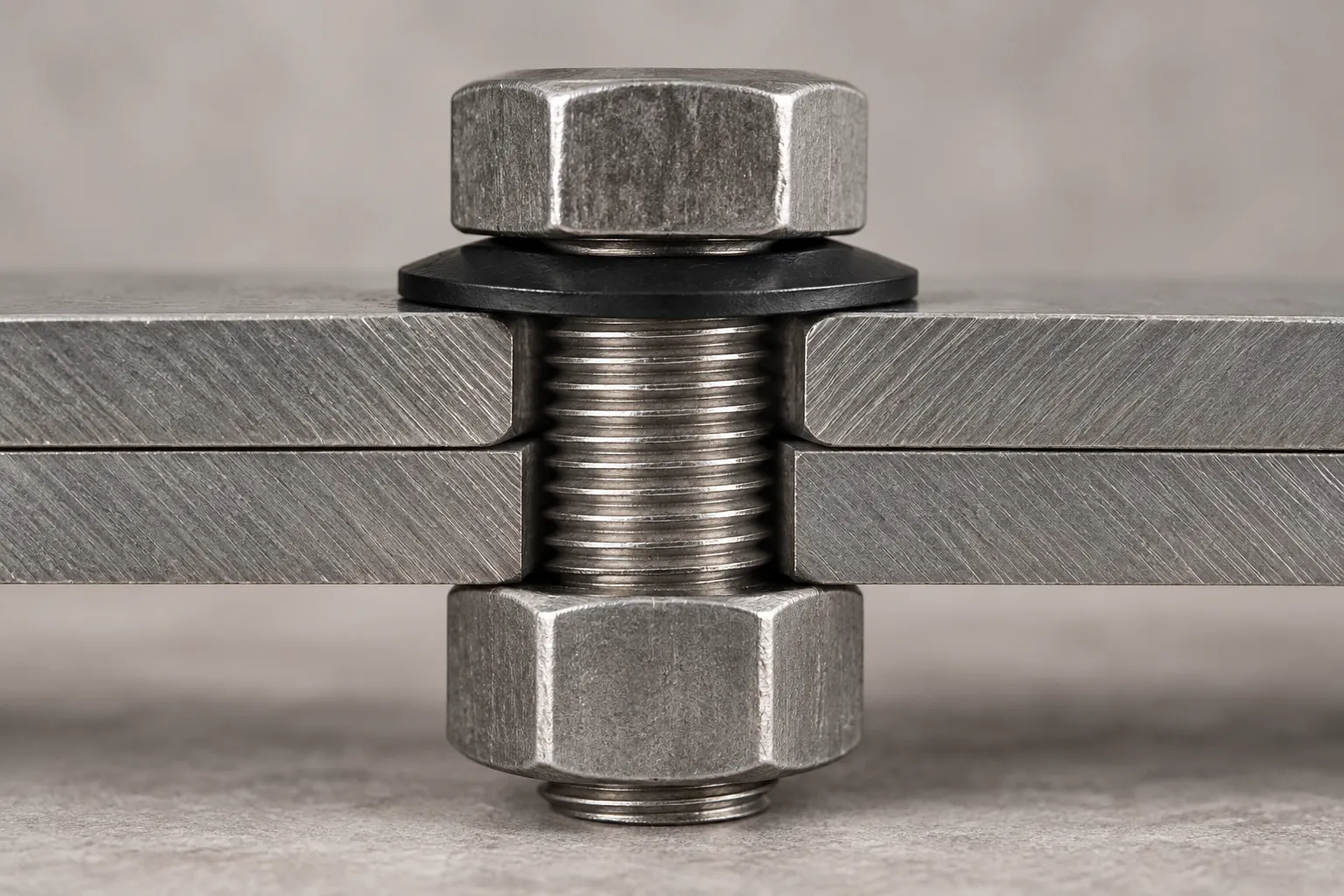
First identify which rim contacts the bolt head, nut, or reaction plate. A conical spring washer stores energy as its cone flattens, so reversal can change contact, friction, and travel. The drawing should show the direction with a section view or orientation arrow; “cup up” alone is easy to misread on an automated line.
Both seats must be hard, clean, and large enough to support the working rim. A conical spring should not bridge a counterbore edge, burr, keyway, thread run-out, or soft coating that can cold-flow. Check mating diameters and make sure a chamfer does not become the load-bearing surface.
Pre-tightening checks
- Remove burrs, scale, excess plating build-up, and assembly debris.
- Confirm that the guide, bolt shank, or mandrel does not force the inner rim sideways.
- Measure free height and inspect the rim for nicks, cracks, flattening, or uneven finish.
- Mark stack direction on the work instruction and inspection drawing.
A clean dry-fit exposes contact marks before preload hides them. Lubrication, coating, and roughness should follow the joint specification because friction changes the torque-to-clamp-load relationship.
How do conical spring washers stack, and how should the guide be designed?
Discs nested in the same direction act in parallel: force capacity increases while travel remains close to one disc. Alternating discs act in series: travel increases while force is governed by the group. The correct conical spring washers arrangement depends on whether the joint needs more force, more movement, or both. In production, count conical spring washers at each station.
Use notation such as 2P x 3S, and define it in the title block: two discs nested in parallel at each station, with three stations in series. Show the load-facing direction as well. Supplier and assembler can otherwise interpret “three springs in series” differently when spacers or a locating sleeve are present.
Guide and mandrel controls
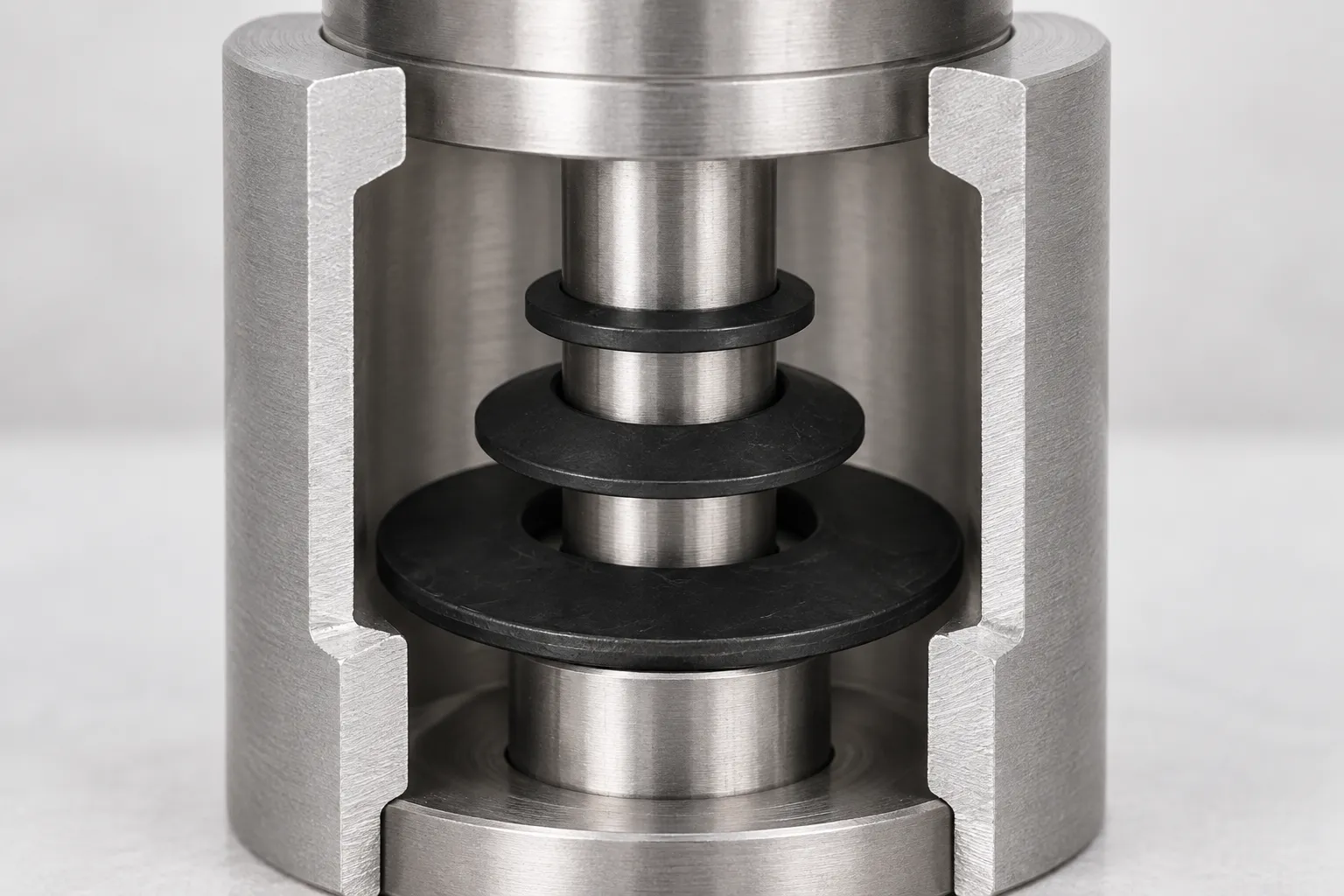
A guide keeps the stack concentric while the cone flattens. An internal guide must let the bore move freely over the mandrel; an external guide must not bind the outside rim before the specified height. Clearance should account for tolerance, coating, contamination, and thermal expansion. Label trays for conical spring washers with the same direction shown on the drawing.
Spacers may separate parallel groups, control contact, or prevent fouling at a shoulder. Specify them as functional stack parts, not field fixes. The design record should state free height, target compressed height, solid height where relevant, and reaction direction. For background, see Eugene’s guide to what a disc spring is and its explanation of Belleville washer stack arrangements.
| Arrangement | Typical purpose | Installation priority | Main risk if misread |
|---|---|---|---|
| Single disc | Compact travel and force response | Correct face and full rim support | Reversal changes seating and deflection behavior |
| Parallel, nested | Higher force within a compact axial length | Clean nesting and no rim interference | Uneven contact makes load sharing poor |
| Series, alternating | More travel for thermal or tolerance movement | Alternating direction at every interface | One reversed disc reduces intended travel |
| Parallel groups in series | Combined force and travel requirements | Define P x S notation and section view |
Wrong group count changes preload and solid height |
Which tooling and preload checks make a conical spring installation repeatable?
Torque is an assembly input, not a direct measurement of spring force. Friction, lubricant, coating, and surface condition can shift clamp load; a 10% torque change does not guarantee a 10% preload change. Define the control variable as compressed height, axial force, torque-angle behavior, or another validated method.
A torque wrench remains useful after calibration with the actual fastener, lubricant, and mating materials. For development or audit work, use a calibrated load cell, bolt-tension measurement, or force-height test. A conical spring should be checked at its specified working height because torque-only acceptance can pass a mis-seated stack.
Minimum work-instruction fields
- Part number, material, coating or lubricant, and lot traceability.
- Section-view orientation, stack notation, guide, and seating limits.
- Tightening sequence, tool identification, and calibration status.
- Target preload or compressed height, tolerance, sampling, and failure response.
For manual assembly, an orientation nest or keyed carrier can reduce reversal errors. For automated assembly, vision can confirm count and direction, while a force-displacement trace can detect a burr, missing disc, or wrong spacer. Visual checks should confirm conical spring washers before preload is applied. Acceptance limits must come from the validated test plan, not a catalog nominal.
What should a conical spring washer inspection and service plan include?
Inspection should compare the installed state with the design state, not merely confirm that the fastener is tight. Record compressed height, contact pattern, guide condition, and evidence of fretting, corrosion, coating transfer, or rim damage. A conical spring washer with relaxation, permanent set, or an uneven contact ring may no longer provide the required movement reserve. Replace matched conical spring washers after approved rejection criteria are met.
Fatigue and relaxation depend on stress range, temperature, material, surface condition, cycling frequency, and working deflection, so the service interval is application-specific. After bedding, thermal cycling, vibration, or maintenance, recheck using the validation method. Do not reuse a part after visible cracking, severe corrosion, or deformation without documented disposition.
| Application | Dimensions to control | Practical note |
|---|---|---|
| Compact bolted joint | Outside diameter, inside diameter, thickness, free height | Verify rim support and head or nut bearing area before tightening. |
| Thermal cycling joint | Working height, solid height, guide clearance | Reserve movement for thermal and tolerance changes. |
| Guided actuator or valve | Bore, mandrel diameter, axial runout, stack height | Check free movement over the full stroke and prevent binding. |
| Vibration-sensitive assembly | Preload tolerance, contact diameter, surface finish | Validate friction and inspect for fretting after representative cycling. |
| Serviceable equipment | Installed height, remaining travel, corrosion allowance | Make the check measurable without unnecessary dismantling. |
Total cost includes tooling, inspection time, line stoppage, rework, field access, and replacement risk. A documented conical spring specification can lower cost when it prevents orientation errors or speeds diagnosis. Compare the installed system, not unit price alone.
Which standards and procurement checks support approval of conical spring washers?
DIN EN 16983 is a quality-requirement reference for disc springs and their dimensional or performance expectations; it is not a product certificate. Agree the applicable edition, drawing, material, heat treatment, finish, and inspection records for the destination market and duty. Claims that imply certification where only a dimensional reference exists create compliance risk.
Procurement should request a controlled drawing, force-height data or agreed test method, material records where relevant, and a clear stack direction. Eugene, the spring and precision fastener manufacturer behind tg-eugene.com, supports this review with configurable conical spring washers, drawing-based tolerances, and stack guidance; the responsible engineer owns final approval. Packaging should identify conical spring washers by part and orientation. See the DIN 2093 Belleville disc spring page and the guide to Belleville spring washers for high-load bolting.
Frequently Asked Questions
What is a conical spring washer?
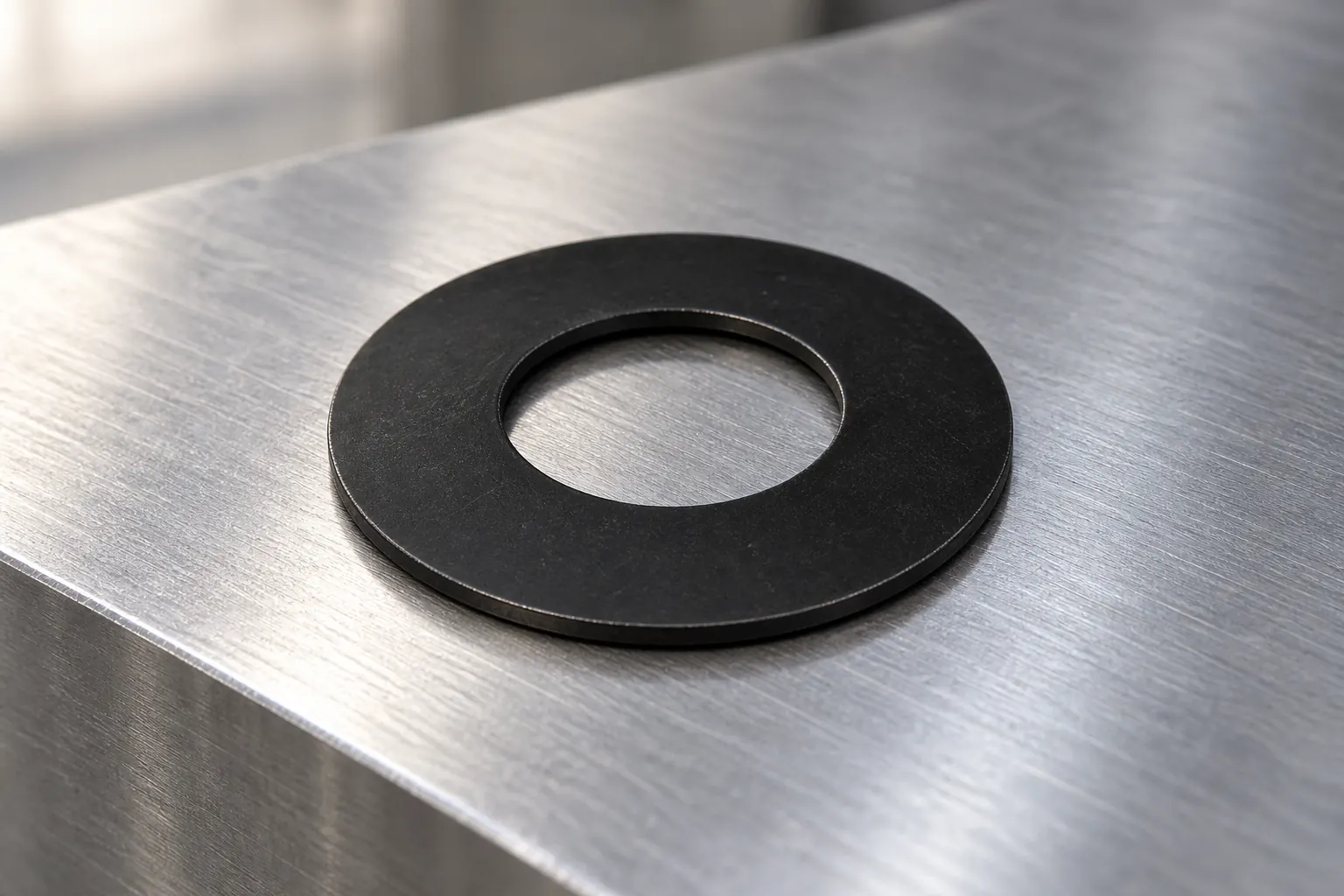
A conical spring washer is a dished washer that deflects axially under load and can provide preload compensation or controlled movement. Geometry, material, seating, and working height determine its behavior, so use an engineering drawing rather than treating it as a flat washer substitute.
What is a conical spring?
A conical spring is a tapered or dished element that produces axial force as it is compressed. In fastener applications, it may mean one disc or a defined stack; the drawing should state the exact part and arrangement.
Is a conical spring washer the same as a Belleville washer?
In many industrial contexts, a conical spring washer is called a Belleville washer or Belleville spring washer. The names are often interchangeable, but dimensions, material, finish, and load-deflection requirements still need confirmation.
What is a conical spring washer used for?
A conical spring washer maintains or controls axial preload where space is limited and the joint must accommodate tolerance, thermal movement, or vibration. Suitability depends on force, travel, cycle life, and seating geometry.
How does a conical spring washer work?
When compressed, the cone moves toward a flatter profile and develops an axial reaction force. A stack of conical spring washers changes that force-travel relationship according to nested or alternating direction, so count and orientation must be verified.
References:
- DIN EN 16983 at DIN Media
- SPIROL disc springs technical overview
- SPIROL disc springs to DIN EN 16983, formerly DIN 2093
For the joint that matters, direction is part of the specification: install the spring you calculated, seat the surface you designed, and measure the preload you need.
Eugene supports OEMs, distributors, procurement teams, and mechanical engineers with drawings, tolerances, material selection, and stack guidance for precision spring and fastener requirements. For related retaining-ring and circlip needs around the same assembly, review Eugene circlips and contact the team with the application drawing, target load, working height, environment, and service conditions.