 Wenzhou Eugene Technology Co., Ltd.
 How does a snap ring pliers set work with an internal bore groove?
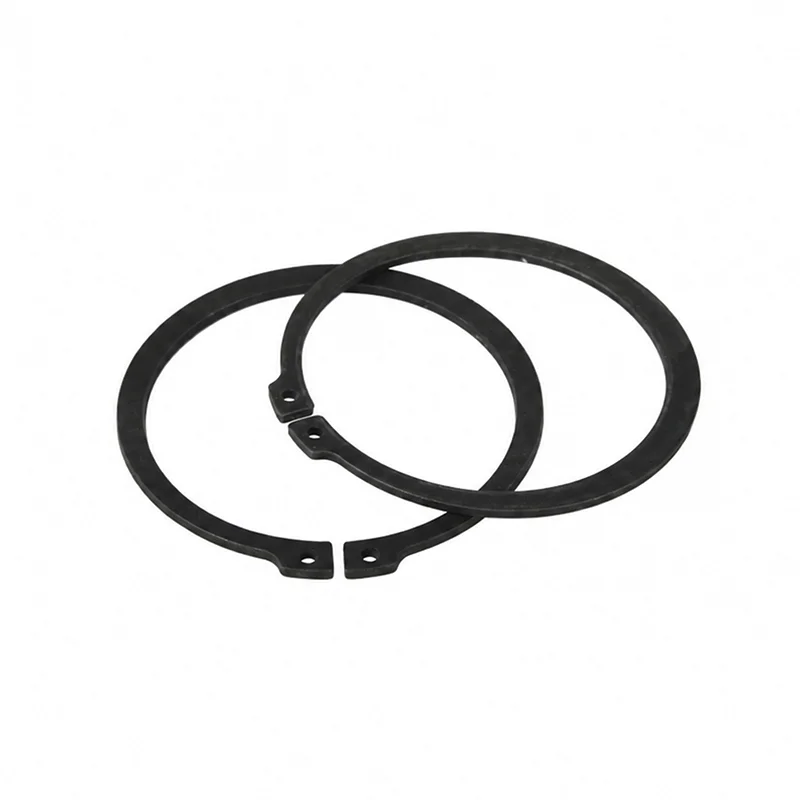
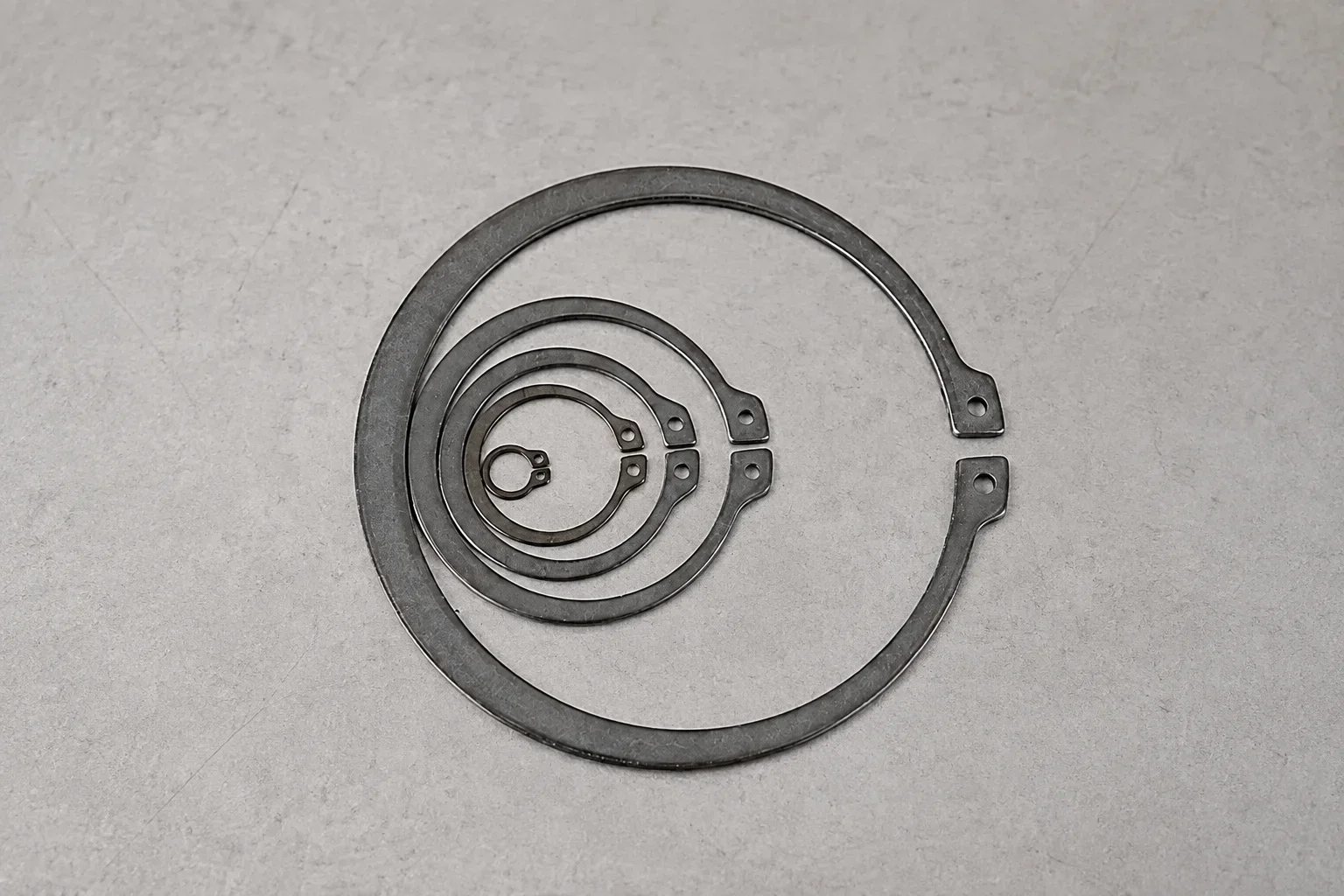
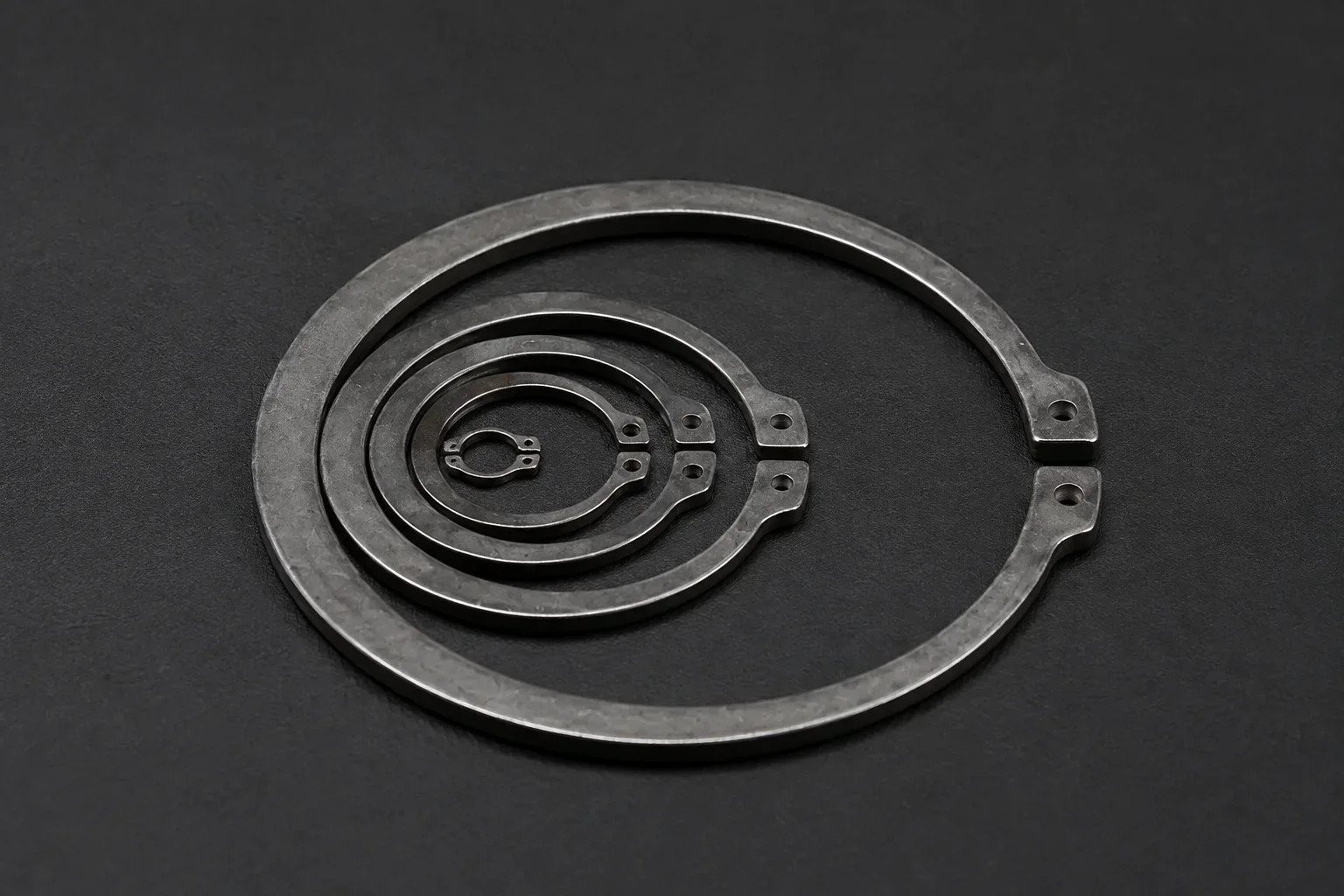
An internal ring sits in a machined groove inside a housing or bore. Its lugs contain holes for the tool tips; squeezing the handles opens the ring, reducing its outside diameter so it can pass into the bore. Release the handles slowly and the ring expands into the groove. A quality snap ring pliers set gives a stable tip-to-hole fit, controlled spring return, and enough reach without twisting the ring.
Start with a clean assembly. Remove chips, burrs, preservative film, and loose sealant from the groove. Measure the bore, groove diameter, groove width, and ring free diameter against the drawing or catalog. The internal snap ring pliers should be aligned with the ring plane; an angular load can enlarge a lug hole and leave a permanent distortion that is not obvious at first glance.
For repeat work, set a jaw-stop or handle limiter so the ring is opened only enough to clear the bore. Over-opening creates plastic strain and reduces the ring’s spring force. Smalley’s installation guidance explains a similar principle for retaining rings: use a controlled motion and avoid forcing a ring beyond its elastic range. Their installation manual is useful background for tool and handling reviews.
Which measurements make a snap ring installation reliable?
Use a drawing-based sequence rather than judging by feel. Record the nominal bore diameter, groove diameter, groove width, edge radius, and axial load direction. Compare the ring section and material to the selected standard. A DIN 472 ring is designed for bores; DIN 471 covers shaft applications. Mixing these families can produce a ring that appears to fit yet cannot carry the intended thrust.
Check the ring’s free diameter before opening it. A simple go/no-go check uses a master groove or a calibrated bore plug. After insertion, verify that the ring is fully bottomed: probe the circumference with a non-marring pick, rotate the housing, and check that no segment rises above the groove land. For critical assemblies, measure axial end play with a dial indicator and compare it with the drawing limit.
The tool must match both ring size and lug-hole diameter. A snap ring pliers set with interchangeable tips can cover several hole sizes, but adapters should not reduce the tip engagement below the manufacturer’s minimum. If the tip is too narrow, it can punch through the hole; if too wide, it can spread the lug. Keep a size chart at the workstation and link it to your internal snap ring size chart reference.
What snap ring handling sequence protects the ring and the operator?
- Inspect the ring for cracks, nicks, corrosion, or a bent lug; quarantine any suspect part.
- Orient the chamfer or marked face as shown on the drawing, especially where axial load has a preferred direction.
- Seat one tool tip fully, then the second; keep both tips parallel to the lug holes.
- Compress gradually until the ring clears the bore, keeping fingers outside the release path.
- Guide the ring to the groove, release the handles in a slow, even motion, and remove the tool only after the ring is stable.
- Perform the 360-degree seating inspection, record the operator and lot, and fit the mating component without hammering.
Wear eye protection because a released ring stores spring energy. Never substitute a screwdriver, pliers, or improvised wire for internal snap ring pliers; those methods score the ring and make release unpredictable. Keep the tool pivot lubricated according to its maker’s instructions, but keep oil out of the groove when friction or adhesive retention is part of the design. A maintained snap ring pliers set should be checked for loose pivots and worn tips before each shift. Store internal snap ring pliers with tip protectors to avoid hidden wear.
How can teams compare a snap ring pliers set with total cost?
Unit price rarely represents the cost of a failed installation. Include inspection time, ring damage, line stoppage, rework, bearing contamination, and field returns in the decision. The table below is a practical, non-price-specific comparison; actual economics depend on ring volume, size range, and quality controls.
| Tool approach | Fit and control | Durability | Typical risk | Total-cost implication |
|---|---|---|---|---|
| Dedicated internal tool | Best for one defined size and hole geometry | High when maintained | Limited range | Low rework at stable volume |
| Interchangeable snap ring pliers set | Good range with correct tips and stops | Moderate to high | Wrong tip or lost adapter | Lower inventory; training is essential |
| General-purpose pliers | Uncontrolled angle and opening | Variable | Slip, lug damage, ring ejection | Low purchase cost but high rework exposure |
| Automated insertion head | Repeatable force and position | High after validation | Changeover complexity | Strong ROI at high volume |
Illustrative calculation: if a line installs 2,000 rings per week and a poor process creates a 1.5% rework rate, 30 assemblies require attention. At 12 minutes per recovery and a loaded labor rate of $35 per hour, direct labor is about $210 per week, before downtime or scrap. Reducing rework to 0.3% saves roughly 24 recoveries, or $168 weekly; validate the assumption with your own traceability data.
Which application dimensions change a snap ring specification?
| Application dimension | What to confirm | Why it changes selection |
|---|---|---|
| Static axial load | Load direction, groove shear area, safety factor | Prevents ring walk-out under thrust |
| Rotating assembly | Clearance, balance, speed, lubrication | Avoids contact, vibration, and fretting |
| Temperature and corrosion | Material, coating, heat exposure, media | Protects spring force and surface integrity |
| Service access | Tool reach, lug orientation, removal cycles | Determines whether reusable or heavy-duty tooling is justified |
| Compliance market | Applicable drawing standard, material declarations, records | Supports audits and customer approval |
For a sourcing team, a snap ring should be specified by function and interface, not by a generic diameter alone. Ask for a lot traceability format, dimensional inspection method, and packaging that prevents mixed sizes. A ring for a food-processing machine may require different material documentation than one for a dry industrial gearbox, even when dimensions match.
Which standards and cautions should govern an internal snap ring purchase?
DIN 472 defines internal circlips for bores, including nominal dimensions and groove relationships; use the latest controlled edition in your drawing system. ISO 2768 may govern general tolerances where a drawing invokes it, but it does not certify a ring. ASTM E8/E8M is a tensile test method for metallic materials, not proof that a finished ring meets a particular retaining-ring design. Treat all three as different types of requirements: product geometry, drawing tolerance, and material test method.
Validate load capacity with the actual groove, not a catalog headline. Smalley’s load-capacity guidance explains how thrust, groove shear, and ring stress interact. Their selection guide and Spirolox reference help compare coiled alternatives, but they do not replace your engineering calculation.
- Do not claim “DIN certified” unless the supplied evidence supports the exact product and audit scope.
- Do not use a shaft ring in a bore or reverse the ring face without engineering approval.
- Control burr height and edge radius; a sharp edge can cut the ring during insertion.
- Define acceptance: full seating, no twist, no visible crack, and measured end play within drawing limits.
How should procurement select a snap ring pliers set and supplier?
First, freeze the interface: bore, groove, section, lug-hole diameter, material, coating, and load case. Second, request samples and a dimensional report tied to the lot. Third, run a controlled installation study with the intended internal snap ring pliers, recording opening force, cycle time, seating defects, and operator feedback. Confirm that the internal snap ring pliers can reach the groove without rubbing the bore entrance. Fourth, approve packaging and labeling that prevent size mix-ups. Finally, review rework and return data quarterly rather than assuming the lowest quote is the lowest cost.
Eugene (Wenzhou Eugene Technology Co., Ltd.) supports China B2B buyers with precision retaining rings and configurable documentation. Review the circlips category for families and materials, then confirm the exact bore ring, inspection plan, and packing specification with engineering. Product pages should be treated as a starting point; the controlled drawing and agreed sample remain the purchase reference.
What questions do engineers ask about a snap ring?
How to use snap ring pliers?
Choose tips that fit the lug holes, seat both tips fully, compress only until the ring clears the bore, and release slowly into the groove. Confirm 360-degree seating before removing the tool. Use eye protection and follow the ring maker’s installation limits.
What happens if a snap ring plier slips out?
The ring can eject, deform, or leave the groove partially seated. Stop work, inspect the ring and bore for damage, and replace the ring if a lug or edge is marked. Recheck tip size and alignment before restarting; never catch a released ring by hand. Use correctly sized internal snap ring pliers for the replacement part.
Where can I buy a ring & snap ring?
Buy through a qualified industrial distributor or directly from a manufacturer that can provide a controlled drawing, material information, and lot traceability. Eugene’s DIN 472 internal circlip product page is a useful starting point for a bore application.
What types of snap rings are made by wire transform?
Wire forming can produce circular, spiral, wave, and specialty retaining rings when the design permits a round-wire section. The process is selected for geometry, spring behavior, and volume; stamped strip rings may be preferable for flat sections. Ask for a drawing and process capability data rather than inferring manufacturing method from appearance.
What is a Smalley retaining ring?
A Smalley retaining ring is commonly a coiled, Spirolox-style ring made from flat wire and designed for axial retention. It can offer compact radial height and flexible configurations, but groove and load calculations still govern suitability. Consult the manufacturer’s selection and installation documents for the exact series.
Does snap ring offer circlips?
Yes, “snap ring” and “circlip” are often used interchangeably, although regional catalogs may distinguish internal, external, E-type, and spiral forms. Confirm whether the request is for a bore or shaft installation and cite the governing drawing standard. Eugene lists internal and external circlip families for industrial sourcing review.
References
- Smalley Spirolox retaining rings.
- Smalley retaining-ring installation manual.
- Smalley retaining-ring selection guide.
- Smalley ring-design load capacity guidance.
- NASA Technical Report 19900009424.
Match the tool tips and opening range to the ring’s lug holes, confirm the ring and groove dimensions, and verify full 360-degree seating with no visible lift before the assembly enters production. NASA’s retaining-ring discussion in Technical Report 19900009424 is a reminder that seemingly simple hardware deserves disciplined failure analysis.
Eugene (Wenzhou Eugene Technology Co., Ltd.) can support your ring specification and inspection plan; review the circlips category, then enquire with Eugene with your bore, groove, load, environment, and annual volume.