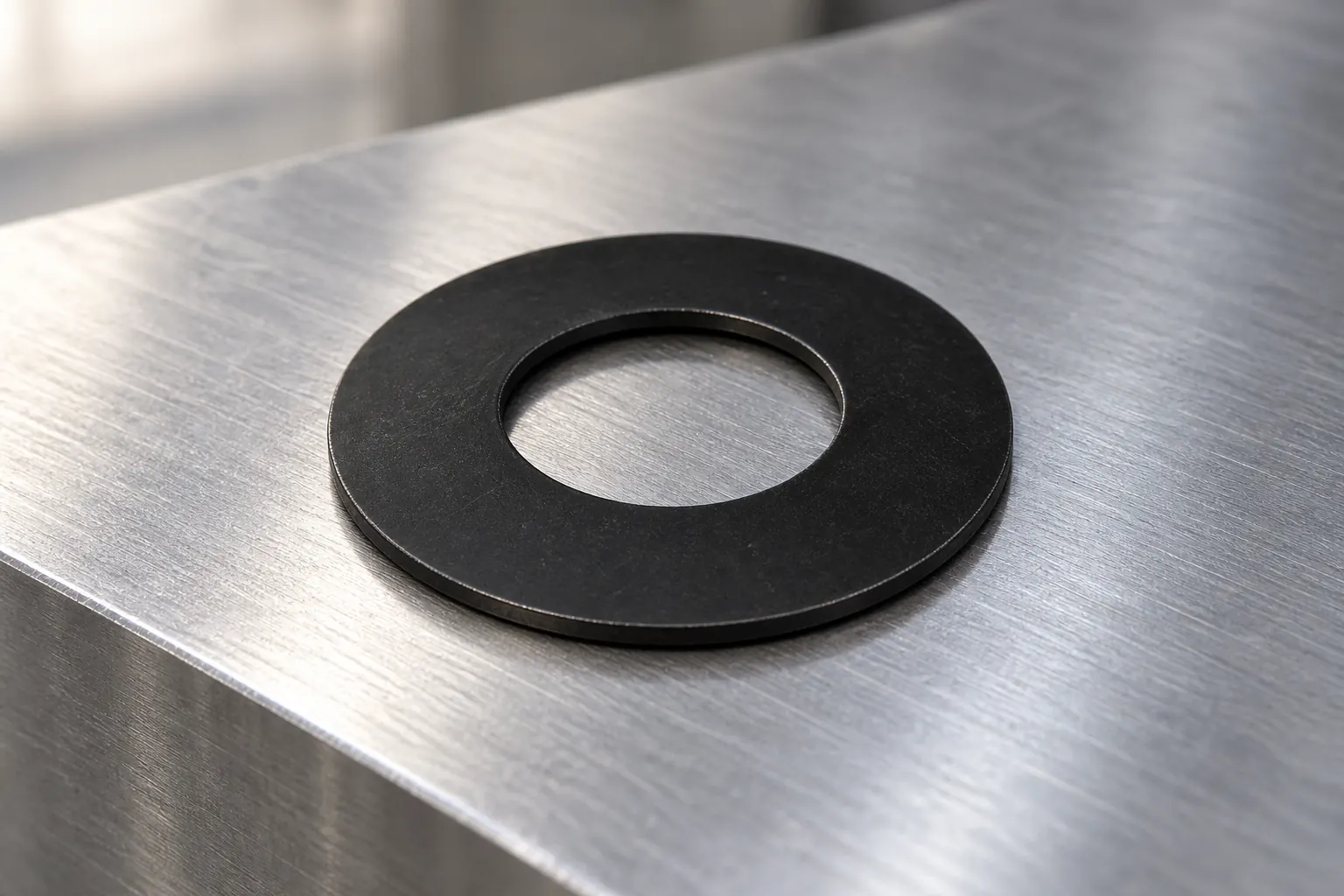
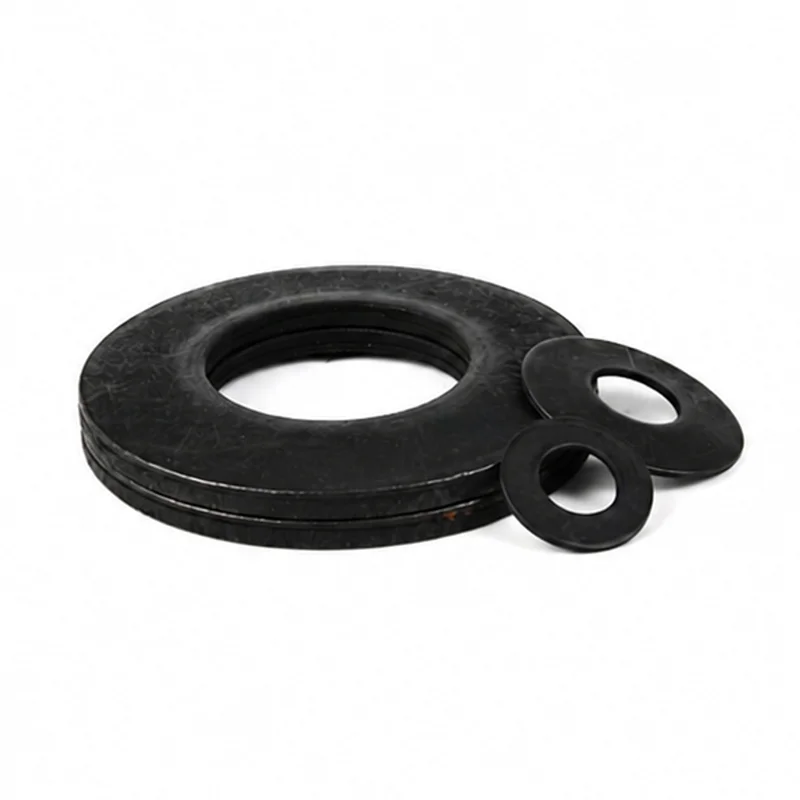
Belleville disc spring applications usually share one need: controlled axial force in a limited space. The conical washer-shaped spring deflects under an axial load. Engineers can use one disc or an engineered stack to fit a required force-and-travel relationship.
That compact form makes disc springs worth evaluating for preload, wear compensation, return action, clamping, and shock management. It does not make them suitable for every assembly. Selection starts with the required force, working deflection, available envelope, duty, environment, guidance, and mating interfaces.
A disc spring is most useful when a conventional compression spring cannot package the required axial force within the available height or diameter. The spring’s conical geometry creates a different force-deflection response from a typical helical coil. Stacking also changes the relationship between force and travel.
The decision should begin with the working points, not the part’s free appearance. Define the force required at the installed position and over the allowed movement. Then compare those points with the permitted outside diameter, inside clearance, working height, guidance, and surrounding hardware.
Disc springs often operate as part of a system. Bolts, shafts, guides, seats, bearings, and retained components affect alignment and load transfer. A correct spring cannot compensate for a seat that tilts, a guide that binds, or an interface that applies load only at an uncontrolled edge.
Also define the failure response. Some assemblies can tolerate a gradual change in preload, while others need a clear inspection or replacement limit. Record what happens if force falls outside the target window, the stack settles, or a disc cracks. This turns a general application idea into a testable engineering requirement.
Grouping applications by function is more useful than listing industries. The same machine may use disc springs for several different jobs, and each job needs different inputs.
| Mechanical function | Typical assembly examples | Key design questions | Main review risk |
|---|---|---|---|
| Package compact force | Short axial mechanisms, compact clamping units | Required force points, allowed travel, diameter and height | The spring meets one point but misses the full envelope |
| Maintain preload | Bolted joints, bearing arrangements, friction assemblies | Required clamp force, movement, relaxation, interfaces | Force falls outside the working range |
| Compensate for wear or movement | Brakes, clutches, seals, contacts | Expected movement, force window, cycle count | Travel or life is assumed rather than calculated |
| Return or closing action | Valves, tooling, mechanisms | Start/end force, stroke, response, guidance | Binding, overtravel, or unstable seating |
| Manage shock or stored energy | Stops, buffers, overload devices | Energy, peak load, repetition, damping in the system | Generic spring data is used as a complete system model |
| Control bearing or shaft force | Bearing preload and axial take-up | Preload window, thermal movement, speed, lubrication | Heat and movement change the operating point |
The matrix screens the application; it does not size the spring. Each row still requires a force-deflection calculation and product-specific data. For repeated loading, the engineer must also evaluate stress and fatigue at the actual working deflections.
A disc spring can add compliance to a clamped joint. This may help the assembly maintain force as parts settle, expand, contract, or wear. The spring must still fit the bolt or guide, seat correctly, and remain within the approved deflection range.
The design record needs the target preload and acceptable force window after expected movement. Temperature changes and surface settlement may shift that window. Adding a Belleville washer does not automatically prevent loosening; the complete joint design controls that result.
Brakes, clutches, seals, and contact systems can lose position as friction surfaces wear or parts move. A disc spring can provide an axial force over that movement. The design must define both the beginning and end of the working stroke.
Smooth movement and repeated impact create different duty conditions. The useful output is a force window across the expected wear range, together with cycle and service criteria. A part selected at one force point may miss the rest of that window.
Valves, tools, and compact mechanisms may use disc springs to return a component or hold it against a seat. The available travel may be short, but the required force can be substantial. Guidance is important because off-axis loading can tilt the disc or concentrate contact.
Installed position, maximum movement, stop condition, and interface geometry are system requirements. A positive travel limit should protect a mechanism that can overtravel; the spring should not act as an uncontrolled stop.
A disc spring may help move or hold a mechanism in a defined state when power, pressure, or an actuator force is removed. Calling that action “fail-safe” requires more than spring force. The system analysis must define the safe state, the required force at release, available travel, response time, friction, temperature, wear, and credible single failures.
Verify the complete mechanism under the specified loss-of-power or release condition. Include travel limits and inspection criteria. A generic disc spring or stack should not be presented as fail-safe until the assembly-level safety requirements and tests have passed.
Disc springs can participate in buffers, overload devices, and shock-management assemblies. The system must convert expected energy and peak load into an approved spring arrangement. Repetition rate, friction, damping, temperature, and surrounding structures all affect the result.
Outside diameter or stack height alone cannot establish energy capacity. The selected part and arrangement need a validated force-deflection curve, followed by verification of the complete mechanism.
Neither form is universally better. Compare the required force, travel, diameter, installed height, guidance, cycle life, and environment. A disc spring often becomes attractive when axial height is restricted and the design needs relatively high force over short movement. A coil spring may provide a longer stroke or a different packaging route.
The comparison must use the actual working range. A spring that meets the maximum force may have too little travel, while a spring that meets the stroke may exceed the available diameter. Installation tolerances and movement of the mating parts can shift both working points.
Stacks add another design choice. Treat orientation and count as controlled inputs, then verify the proposed arrangement with approved product data. Review the Belleville washer stack arrangements guide before treating a stack as several interchangeable loose washers.
Add the governing standard, drawing revision, inspection plan, traceability, quantity, and packaging requirements to the RFQ. If the design uses a stack, specify orientation and count as controlled assembly information. Do not leave stack direction to the installer.
Use calculated or tested force-deflection data for the selected part. For cyclic duty, review stress and fatigue with the real working points. Prototype testing can verify the assembly, but production still needs a released drawing and acceptance method.
TG Eugene lists a DIN 2093 Belleville disc spring product family. Use the page to identify the relevant product route after the application screen. Final selection still requires the drawing, force-deflection requirement, interfaces, duty, and approved product data.
The broader TG Eugene product catalog helps buyers locate related families. Keep the RFQ focused on the mechanical job rather than asking a supplier to choose from an industry name alone.
Common functions include maintaining preload, compensating for wear or movement, returning mechanisms, controlling bearing force, and managing shock. Each application needs its own force, travel, duty, environment, and interface review.
It may fit when the assembly needs substantial axial force within limited height and short controlled travel. Compare both spring forms against the actual working envelope instead of choosing from the name alone.