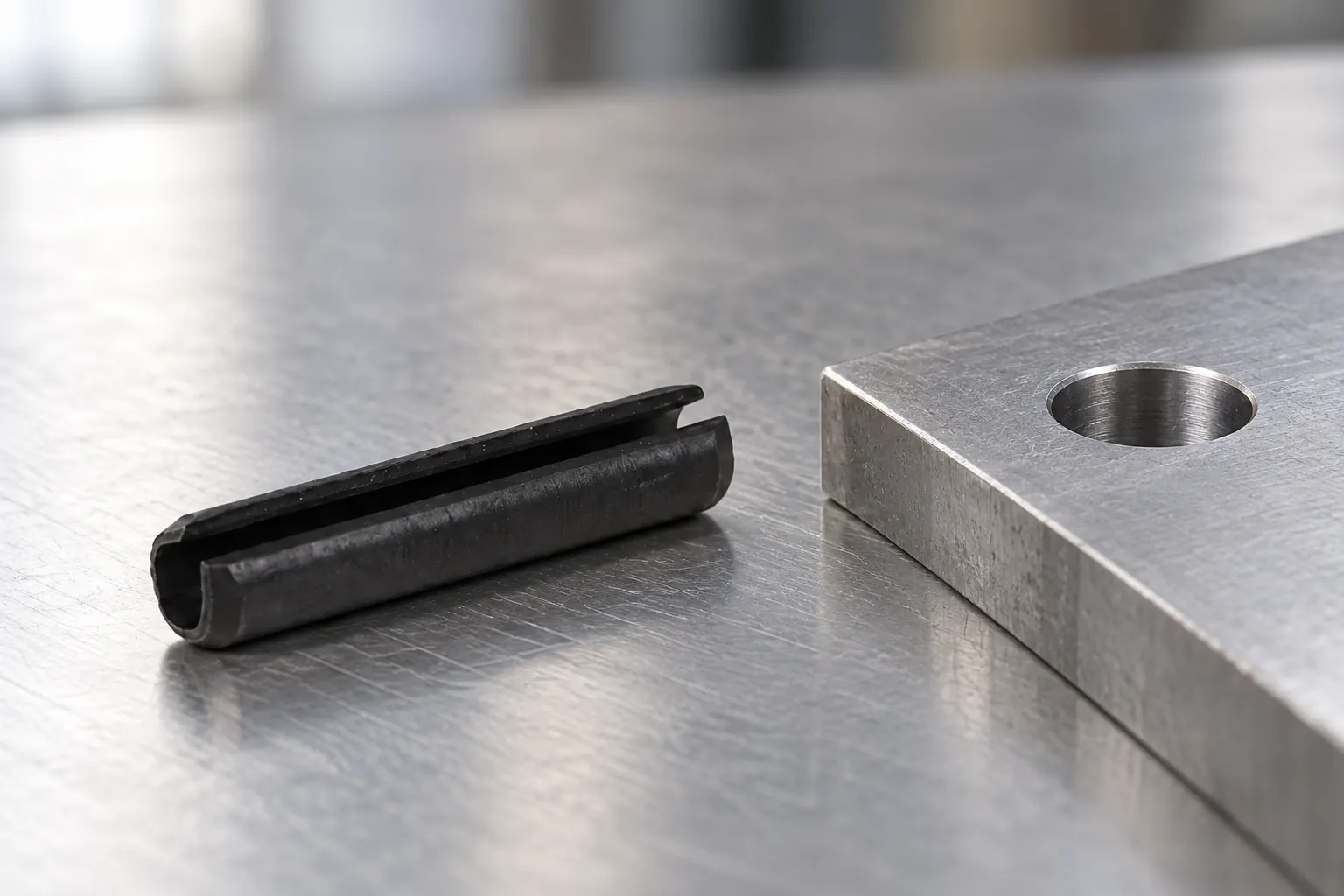
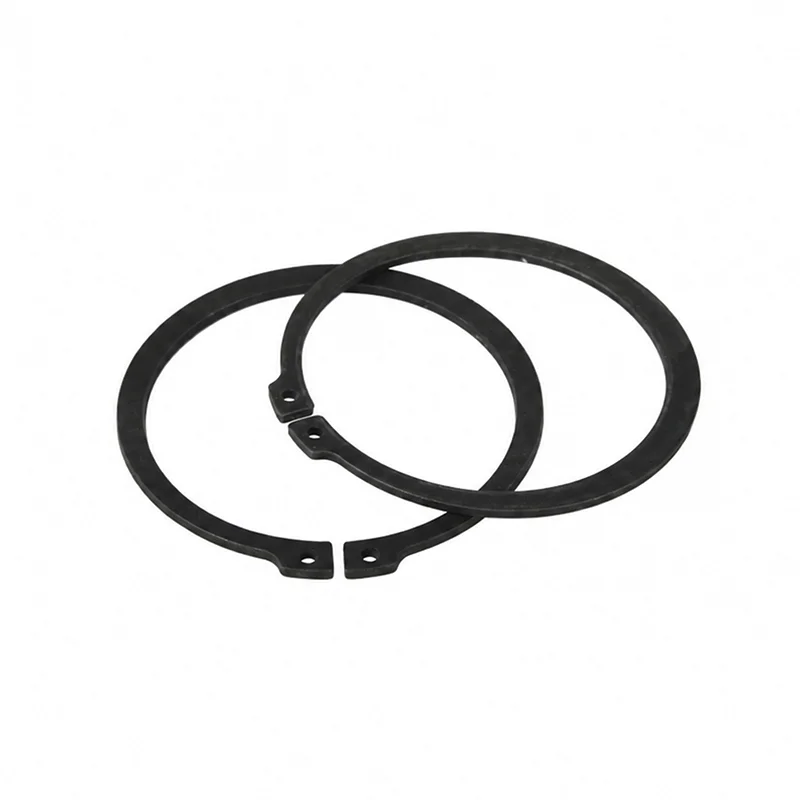
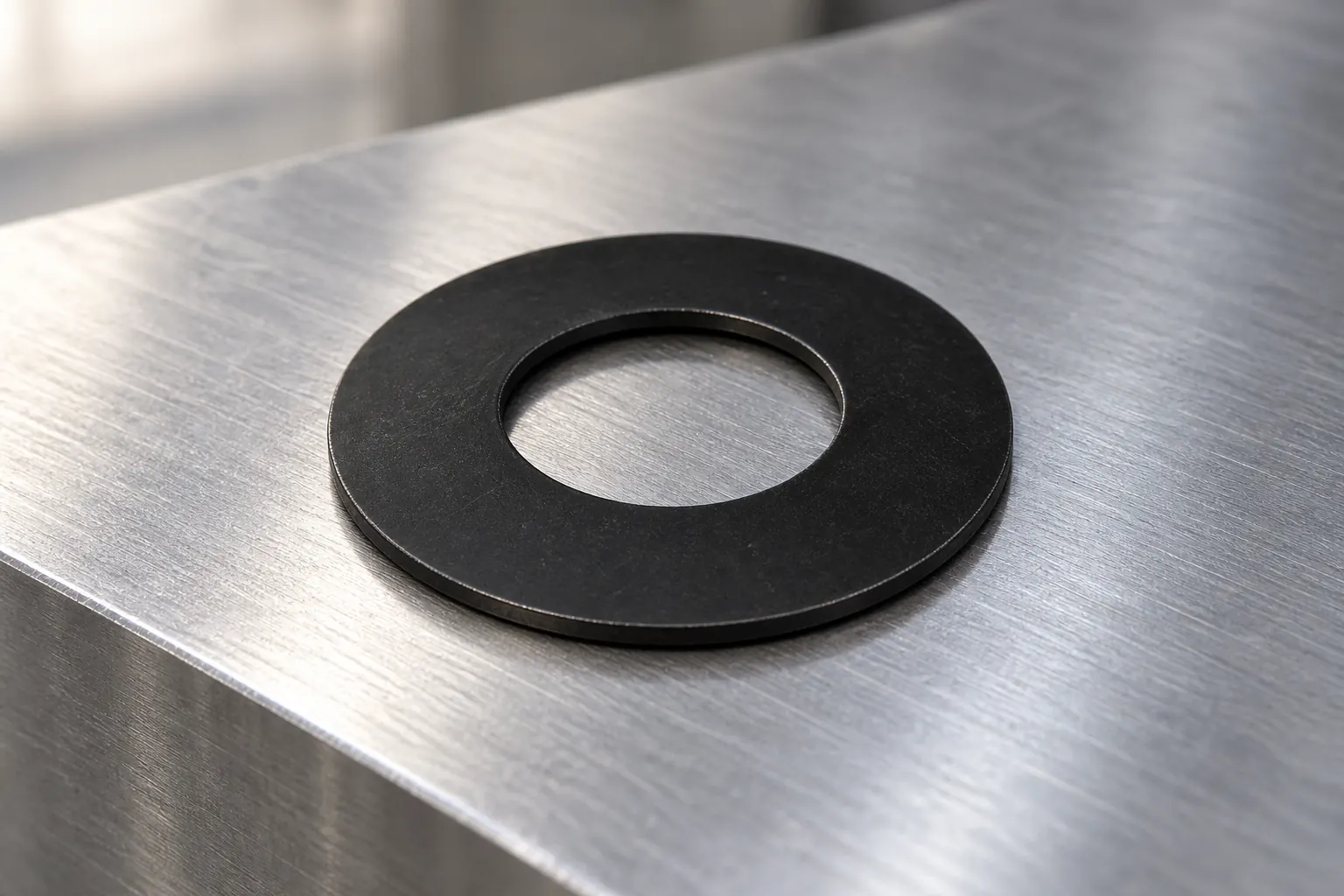
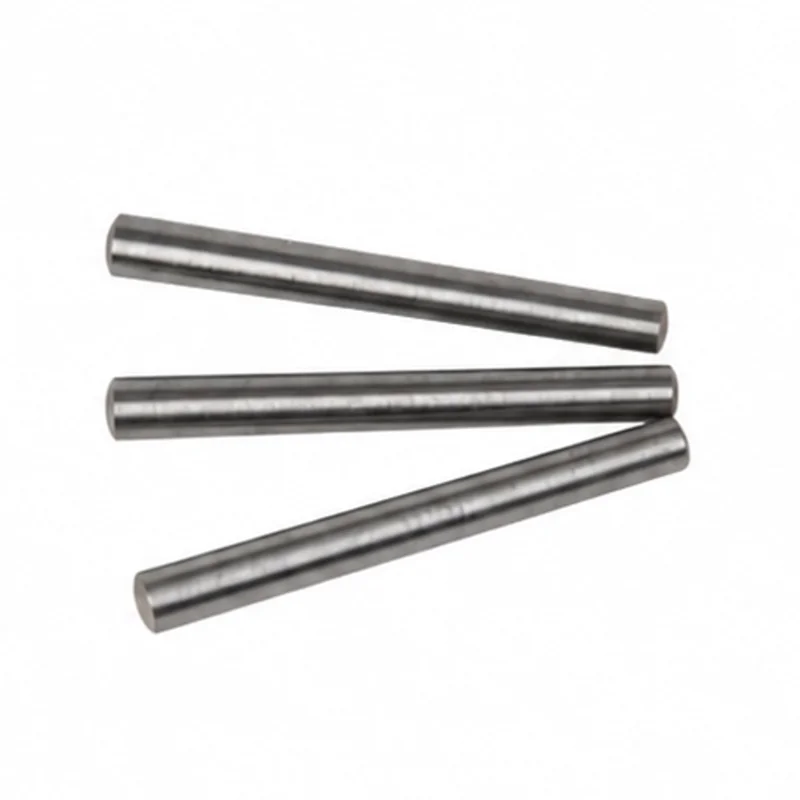
A push on retaining ring is designed for a grooveless shaft where a conventional groove is not available. Its teeth or prongs create an interference fit with the mating surface. That solves a real assembly problem, but it does not make the ring a universal substitute for an external circlip. Shaft condition, axial load, installation direction and service expectations must match the selected ring.
The phrase “self locking retaining ring” covers several designs. A flat-rim push-on ring, a curved-rim ring and a grip ring may not behave the same way. Confirm the ring family and the drawing before treating a catalogue description as a complete specification. A buyer searching for a grooveless retaining ring should also confirm the shaft retaining ring diameter and surface condition, not only the product name.
A push on retaining ring fits when the shaft diameter, surface and axial load fall within the selected ring’s application data. Use the grooveless option only after checking the ring drawing and the shaft condition together.
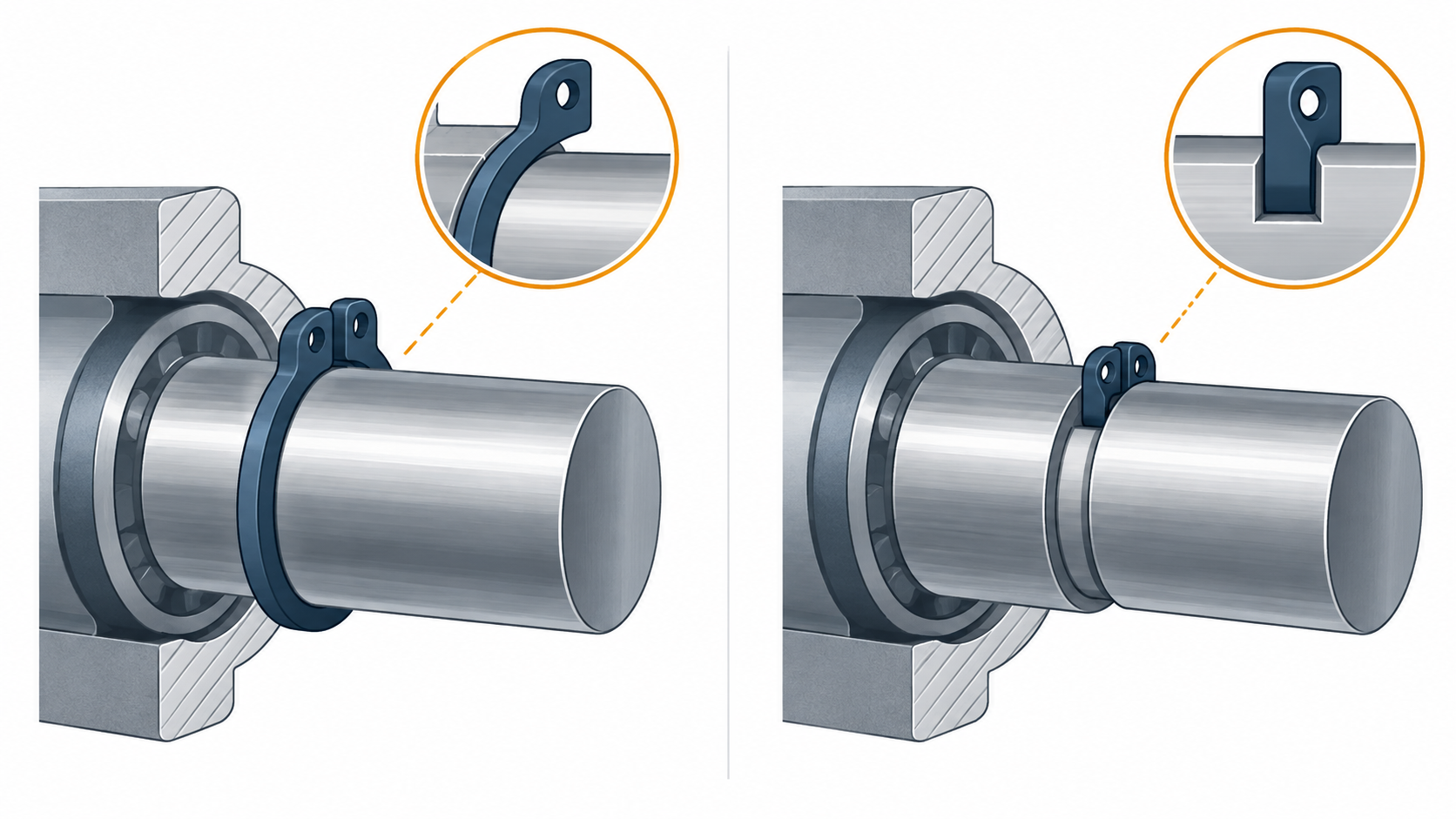
A grooved external circlip sits in a machined groove. A push-on retaining ring instead uses interference between its internal prongs and the shaft surface. During installation, the ring is pushed over the shaft. The prongs deflect and then press against the shaft to resist axial movement.
This arrangement is useful when the shaft cannot be grooved, when a groove would weaken a small shaft, or when a simple push-on assembly is preferred. It also changes the design questions. The shaft must provide the right diameter, surface condition and hardness for the ring to grip without cutting, slipping or damaging the assembly.
Do not infer suitability from the ring name alone. The same nominal shaft diameter can behave differently with a soft shaft, a hardened shaft, a plated surface or a rough turned surface. The ring manufacturer’s drawing and the application load must be reviewed together.
A push-on ring can be a good answer when the shaft is suitable and the load is controlled. It is a poor shortcut when a drawing already requires a groove, when the shaft is too hard for the prongs to engage as intended, or when repeated removal is part of normal service.
| Assembly condition | Possible retaining family | What the drawing must control |
|---|---|---|
| Grooveless external shaft | Push-on or self-locking retaining ring | Shaft diameter, material, surface, load, installation and removal limits. |
| External shaft groove is available | DIN 471 external circlip | Groove diameter, width, depth, edge condition, ring orientation and axial load. |
| Internal bore groove is available | DIN 472 internal circlip | Bore diameter, groove geometry, insertion access and retained-component position. |
| Radial entry on a small external shaft | DIN 6799 E-type circlip | Shaft groove or shoulder, ring engagement, side clearance and radial installation path. |
The table is a decision aid, not a substitution chart. A DIN 471 external circlip needs a shaft groove; it should not be described as a push-on ring. A DIN 472 ring is for an internal bore arrangement, while an E-type ring enters radially and has its own engagement conditions. The shaft, bore and retention direction determine the correct family.
For a grooveless design, start with the ring manufacturer’s selection data and verify the shaft condition. For a grooved design, check the groove against the selected standard and ring drawing. If the current assembly has no groove but the load is too high for a push-on solution, the correct answer may be to revise the shaft rather than force an unsuitable ring into the design.
Push the ring on in the intended direction and support the shaft so the installation force does not bend the assembly. Use a tool that applies force to the ring’s designed contact area. Do not hammer one prong or use a tool that scores the shaft. If the ring cocks during installation, remove it and investigate the diameter, tool alignment and entry condition.
Keep the retained component close to the ring when the application requires a small axial gap. The ring cannot correct a large shoulder clearance or a shaft that is outside the selected diameter range. The drawing should also state whether the ring must seat against a shoulder, spacer or bearing inner race.
Many push-on rings are not intended to be removed and reused repeatedly. The prongs may deform during removal, and forcing them back can change the interference fit. Some grip-ring designs are serviceable, but that is a product-family condition, not a rule for every self-locking ring.
Before removal, record the ring family and the shaft condition. After removal, inspect the prongs, inner edge, shaft surface and any retained component. Replace the ring when the prongs are bent, the ring is cracked, the shaft has been scored, or the service drawing calls for a new ring. If repeated maintenance is expected, select the retention method with that service cycle in mind.
Choose another retention method when the shaft surface cannot accept prong contact, when the axial load exceeds the approved data, or when the assembly needs frequent removal. A groove may be the better engineering choice if the shaft can be machined and the load path requires a defined shoulder. Likewise, a bore-retaining ring is more appropriate when the component sits inside a housing rather than on an external shaft. The important decision is not whether a push-on ring can be installed; it is whether the installed ring remains controlled through the full service cycle.
TG Eugene’s DIN 471, DIN 472 and DIN 6799 pages are useful comparison routes for grooved or radial-entry retaining arrangements. They should be used as product starting points, not as proof that a listed part can replace a push-on ring in the current assembly.
No. Its purpose is to retain on a suitable grooveless shaft through interference from its prongs or grip features. It still needs a controlled shaft diameter, surface and load condition. If a groove is already available, compare the push-on option with the correctly specified grooved ring rather than assuming either is automatically better.
Do not assume it can. Many push-on rings deform during removal and are replaced during service. Reuse is acceptable only when the specific ring design allows it and inspection confirms that the ring and shaft remain within the approved condition.