 Wenzhou Eugene Technology Co., Ltd.
 A Belleville washer preserves preload only when the joint has room to move
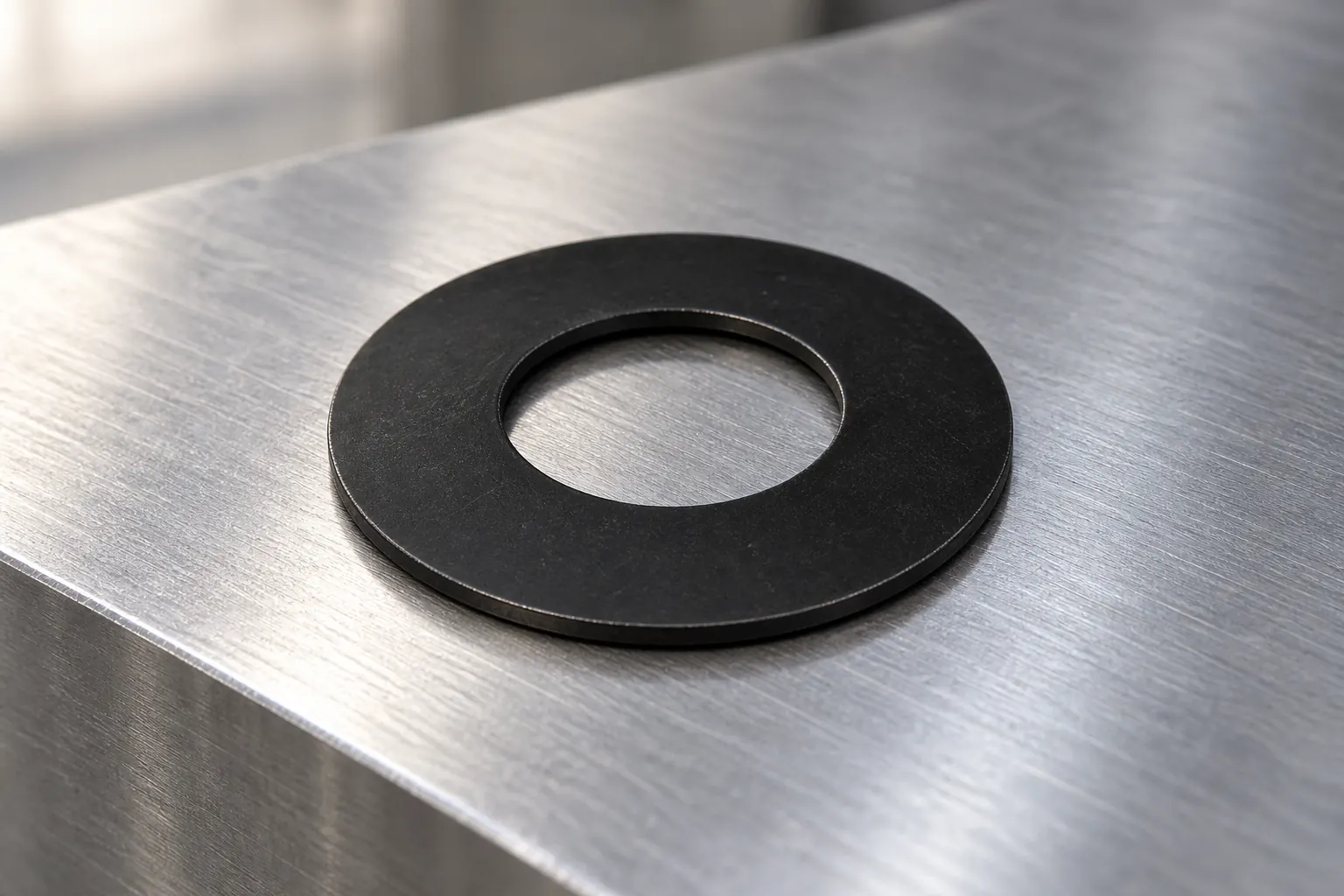
A Belleville washer is a conical disc that flattens elastically under axial load. In a bolted joint it is placed so its spring travel absorbs a controlled share of settlement or thermal displacement. Its benefit is therefore joint stiffness management, not a substitute for the bolt preload that creates friction and clamp force in the first place.
For the Stuttgart clamp, the useful question was not “which washer fits M16?” but “how much loss can the joint tolerate before separation, slip, or leakage begins?” A 0.10 mm settlement event can be consequential in a very stiff, short bolt grip; when a Belleville washer is designed to deflect across that event, the resulting drop in clamp force can be materially lower. The exact result depends on the bolt spring rate, clamped-part spring rate, contact geometry, friction, and the disc spring’s force-deflection curve.
Use a torque-angle procedure or a direct-tension method when the process requires controlled preload; both should be validated for the actual coating, lubricant, and bearing faces. Torque alone is an indirect proxy because friction can consume a large and variable portion of input torque. A joint test that records clamp load or bolt elongation across representative settling cycles is more informative than a catalogue comparison.
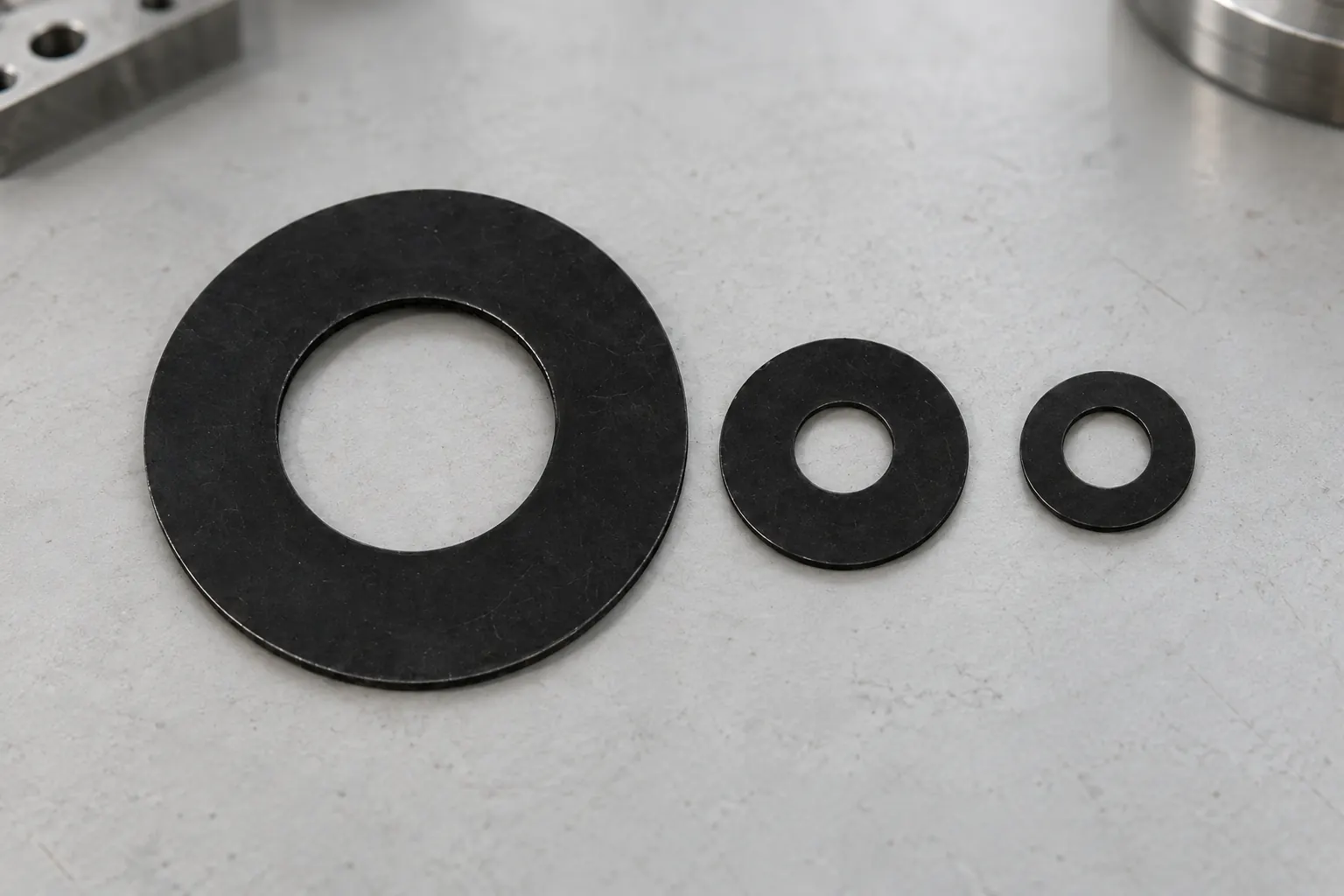
Preload loss has a cost beyond the washer line item
Repeated retorque, unexplained field returns, fretting at interfaces, and inspection downtime usually cost more than a properly documented spring element. Conversely, a disc spring selected without checking the flattened height can create its own problem: bottoming eliminates spring travel and may overload a contact face. Treat the load-deflection curve as an engineering input, not a decorative product attribute.
A belleville spring washer converts deflection into a controlled load range
The force rises nonlinearly as a belleville spring washer is compressed. Disc geometry, material, thickness, and free height set the curve; a designer normally chooses a working region rather than assuming the spring can operate at any height. DIN 2092 is commonly used for disc-spring calculation, while DIN 2093 covers standardised disc springs and their dimensional and quality framework.
At installation, compare the specified installed height with the manufacturer’s curve. At service, compare expected movement with the remaining travel before the spring approaches a flat condition. For cyclic applications, evaluate stress range and fatigue requirements with the supplier rather than inferring life from nominal load alone; frequency, corrosion exposure, surface condition, and stack alignment all matter.
The phrase belleville spring washer is often used broadly in purchasing, but the drawing should be specific: outside diameter, inside diameter, thickness, free height, material, surface condition, arrangement, quantity, and the target working height. A part number without these joint conditions can lead two buyers to expect different performance from the same nominal disc.
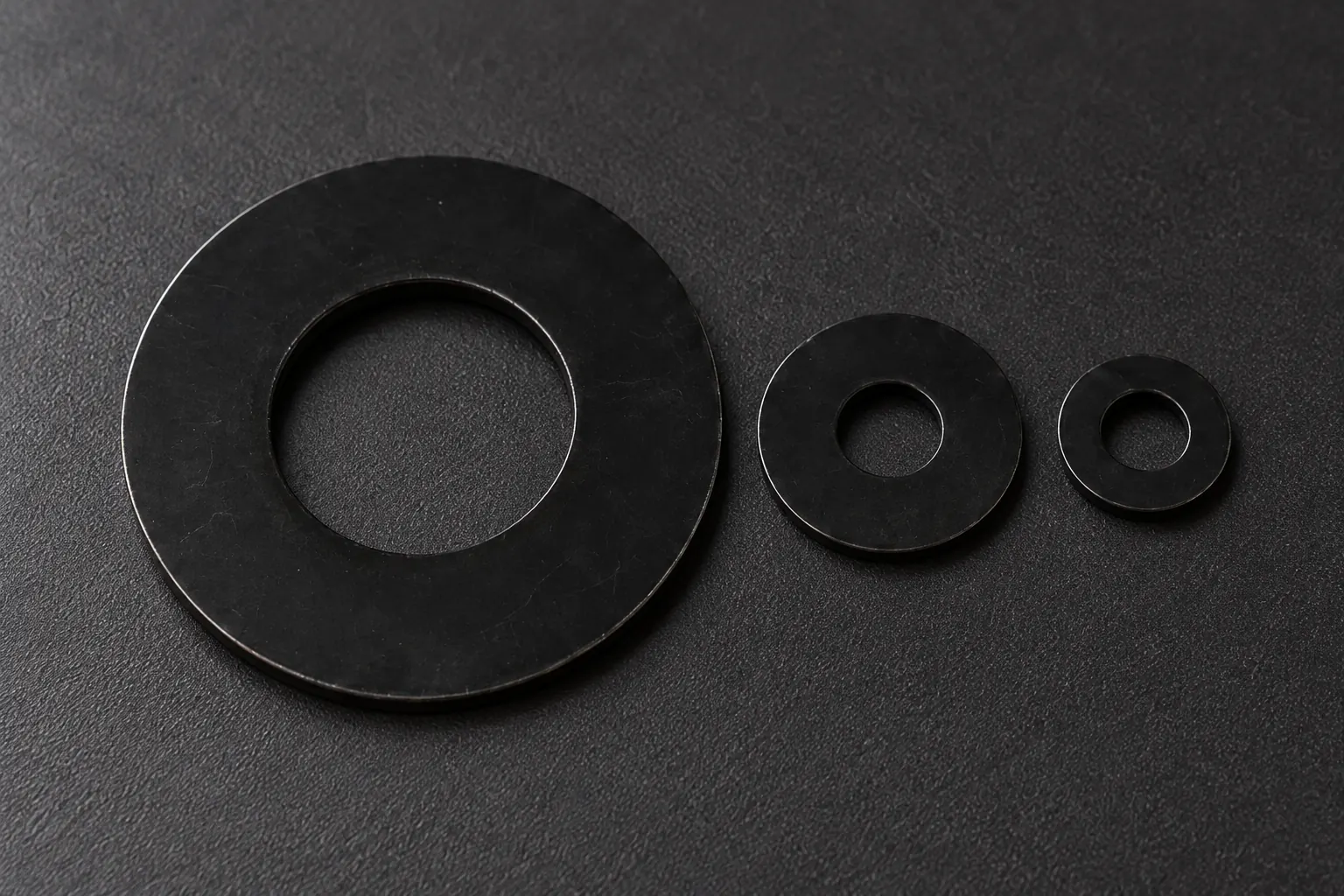
Joint testing should reproduce the mechanism that loses preload
For embedment-sensitive joints, a controlled tighten-settle-recheck sequence may reveal the loss mechanism. For temperature-driven movement, test the expected temperature range and dwell. For vibration, use the relevant customer or application test plan, then inspect for loosening, interface damage, and residual clamp force. No one test method proves every duty cycle; the test must match the failure mode.
Stacking a Belleville washer changes travel and load rather than creating a universal upgrade
Disc springs can be nested in parallel or opposed in series. Parallel nesting increases load capacity at approximately the same deflection per disc when parts are matched and load sharing is controlled. Series stacking increases available travel at approximately the same load per disc. Use the DIN 2092 calculation approach as the starting point for the arrangement; these tendencies are not permission to multiply catalogue values without allowing for tolerances, friction between discs, guides, and end conditions.
| Joint option | Preload-retention role | Best fit | Key design check |
|---|---|---|---|
| Plain hardened washer | Provides a bearing surface; adds negligible elastic travel | Stable, low-settlement joints | Bearing stress and surface finish |
| Single Belleville washer | Adds limited elastic travel and a nonlinear load response | Compact joints with quantified settlement | Working height and residual travel |
| Parallel-nested discs | Raises available load range | Higher axial load with limited movement | Load sharing, guide diameter, flattened height |
| Series-opposed discs | Raises usable deflection range | More movement at a controlled load | Stack alignment, total height, fatigue duty |
| Load driver or arrangement | What to calculate | What to verify on the assembly |
|---|---|---|
| Settlement or embedment | Expected movement and residual clamp load after it occurs | Installed height after initial tightening and recheck |
| Thermal expansion mismatch | Relative axial movement across the service temperature range | Clearance, material stack, and remaining spring travel |
| Parallel disc stack | Load at the chosen deflection for the matched stack | Concentric seating and equal contact faces |
| Series disc stack | Total deflection at the chosen operating load | Guide support and no interference through travel |
As an illustrative calculation, if a single disc’s useful travel at the target load is 0.4 mm, two ideally series-arranged discs may provide about 0.8 mm at roughly that load. That simplification is a starting point only; it is not a release value. A stack of Belleville washers needs the actual curve, tolerances, and assembly friction considered before it enters a drawing.
A Belleville washer specification must separate standards, search language, and supplier claims
DIN 2093 is relevant when a project calls for the standard’s covered disc-spring sizes and technical requirements. DIN 2092 remains relevant to calculation. Where a customer flow-down calls for EN 16983, treat it as a fastener manufacturing quality-system requirement to be assessed in its stated contractual scope; it does not classify a disc spring, replace drawing review, or by itself certify a product lot. Market access and coating requirements can add separate obligations based on destination, material, and declared use.
Ask for the current standard edition, material and surface details, dimensional inspection evidence, load-deflection information at nominated heights, and lot traceability appropriate to the order. Do not write “DIN compliant” in procurement or marketing documents unless the ordered component and supporting evidence are aligned to the claimed scope. For a belleville spring washer, the functional evidence belongs alongside the dimensional callout.
Search language deserves equal discipline. belleville hand car wash describes a local vehicle-cleaning service search, not an alternative name for a disc spring. A buyer who enters “belleville hand car wash” while sourcing bolting hardware should refine the query to dimensions, load, material, and standard. Do not turn a belleville hand car wash result into a parts specification or place it on a purchase order. In web analytics, a belleville hand car wash query should be excluded from engineering keyword lists.
Five selection actions keep the disc spring connected to the joint
- Define the minimum residual clamp load and the movement to be absorbed before choosing a Belleville washer.
- Specify bolt size, grip length, bearing faces, space envelope, and allowable installed height together with the spring.
- Choose single, parallel, or series arrangements from the required load and travel; then check guiding and flat-height clearance.
- State the relevant DIN 2093, DIN 2092, coating, material, inspection, and traceability expectations in the request for quotation.
- Keep the belleville hand car wash query outside the engineering search record; it has no technical equivalence to a disc spring.
For buyers who need DIN-standard or custom fasteners, Eugene can discuss configurable dimensions, drawings, and inspection documentation against the application requirements. That discussion should start with the joint data above, not with an assumption that every conical washer performs the same way.
Frequently Asked Questions
What is a retaining ring used for?
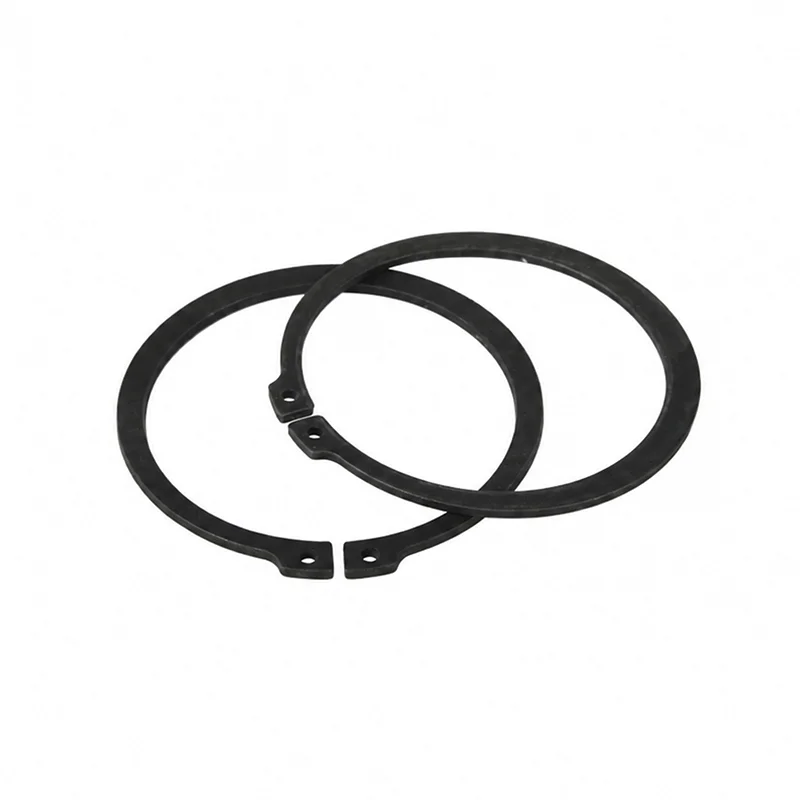
A retaining ring locates a component axially in a groove on a shaft or in a housing. It is related mechanical-retention context, but it is not interchangeable with a Belleville spring washer, which supplies axial spring force in a bolted joint. If both appear in one assembly, verify that each has its own groove or seating feature and load path.
What are the main types of retaining rings?
Common forms include external shaft rings, internal housing rings, E-type rings, and spiral rings. These retain components in position; they do not provide the calibrated preload-management role of a belleville spring washer. Select the ring by groove, shaft or bore size, axial load, installation access, and service environment.
What is an E-type retaining ring?
An E-type retaining ring is a side-installed external ring with an E-shaped opening that seats in a shaft groove. It can be useful where end access is limited, but it remains a retention component rather than a disc-spring substitute. The belleville hand car wash phrase is likewise unrelated to either retaining-ring geometry or bolted-joint spring selection.
What is the difference between an E-clip and a retaining ring?
An E-clip is one type of retaining ring, normally fitted radially onto a shaft groove; “retaining ring” is the broader family term. Neither description identifies a disc spring or the force-deflection behaviour needed for preload retention. Refer to the groove standard and the component drawing before substituting one ring type for another.
Do I need retaining ring pliers to install or remove a retaining ring?
Purpose-made pliers are often appropriate for internal and external circlips because they control expansion or compression during installation and removal. Some E-type rings are installed with dedicated tools or carefully selected hand tools, depending on access and the manufacturer’s instructions. This tooling question concerns mechanical retention; it does not change disc-spring selection.
How do I choose the correct retaining ring pliers?
Match the pliers to internal or external rings, ring size, tip diameter, tip style, access angle, and the expected installation force. Confirm the tool will not overstress the ring or damage the groove. For retaining-ring product context, Eugene’s snap ring overview explains the family distinction without conflating it with a disc spring.
Conclusion: A Belleville washer earns its place by protecting the specified preload.
A good high-load joint is designed around residual clamp load, available movement, and a verifiable assembly process. A Belleville washer can be a disciplined way to add elastic reserve, while a belleville spring washer stack can tune load or travel when its geometry and seating are controlled. A belleville hand car wash listing remains a local-service result, never a component descriptor. The durable principle is simple: specify the joint first, then specify the spring element that can prove its role.
References
- NASA-STD-5020, Requirements for Threaded Fastening Systems in Spaceflight Hardware.
- Smalley, Retaining Ring Selection Guide.
- Industrial Fasteners Institute.
When a purchase decision reaches the point where spring selection intersects with retention hardware, review the entire interface. Explore Eugene’s circlips range for related retaining solutions, or contact Eugene with the drawing, load case, and documentation requirements.