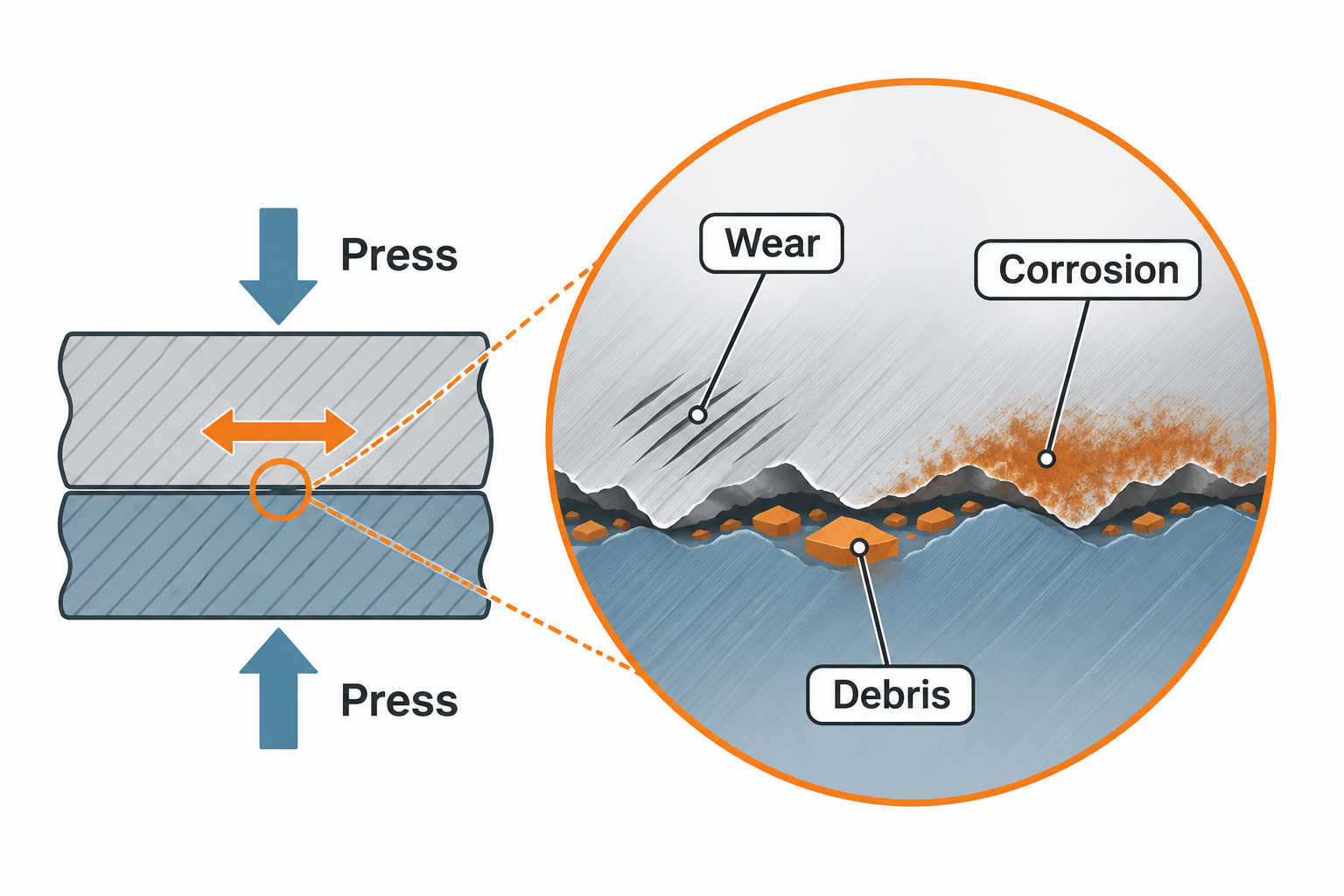
Fretting is damage caused by small, repeated relative movement between contacting surfaces under load. The movement may be difficult to see even when the joint appears stationary. It can produce wear debris, surface damage and, when chemical reactions accompany the wear, fretting corrosion. The useful engineering question is what permits movement at the interface; changing a coating without examining the contact conditions may leave that cause unresolved.
Fretting concerns repeated small movement at a loaded contact. It differs from the large sliding motion that is obvious in many wear mechanisms. A bearing seat, clamped interface or other nominally fixed connection can still experience local movement.
Look at the contacting pair as a system. The surface condition of one component is only part of the evidence. The mating surface, fit, load and operating history help explain where movement occurs and why it continues.
For a suspected case, record the contact location and the direction of any marks before cleaning. A general photograph of a disassembled component may show damage without revealing the assembled interface that produced it.
Fretting wear describes material damage associated with the repeated contact movement. Fretting corrosion adds chemical reaction, commonly oxidation, to that contact damage. Fretting fatigue concerns the influence of the contact damage and stress conditions on fatigue cracking.
These descriptions should not be collapsed into a single visual diagnosis. Debris or discoloration can support an investigation, but it does not establish the complete mechanism. A crack requires additional evaluation beyond identifying a worn or discolored area.
In bearing discussions, also distinguish fretting at a seat from other damage classifications such as false brinelling at rolling contacts. Location and operating conditions matter. Use the relevant component manufacturer’s damage guidance rather than applying one label to every vibration-related mark.
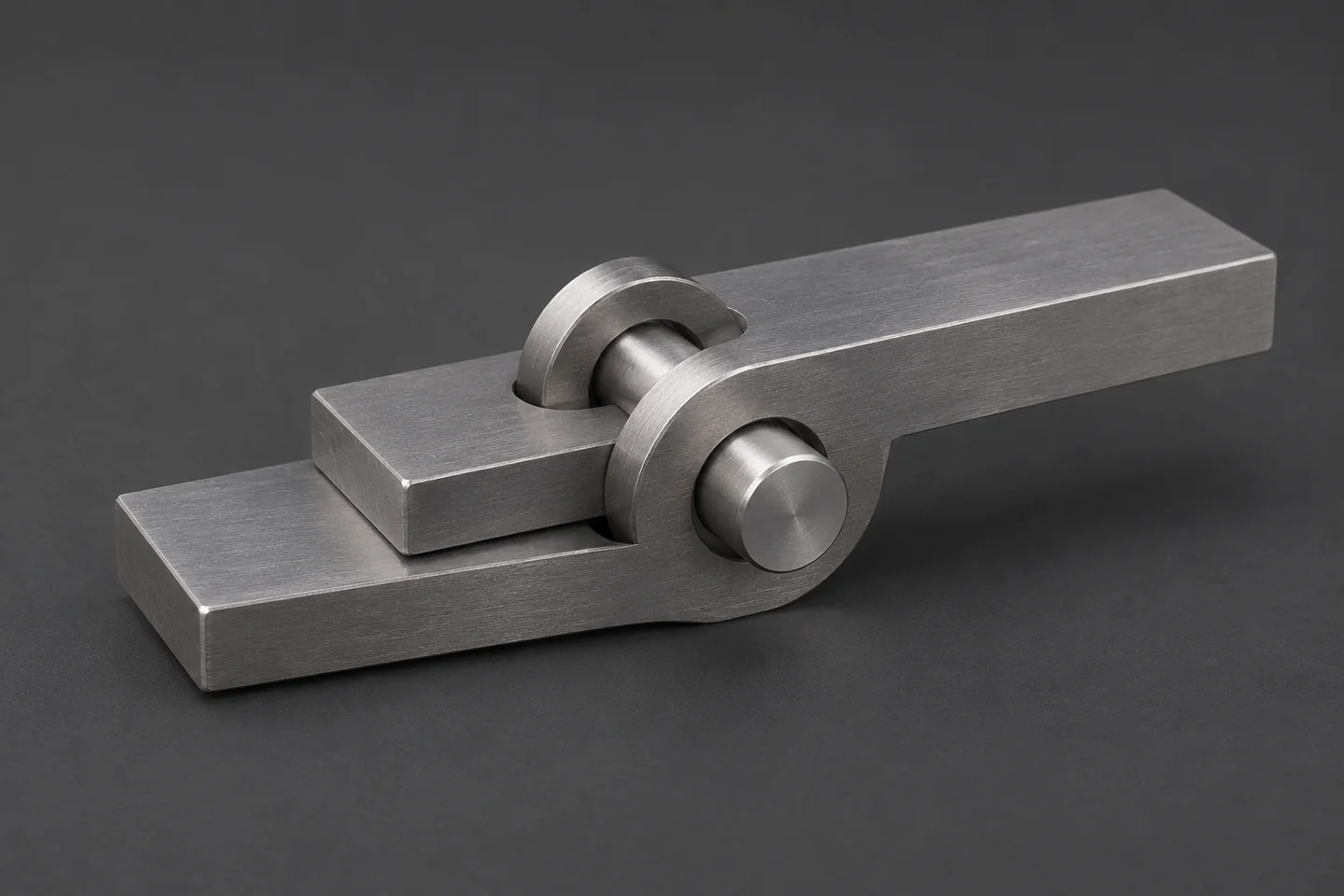
Ask whether the contact was intended to remain fixed, to slide or to allow a limited motion. Compare the damage location with the actual load path and support arrangement. A component can be retained against axial escape while another interface remains free to move locally.
Check the specified fit and the actual assembled condition. SKF’s bearing guidance illustrates that insufficient interference can permit seat movement, while excessive interference creates other stresses. The lesson is to evaluate the correct fit for the application, not simply make every fit tighter.
Also review changes in operation or assembly. Record any differences in load, temperature, mounting method or mating components. Compare the damaged assembly with the controlled design before proposing a material or finish substitution.
A useful corrective-action proposal states the suspected movement mechanism and how the change addresses it. Depending on the actual design, the discussion may involve fit, contact arrangement, assembly control, lubrication or a surface treatment. Each option needs evaluation for the component and environment.
Avoid treating a harder surface, smoother finish or new coating as a universal cure. Ask whether the change reduces the damaging movement, changes contact conditions or merely changes how the damage appears. Check for effects on assembly and service requirements.
Define how the correction will be evaluated. Record the original condition, changed variable and relevant operating or test conditions. An undocumented replacement cannot establish which change affected the result.
Preserve the contact pair where practical and record orientation, batch identity, installation history and the observed damage location. Keep photographs before cleaning and note the operating conditions associated with the problem. Escalate cracks or uncertain failure mechanisms to the responsible engineering investigation.
If the assembly uses an external shaft retaining ring, identify its role separately from the fit of the bearing or sleeve it retains. Confirm the ring and groove requirements, but do not assume that changing the retaining ring will correct movement at a different contact interface.
SKF: bearing-damage classification and analysis; SKF Pulp & Paper Practices: bearing fits and fretting at seats.