 Wenzhou Eugene Technology Co., Ltd.
 When a mechanical engineer in Suzhou, Li Wei, approved a small shaft joint for an automated conveyor, the assembly passed its first bench check. After two hours of vibration, the retaining pin walked out, the sensor bracket shifted, and the line stopped. The visible failure looked like a bad part; the root cause was a hole, pin diameter, and installation process that had never been specified as a system.
Summary: A spring pin holds or locates components by creating controlled radial force as it is compressed in a prepared hole. ISO 8752 distinguishes heavy-duty slotted spring-type straight pins from other pin designs, while DIN 1481 is a related dimensional reference; neither reference is a blanket product certification. Treat pin springs as an interface decision: define the joint load, hole condition, material, environment, and inspection method before choosing a size.
What does a spring pin do in a joint?
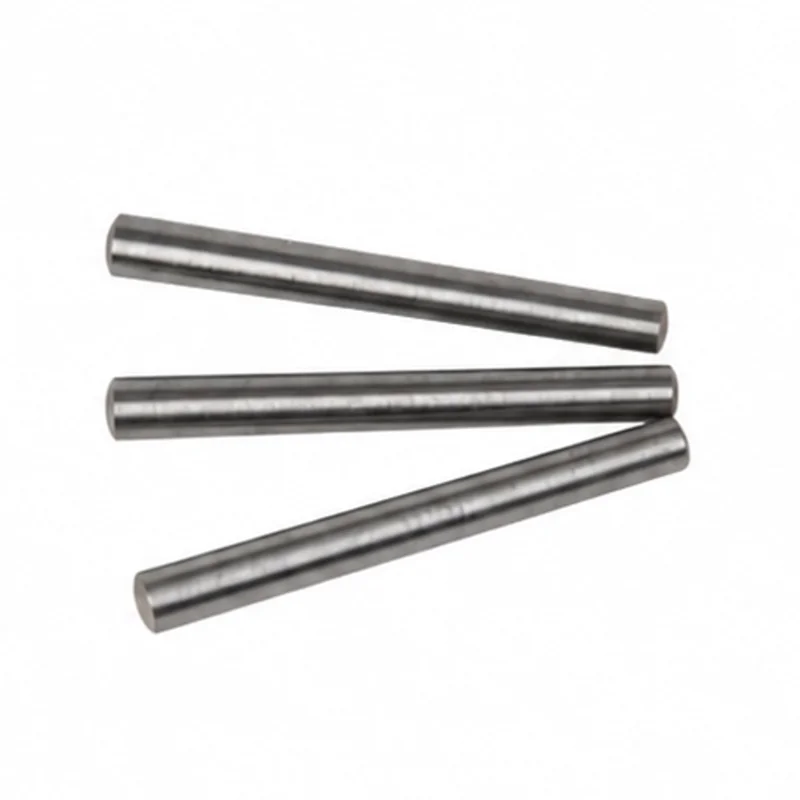
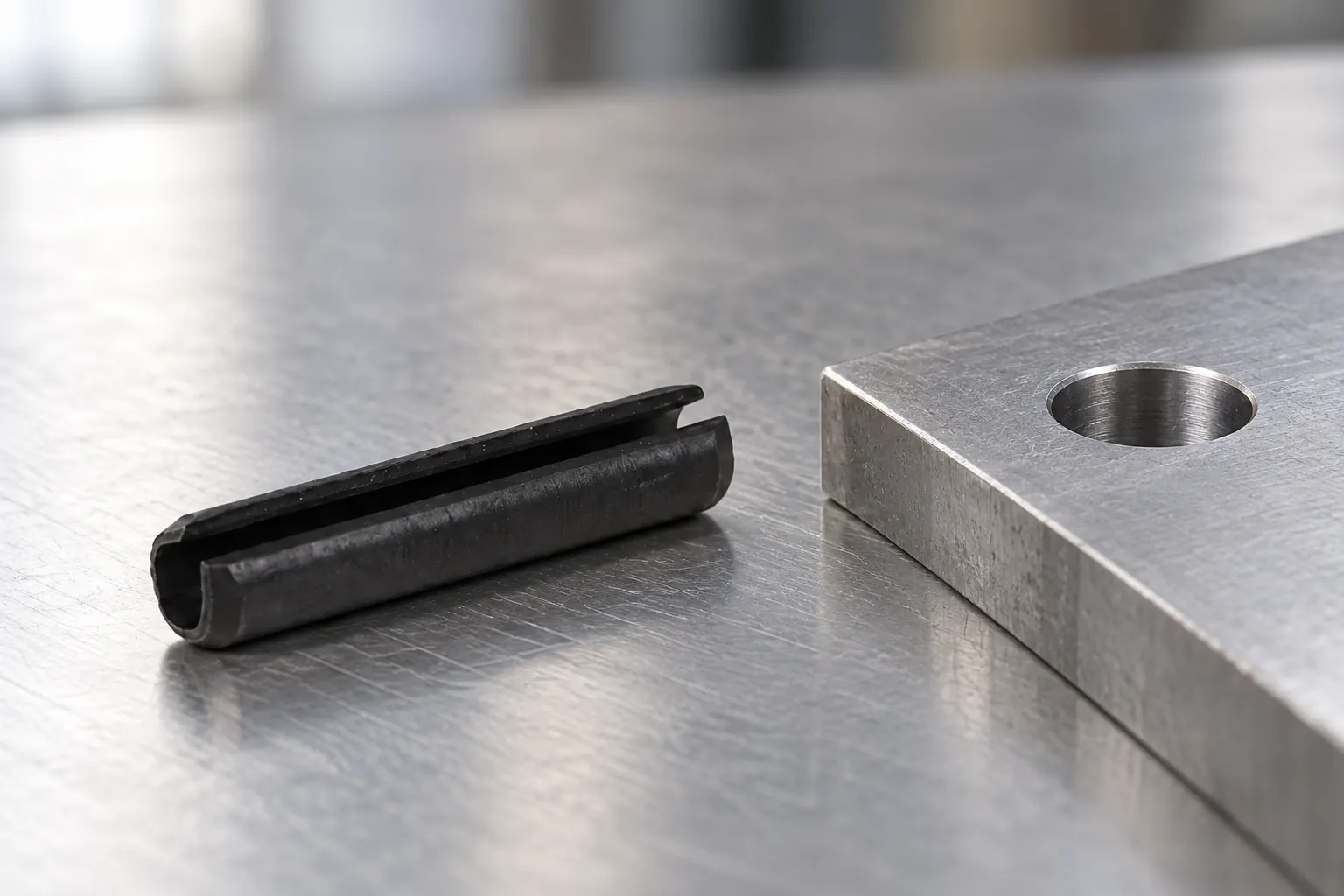
A spring pin is a resilient cylindrical fastener that is intentionally larger than, or otherwise designed to flex within, the receiving hole. During insertion, its cross-section compresses; the resulting outward force creates friction and contact that can retain two or more parts, maintain alignment, or act as a pivot. Unlike a solid dowel, it can accommodate a modest amount of hole variation while still applying preload.
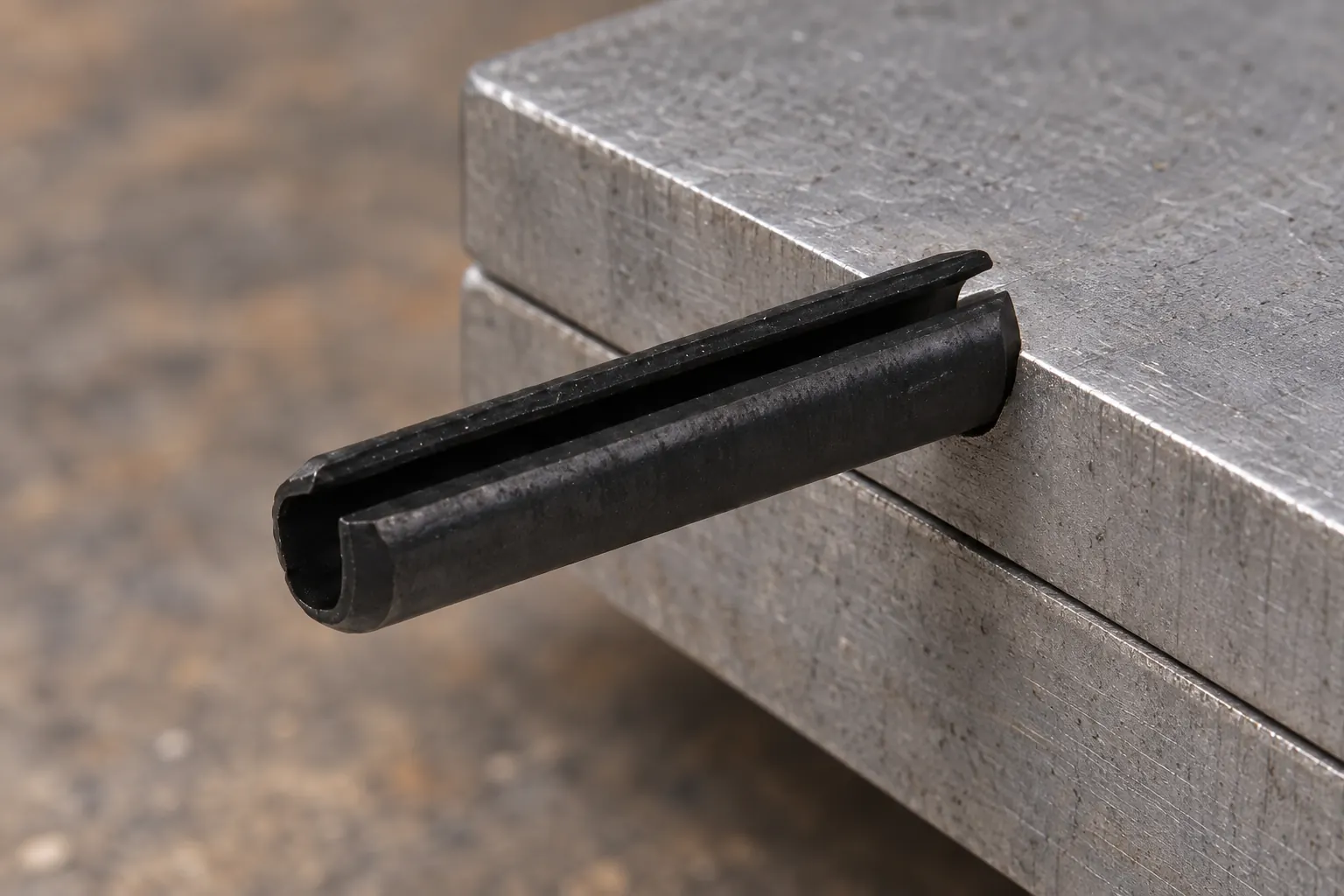
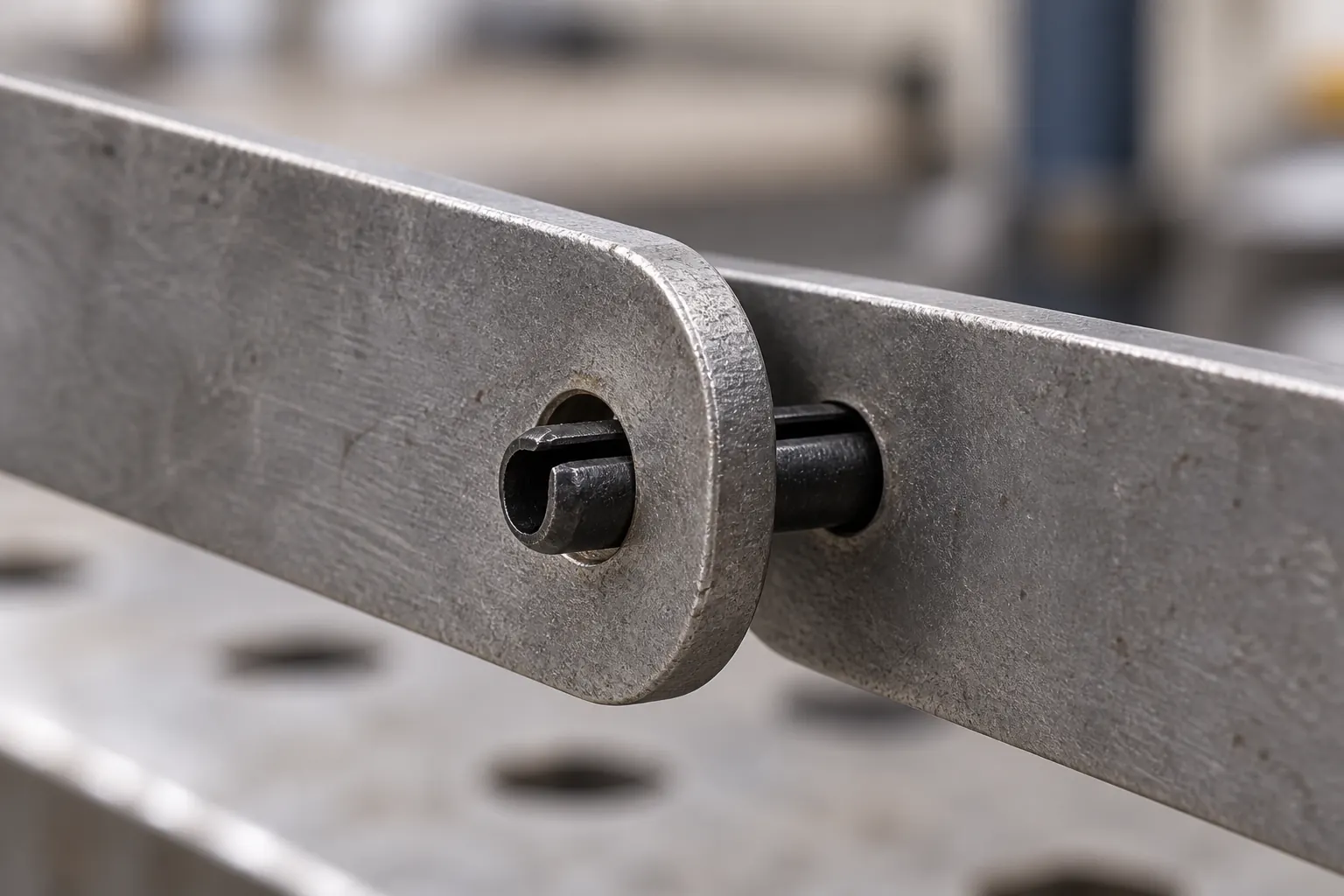
That simple mechanism serves several jobs. It can transmit shear across a bracket, stop a gear or collar from rotating, provide a low-cost hinge pivot, or locate a cover for repeatable assembly. The joint still needs adequate bearing area and edge distance: a compliant pin is not a substitute for a shaft designed to carry bending or a threaded fastener intended to clamp a structural joint.
How do pin springs create holding force?
Most pin springs used in industrial assemblies fall into two broad families. A slotted type has a longitudinal opening that lets the cylinder close during insertion; a coiled type is made from a strip wound into more than one turn, so it can flex with a different balance of radial force, fatigue life, and damping. “Roll pin” is often used for a slotted product, but the terms should be checked against the drawing and standard.
Holding force is not a single catalog number. It changes with outside diameter, free length, hole diameter, material hardness, wall thickness, insertion depth, and whether the joint is subject to vibration. A useful engineering model is to verify three interfaces—pin-to-hole, pin-to-part, and part-to-part—then validate the assembly with a representative retention or vibration test. Record insertion direction and tool condition; an otherwise suitable part can be damaged by overdriving, mushrooming, or misalignment.
For a deeper terminology check, compare Eugene’s guides on what a roll pin is and roll pin versus its alternative. They help teams keep purchasing language consistent when a drawing, supplier quote, and shop-floor instruction use different names.
When do spring pin types change the result?
The right spring pin profile depends on the joint’s dominant risk. Slotted pins are economical and easy to source for general retention; heavy-duty versions are suited to higher shear and vibration when the hole and surrounding material are properly engineered. Coiled pins can offer smoother force distribution and better fatigue behavior in dynamic joints, but their installation tooling and performance specification deserve equal attention.
| Choice | Typical advantage | Watch point | Best procurement evidence |
|---|---|---|---|
| Slotted, light duty | Low unit-cost tendency and simple insertion | Can lose margin in high vibration or soft parent material | Drawing fit, material, and a sample retention test |
| Slotted, heavy duty | Higher radial support for demanding retention | Requires correct hole preparation and adequate edge distance | ISO 8752 size reference plus load and installation records |
| Coiled | Progressive flexibility and good fatigue potential | Usually needs a more deliberate specification and tooling review | Supplier data, cycle test, and defined acceptance criteria |
| Solid dowel or shoulder pin | Precise location and high rigid shear capacity | Less tolerant of hole variation; removal may be harder | Fit class, hardness, and dimensional inspection |
Do not select by diameter alone. For example, a 6 mm nominal pin in a thin aluminum lug may have a different service life from the same nominal pin in a thick steel hub. Material pairing, corrosion protection, temperature, and access for replacement can outweigh a small unit-price difference.
How can procurement teams specify pin springs?
Specification quality is where many pin springs succeed or fail. Put the functional requirement in the drawing or purchase order, not only in a product name. Include nominal diameter and length, pin style, parent materials, hole preparation, insertion tool, coating or corrosion requirement, batch traceability, and the test that determines acceptance.
| Application signal | Selection emphasis | Verification before release |
|---|---|---|
| Static bracket retention | Fit, edge distance, corrosion resistance | Dimensional inspection and pull-out or retention check |
| Vibrating conveyor or motor | Fatigue margin, radial support, anti-rotation | Representative vibration or cycle test |
| Hinge or pivot | Wear, clearance, service access, lubrication | Cycle test and post-test wear measurement |
| Outdoor or washdown equipment | Coating compatibility and galvanic-corrosion control | Environmental exposure plan and coating records |
| Distributor replenishment | Stable standard dimensions and packaging identification | First-article report, lot marking, and reorder controls |
Use the smallest practical set of measurable requirements—often four groups: geometry, material, process, and evidence. If a joint is safety-critical, add a documented failure-mode review and define what happens if a hole is out of tolerance. The total cost includes downtime, sorting, field service, and returns, so a slightly higher-cost component can be economical when it reduces those risks.
How should engineers select a spring pin and confirm compliance?
ISO 8752 is a useful reference for slotted spring-type straight pins, including dimensional and product-design conventions. DIN 1481 is another widely recognized reference for slotted spring pins. These documents help align dimensions and terminology; they do not, by themselves, certify every batch, application, coating, or supplier. Ask which edition and product scope are being used, and require a certificate or inspection record only when it is part of the agreed purchase requirement.
Compliance is destination- and application-dependent. A general industrial joint may need dimensional conformity and material traceability, while an automotive, lifting, medical, or export program may add customer-specific validation, restricted-substance controls, or process audits. Name the method in the control plan: dimensional inspection against the applicable standard, hardness or material verification where specified, and a functional retention, insertion, fatigue, or vibration test representative of service. Avoid marketing “ISO compliant” without stating the exact standard, product scope, and evidence.
Start with the load path and failure consequence, then work toward the catalog item. We recommend that engineers and buyers complete these five actions:
- Define whether the pin locates, retains, pivots, or transmits shear; identify static, shock, and cyclic loads.
- Measure the assembled hole, wall thickness, edge distance, access, and allowable installation force—do not assume a nominal drill size.
- Choose slotted or coiled construction, material, finish, and length for the environment and service life.
- Run a representative fit and function trial, documenting insertion, retention, removal, and any damage after cycling.
- Lock the drawing, lot identification, inspection records, and change-notification rules before production release.
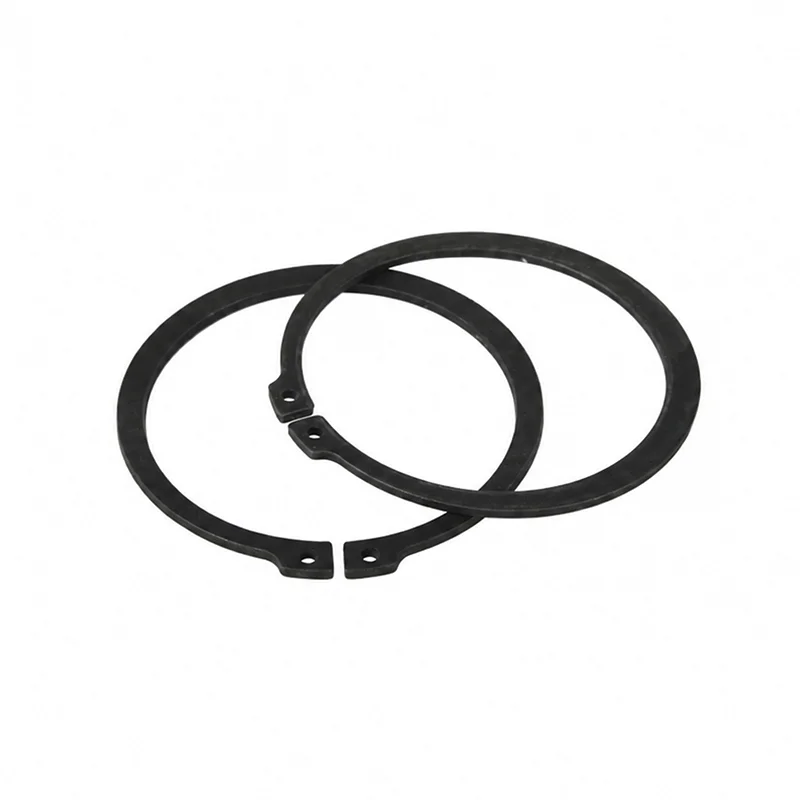
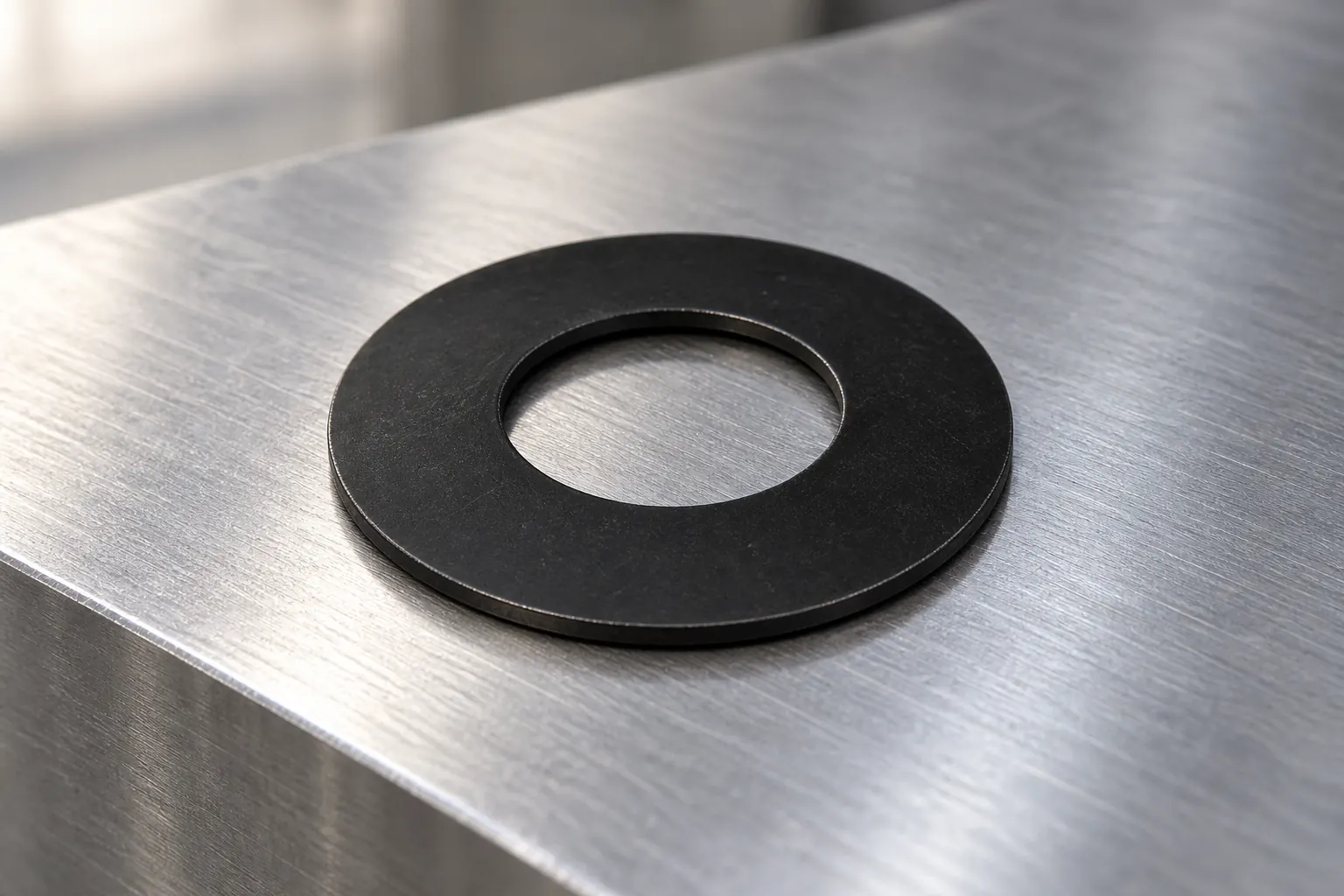
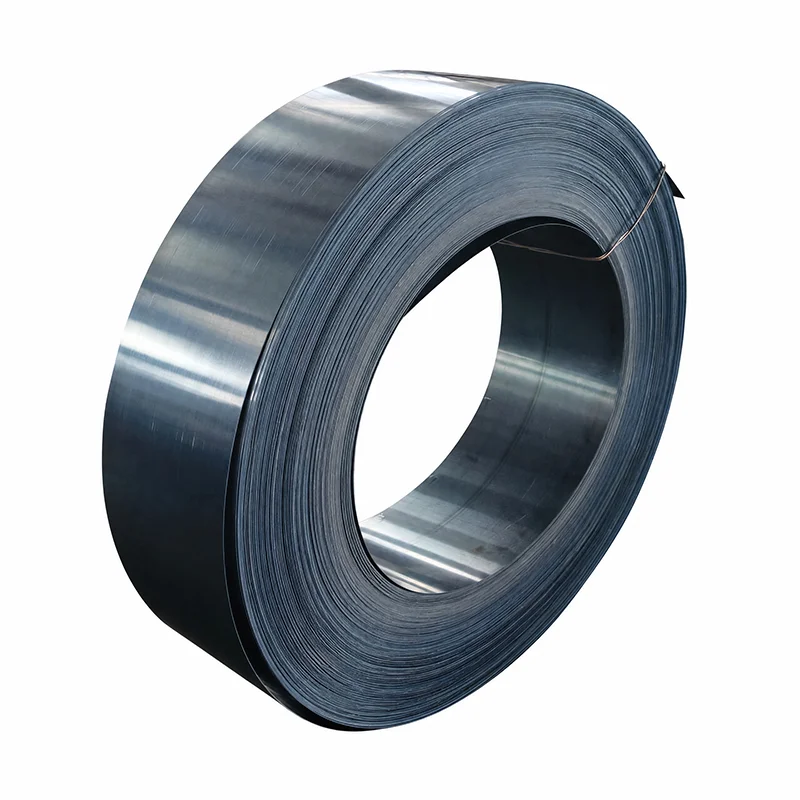
Eugene, the Wenzhou Eugene Technology Co., Ltd. brand, supports precision fastener sourcing across circlips and retaining rings, washers, pins, carbon-steel strip, and custom fasteners. Treat that support as a specification and documentation conversation: share the joint drawing, annual demand, environment, and acceptance test so a configurable part can be assessed against the actual assembly.
What is a spring pin?
A spring pin is a resilient pin that flexes during insertion and exerts radial contact force in a hole. It is used for retention, alignment, pivoting, or moderate shear transfer. The correct size and style still depend on hole geometry, parent material, load, and environment.
What are spring pins also called?
Common names include roll pin and tension pin; coiled designs are sometimes sold under a separate trade description, although these names are not always interchangeable. “Pin springs” can be an informal purchasing phrase rather than the exact standard designation. Match the supplier description to the drawing, applicable standard, and cross-section before approving an equivalent.
How does a spring pin work?
During insertion, the pin’s resilient section compresses and then pushes against the hole wall. That radial force creates friction and support, while the material’s springback helps it accommodate controlled variation. A spring pin works reliably only when insertion is aligned and the surrounding parts can carry the resulting bearing and shear loads.
What are spring pins used for?
Typical uses include holding gears or collars on shafts, retaining brackets and covers, locating subassemblies, and forming pivots in equipment. Pin springs are especially useful where a compact, removable joint is preferable to threads or welding. For high-cycle or safety-critical uses, specify and validate fatigue, vibration, corrosion, and service access rather than relying on the name alone.
How should pin springs be inspected after installation?
Check seating, protrusion, part alignment, and evidence of mushrooming or splitting; then perform the defined retention or functional test on a representative sample. Record the lot, tooling, hole condition, and test result. Pin springs that pass a visual check can still be unsuitable if the joint loses preload during vibration or thermal cycling.
Which spring pin references support selection and compliance?
- ISO 8752, Slotted spring-type straight pins—heavy duty, ISO catalogue reference.
- SPIROL spring pins technical library, design and application guidance.
- SPIROL installation of spring pins, installation guidance.
- NASA Fastener Design Manual, NASA Technical Reports Server.
The dependable pin is the one whose spring force, hole, material, and evidence agree on the same job. For help reviewing a retaining-ring or pin interface, explore Eugene’s ISO 8752 slotted-pin guide, then contact Eugene about precision circlips and custom fastener sourcing for your next production release.