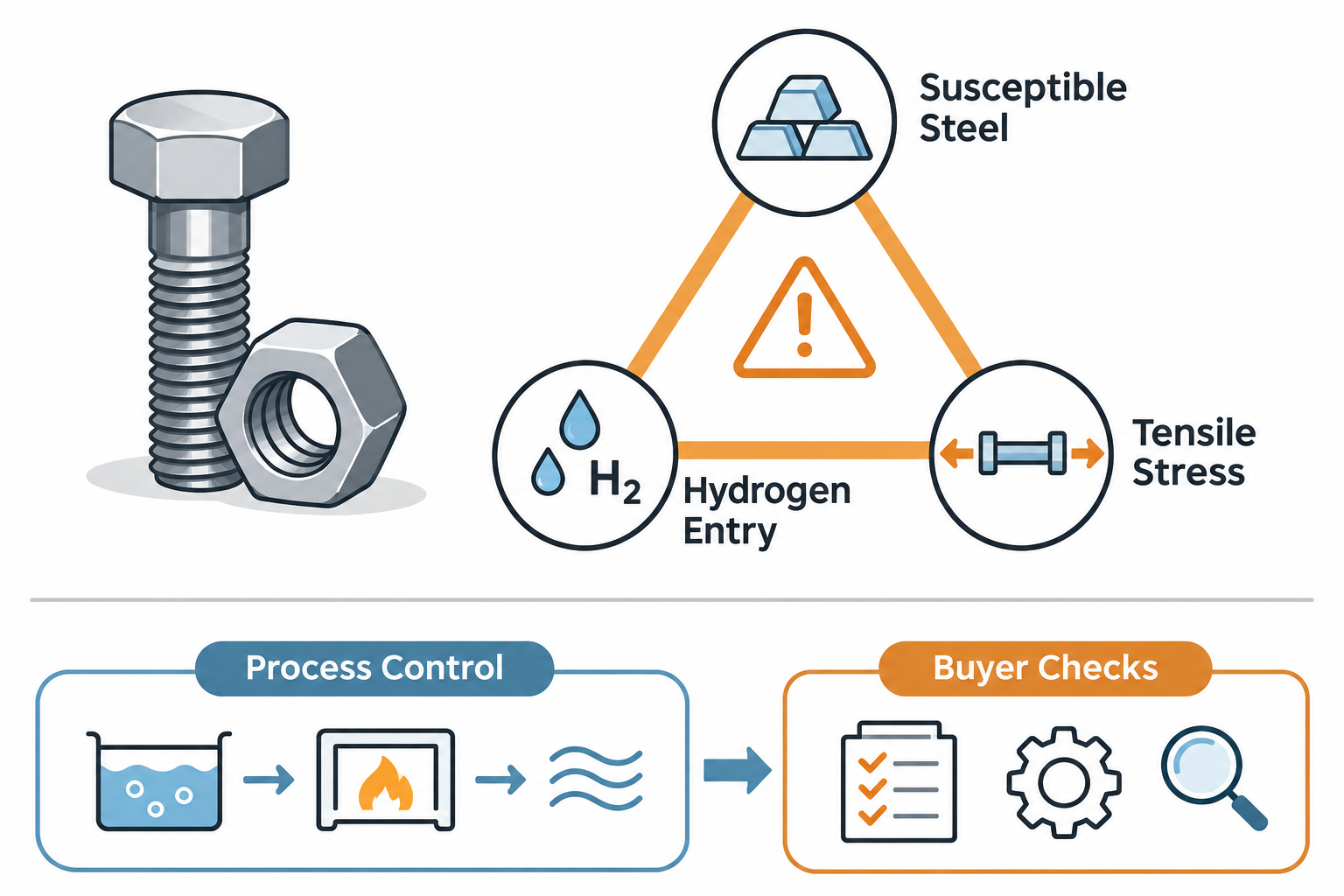
Hydrogen embrittlement can occur when hydrogen enters a susceptible metal under tensile stress, reducing its ability to deform and carry load. High-strength steel fasteners require particular attention because cracking can develop after manufacture or installation. Buyers should review the material condition, hydrogen-producing operations, specified prevention controls and acceptance evidence together. A coating name or a statement that parts were baked is not a complete risk assessment.
The concern is a combination of material susceptibility, hydrogen and tensile stress. A part can suffer brittle cracking under conditions where a simple comparison with its nominal strength would not explain the failure. The loading history and processing history therefore matter.
Susceptibility is not identical for all steels or all supplied conditions. Review the specified grade, strength or hardness condition and application with the responsible engineer. Do not apply a universal safe threshold from an unrelated product or process.
A delayed fracture is a reason to investigate, not proof of a single mechanism. Fracture appearance, batch records, material condition, loading and environment need to be considered together. A photograph alone cannot establish the cause.
Hydrogen exposure can arise in manufacturing and service. Acid cleaning and certain electrochemical operations deserve attention in a fastener process review. Service conditions that generate hydrogen at the metal surface create a different exposure path that also needs assessment.
Map the actual route rather than treating the final finish as the whole process. Ask which cleaning, preparation, coating and post-treatment operations are used and which are subcontracted. A non-electrolytic final coating does not by itself describe every earlier preparation step.
Connect the route to the supplied material condition. The same finish description can accompany different grades and strengths. A meaningful risk discussion identifies the actual combination instead of classifying an entire finish family as universally safe or unsafe.
Specify the component and coating requirements before processing. The supplier and responsible technical team should evaluate the treatment route for the material’s susceptibility, including preparation steps that can introduce hydrogen. A last-minute instruction to “bake if needed” leaves important decisions unresolved.
For electroplated fasteners, ISO 4042 addresses coating systems and includes requirements and recommendations for minimizing hydrogen embrittlement risk. Confirm the applicable edition, amendments, product scope and customer requirements in the order. Do not extend its scope automatically to every coating or service environment.
Keep a controlled route with the accepted specification. If the processor, preparation or coating route changes, ask how the change affects the agreed controls and required approval evidence.
A specified thermal treatment can allow hydrogen to escape under appropriate conditions. Its relevance depends on the material and process. Do not copy a general temperature-and-time recipe into an order without the applicable technical basis.
A baking record documents an operation; it is not proof of zero residual risk. Likewise, an acceptance test establishes evidence under that test’s conditions. Identify the method, sample basis, acceptance criteria and records required by the governing specification.
Separate corrosion testing from embrittlement evaluation. A corrosion result does not establish the component’s resistance to hydrogen-assisted cracking. Both may matter to the purchase, but they answer different questions and require their own acceptance basis.
Request traceability for the material batch, supplied condition, treatment route, subcontracted processing and required test records. If cracking occurs, preserve failed and unfailed samples, identify affected batches and involve the responsible failure-analysis and design personnel before deciding on reuse or reprocessing.
For drawing-based steel fasteners, use Eugene’s custom fastener inquiry to state the material condition, finish and applicable process-control requirements. Ask for order-specific confirmation of the proposed route and evidence. These requirements should be resolved before production approval, especially where a finish change is proposed.
AMPP: hydrogen embrittlement fundamentals; TWI: causes and prevention principles; ISO: ISO 4042 electroplated coating-system scope.