The ferrous vs non‑ferrous distinction starts with the base metal. Ferrous metals are iron-based materials, including carbon steel, alloy steel, stainless steel and cast iron. Non-ferrous engineering families include aluminum, copper and titanium alloys. This classification identifies the base material family; it does not establish a complete property specification. Magnetism, corrosion resistance, strength and suitability for a spring or fastener must be evaluated for the actual grade and supplied condition.
Use the material designation to identify the family. “Ferrous” does not mean pure iron, and “non-ferrous” should not be interpreted as a laboratory guarantee of absolutely no trace iron. The engineering distinction concerns the base material.
Stainless steel remains ferrous because it is an iron-based alloy. Its corrosion-related behavior does not move it into the non-ferrous category. Likewise, a surface coating does not change the underlying steel into a different base-metal family.
This distinction is useful for organizing material choices, but it is only the first level. Once the application is defined, move to a grade and product specification rather than ordering a component by family alone.
| Family | Examples | What the family name leaves unresolved |
|---|---|---|
| Ferrous steels | Carbon steel, alloy steel, stainless steel | Grade, processing condition and required properties |
| Ferrous cast materials | Cast-iron families | Specific material type and acceptance requirements |
| Non-ferrous aluminum materials | Aluminum and aluminum alloys | Alloy, temper and product form |
| Non-ferrous copper materials | Copper, brass and bronze families | Composition, condition and application-specific requirements |
| Other non-ferrous families | Titanium and its alloys | Grade, condition and required evidence |
The examples illustrate classification, not a ranking of quality. Each family contains materials with different properties. A broad family comparison cannot determine which grade is appropriate for a particular drawing or operating condition.
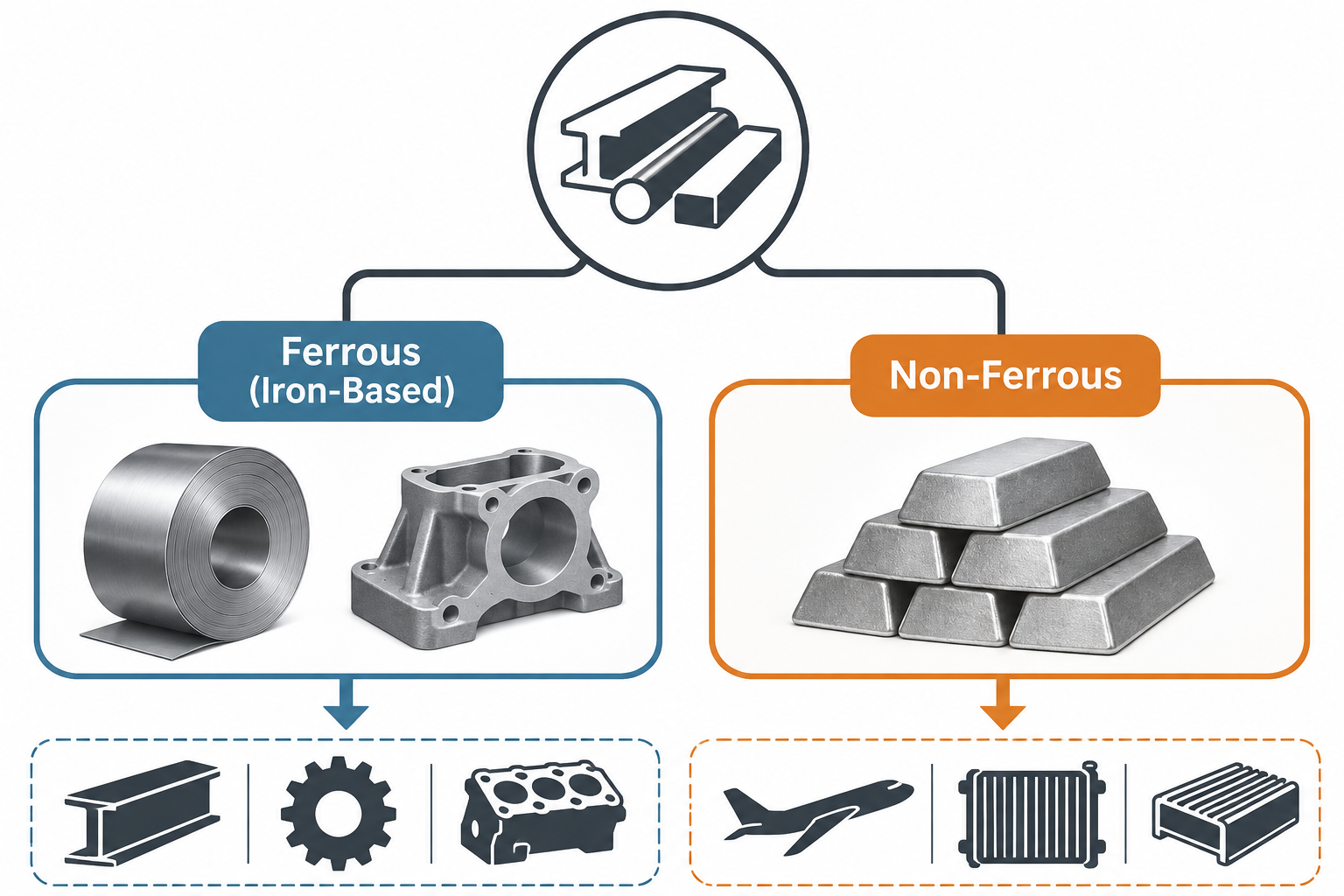
A magnet is not a complete alloy-identification method. Austenitic stainless steels provide an important exception to the assumption that every ferrous material must respond strongly to a magnet. Their magnetic response can also be affected by condition and processing.
Corrosion behavior is another separate question. “Ferrous” does not mean that every grade behaves like unprotected carbon steel, while “non-ferrous” does not mean immune to environmental attack. Evaluate the actual material, surface condition and exposure.
For purchasing, use the specified grade and required material evidence. A visual appearance or a simple magnetic check may help an investigation, but neither should silently replace the agreed identification and acceptance requirements.
Define the operating and manufacturing task first. Identify load, required deformation, environment, joining or forming operations and any interfaces with other materials. Then compare candidate grades and conditions against those requirements.
Keep the comparison consistent. A material in an annealed condition should not be compared with another in a hardened condition without recognizing that difference. Product form and processing route can also affect which requirements need to be specified.
State acceptance evidence with the grade. Where chemistry, hardness, tensile properties or a functional test matter, define the required document or test basis. The family name alone cannot establish an allowable load, corrosion life or component durability.
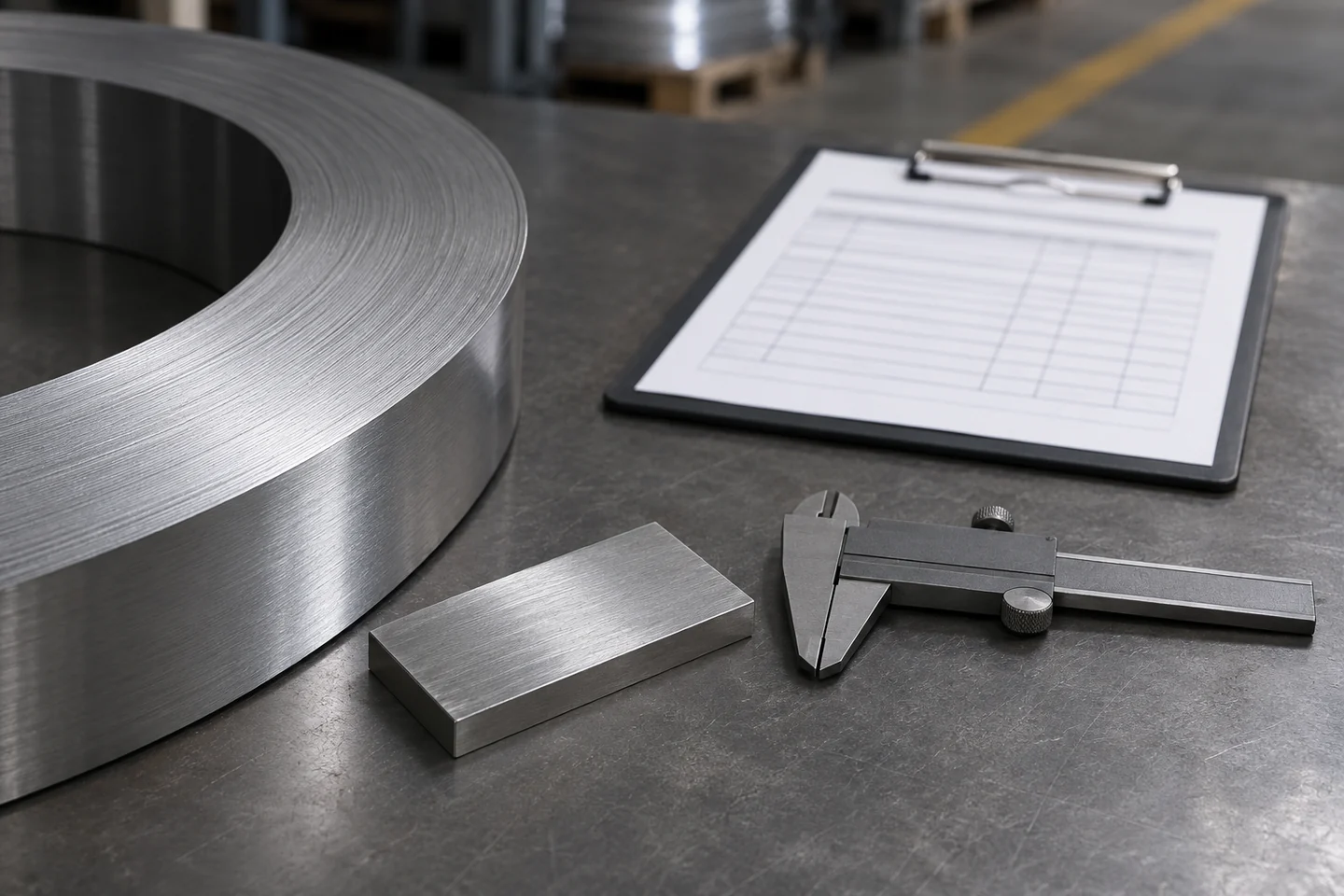
Spring steel belongs to the ferrous category, but that does not complete a strip order. Specify the grade, delivery condition, dimensions, tolerances, edge and surface requirements. Describe the forming sequence and final component requirements where they affect material selection.
Eugene lists heat-treated spring-steel strip. Use the relevant material inquiry to confirm the supplied condition and order-specific evidence. Treat a proposed change to a different alloy family as an engineering evaluation, not a substitution justified by a general ferrous/non-ferrous comparison.
TWI: ferrous and non-ferrous metal families and property exceptions.