A blackening coating gives a metal part a dark surface, but the color does not identify the treatment. On ferrous steel, hot black oxide is a conversion process that forms a magnetite surface layer. The final condition also depends on cleaning, post-treatment oil or sealant, handling and packaging. Specify the process and its acceptance requirements rather than ordering a part simply as “black.”
Blackening is a broad purchasing term. A drawing, supplier quotation and approved sample can all use that word while referring to different processes. Identify the substrate and ask the processor to name the treatment. A steel process should not be assumed suitable for stainless steel, aluminum or another material without confirmation.
Hot black oxide on suitable ferrous substrates chemically converts the surface. It is different from applying a black paint film. That distinction matters when the part has a locating diameter, a thread or a functional contact surface: the finished part still has to meet the drawing. “Thin coating” is not a substitute for confirming the final dimension and inspection stage.
Compare the specified treatment, not photographs of the color. Several finishes can appear dark, and oil can change their apparent shade or gloss. A visual reference helps appearance acceptance, but it cannot establish the underlying chemistry.
| Description | Distinguishing requirement | Order information |
|---|---|---|
| Black oxide | A conversion treatment for the stated substrate | Process, post-treatment and finished-part checks |
| Phosphating | A separate treatment family, even if the part looks dark | Required phosphate process and oil or sealing condition |
| Black paint or applied coating | An applied coating system | Coating identification, preparation, masking and coverage |
Do not accept one as a replacement for another merely because the samples look similar. Resolve a proposed substitution before sample approval or purchase-order release.
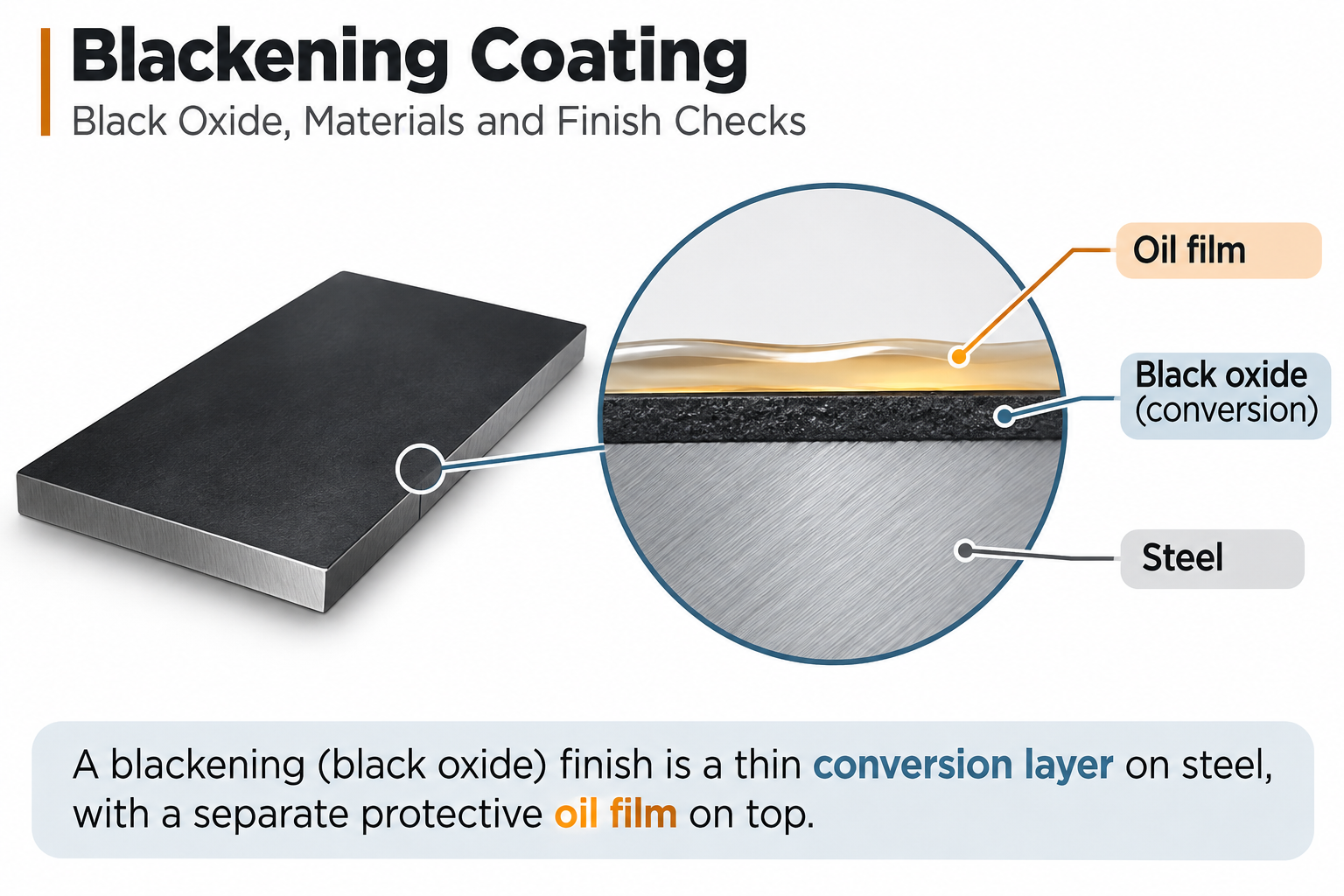
Post-treatment oil contributes to black oxide corrosion protection. It is part of the supplied condition, not an incidental detail. Ask whether the shipment will be oiled, how excess oil is controlled and whether the oil is compatible with the next assembly or cleaning operation.
A black surface alone does not establish a corrosion-test result or storage life. If corrosion resistance is an acceptance requirement, define the test method, specimen condition, evaluation criteria and required documentation. Keep the test requirement separate from appearance.
Also describe the logistics. A finish selected for a dry assembly environment still needs a transport and storage plan. Agree how parts will be protected between treatment, packing, receipt and use, particularly when the buyer plans to degrease them before installation.
Approve appearance and function as separate checks. For appearance, define viewing conditions and acceptable variation using an agreed sample or written criteria. For function, identify surfaces that control fit, movement or contact and state whether they are inspected after treatment.
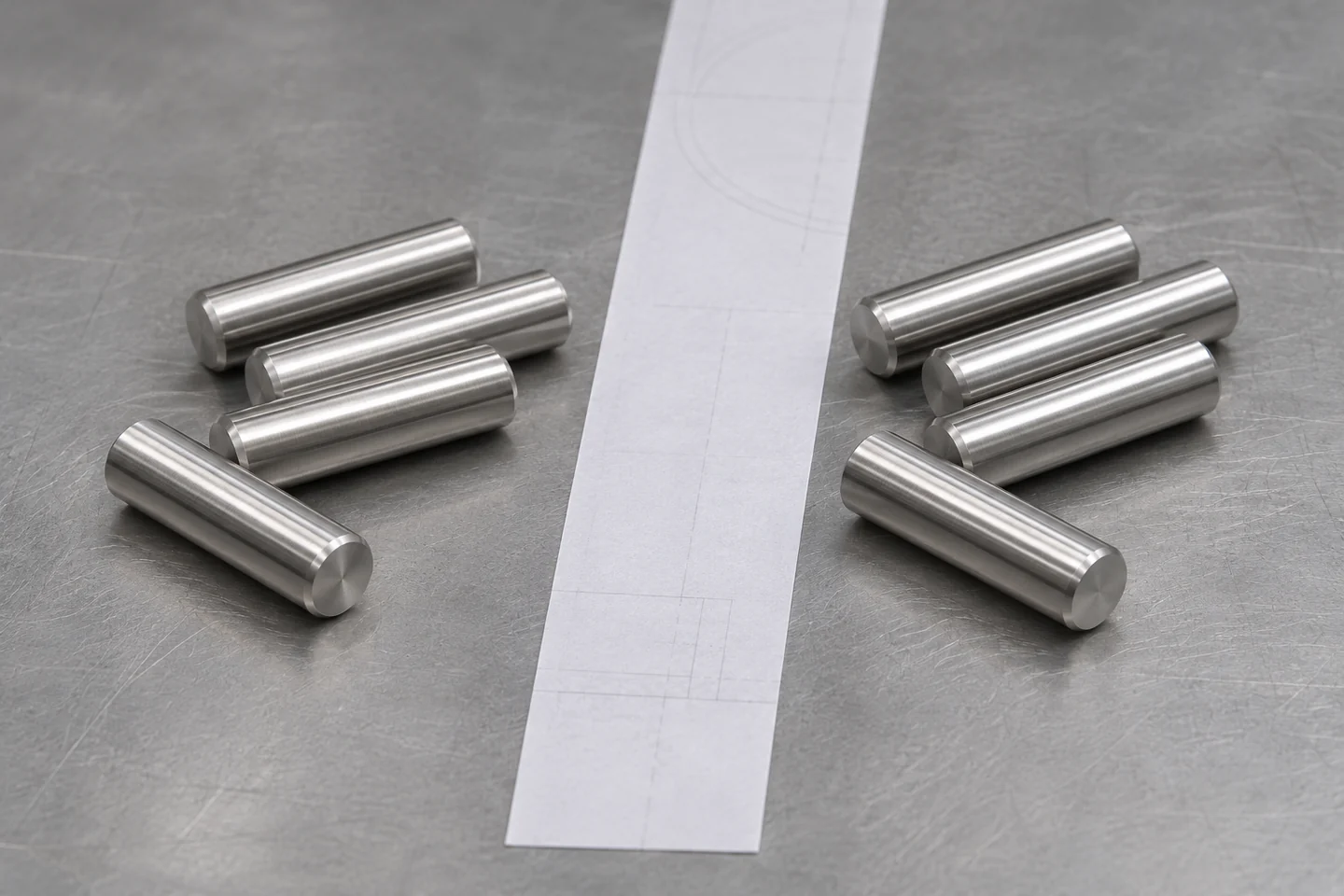
For a spring pin, a dark finish does not establish that the pin and mating hole are a suitable combination. Geometry, hole requirements, material condition and installation method remain part of the assembly decision. Evaluate those requirements alongside the finish.
When a batch differs from the approved sample, record its identity and observed condition before deciding on rework. Ask whether the difference concerns shade, oil, contamination, coverage or a functional characteristic. These are different problems and should not share an automatic disposition.
Include the drawing revision, material grade, required blackening process, post-treatment condition, functional surfaces and inspection requirements in the RFQ. Add the sample-approval arrangement and packaging needs. If a particular specification applies, give its identifier and edition and ask the supplier to confirm the applicable scope.
For a component specified as a slotted spring pin, Eugene lists a black-oxide slotted spring pin. Use that product route to discuss the actual drawing and finish requirement. Confirm an alternative treatment in the quotation rather than inferring it from a photograph.
Coating Technologies: black oxide process and post-treatment oil.