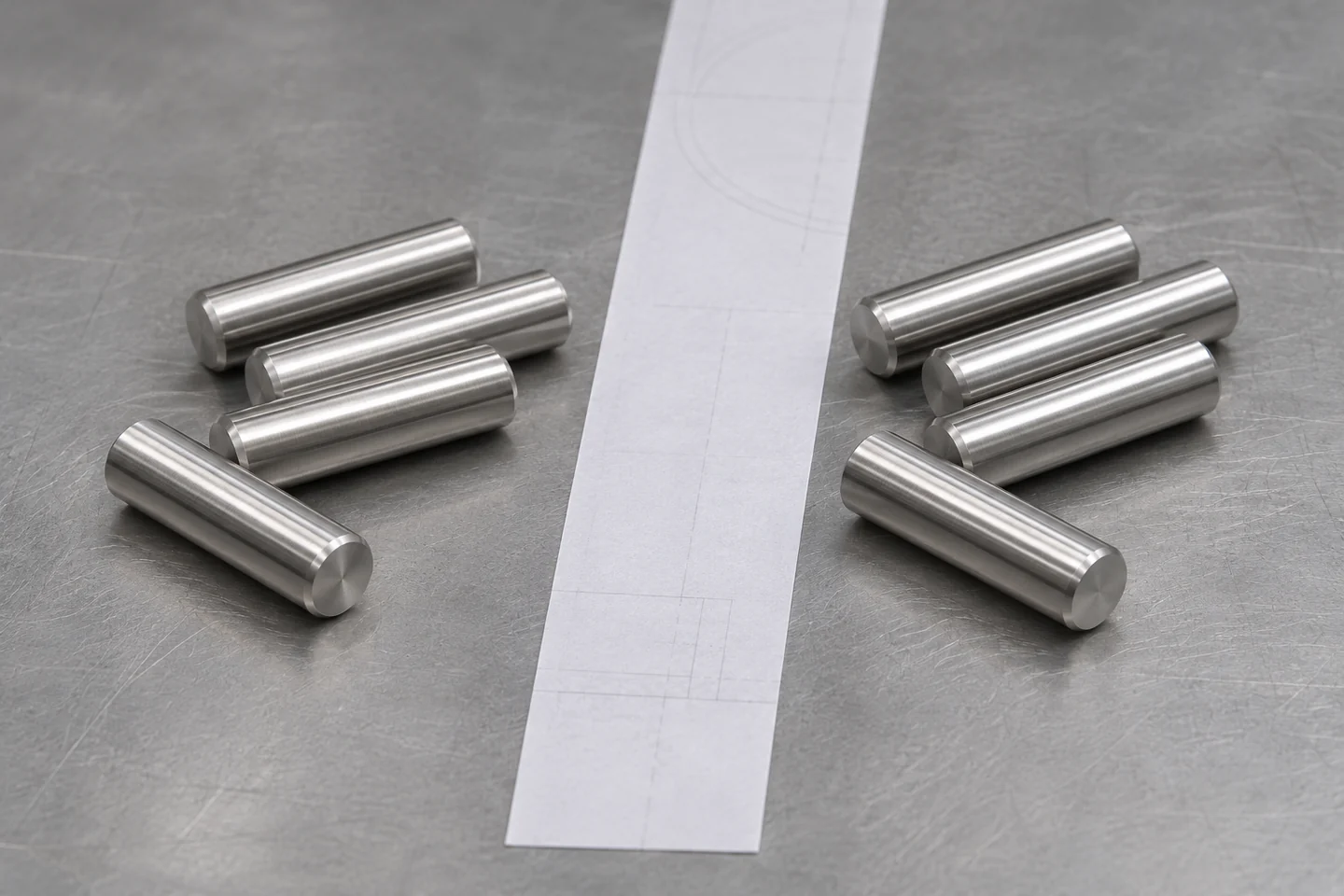
Contract manufacturing means assigning defined production work to an external manufacturer under an agreement. The work may cover a single operation, finished components or a broader production package. The buyer still needs to define the product requirements and allocate responsibilities for design, materials, inspection and changes. Outsourcing production does not automatically transfer every product or supply-chain responsibility to the manufacturer.
The practical question is what the manufacturer is being contracted to deliver. A machining operation on buyer-supplied blanks is different from supplying finished, inspected and packaged components from purchased raw material. Both can be outsourced, but their interfaces and quotation scope differ.
Keep this execution scope separate from design ownership. OEM and ODM terminology may describe the design starting point; contract manufacturing describes an arrangement for performing production work. A project can involve both discussions without either label settling the other.
Write the scope in deliverables. Identify the part or operation, controlled requirements, quantity arrangement and required evidence. This gives the supplier a concrete basis for feasibility review and makes omissions visible before an order is placed.
Assign responsibility for material procurement, tooling, manufacturing, outside processing, inspection, packaging and shipment. For each handoff, identify what information or physical item is supplied, who accepts it and how a nonconformance is handled.
Buyer-supplied material requires an agreed receiving and traceability arrangement. Supplier-purchased material requires an agreed specification and evidence basis. Neither arrangement should leave material identity implicit.
Also define who controls subcontracted operations. If heat treatment or finishing is performed elsewhere, ask who approves that source and obtains the required records. A single commercial contact can coordinate the work, but the production route still needs identifiable responsibility and evidence.
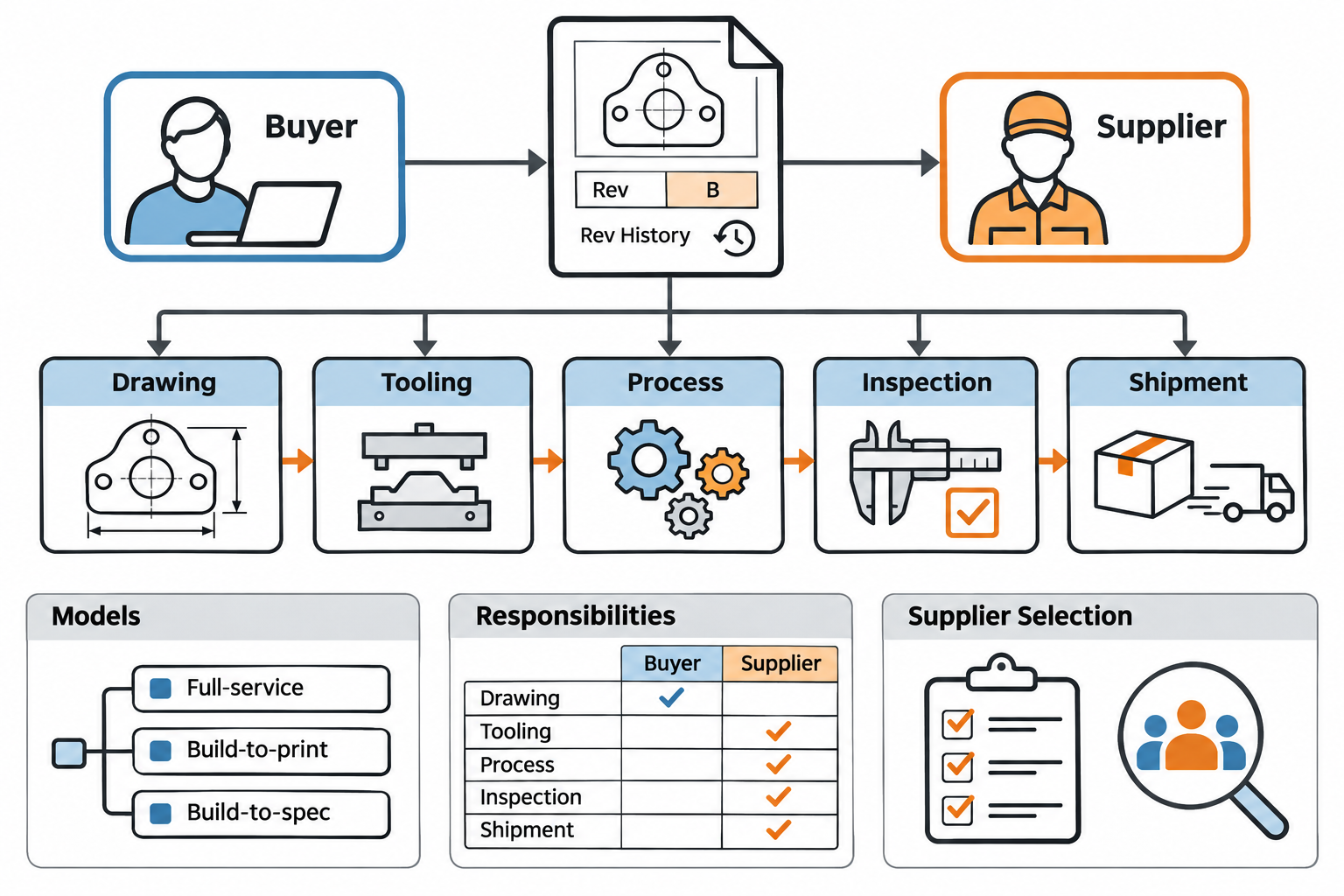
Evaluate the supplier against the part and required production route. Ask how critical dimensions are produced, when the final condition is established and how those characteristics will be inspected. Request relevant evidence instead of relying only on a list of machines.
Use a representative sample or trial where it resolves a real uncertainty. Define the requirements and evidence before the trial, then record the material, process and inspection basis. A sample made by an exceptional route may not demonstrate the proposed production arrangement.
Distinguish claimed capability from verified scope. If a certification or customer-specific approval is necessary, request the current document and check the relevant organization, site and scope. Do not infer approval from a logo or a general statement about quality.
Supply a controlled drawing revision and identify how updates are communicated. Agree which document takes priority if the drawing, model, quotation and order conflict. Resolve deviations before the supplier releases production.
Define changes that require notice or approval: design, material, tool, process, production site or subcontractor. Ask how the supplier prevents an unapproved change from entering repeat orders. Keep the accepted baseline accessible to both purchasing and quality personnel.
Set a clear route for nonconforming material. Identify who records the issue, who can authorize a deviation and what evidence supports rework or replacement. A commercial delivery discussion should not silently override an unresolved engineering acceptance question.
Compare the same delivered scope: material, tooling, operations, inspection documents, packaging, quantity commitment and logistics terms. Separate nonrecurring development charges from recurring unit price. Ask what assumptions the quotation makes about forecasts, release quantities and design stability.
Eugene’s drawing-based custom fastener service describes a route from drawing confirmation through samples and production to delivery. For a specific project, send the drawing and required evidence and ask the quotation to confirm responsibilities and exclusions. Capacity, lead time and commercial commitments should be established for that order rather than inferred from a general service description.