What does OEM stand for? The abbreviation means Original Equipment Manufacturer. In an industrial supply chain, the term can describe a company making components or subsystems that another company integrates into its equipment. For a buyer, the useful next question is which company makes the part, which specification controls it and who approves its use in the finished assembly.
The abbreviation alone cannot answer those purchasing questions. A retaining ring, washer or locating pin may pass through a component manufacturer, an equipment builder and a distributor before reaching the person who orders a replacement. Understanding their separate roles makes an OEM offer easier to evaluate.
The full form is Original Equipment Manufacturer, but a useful definition needs a product context. Ask whether the conversation concerns a finished machine, a component supplied for that machine or a replacement offered against its parts list. Then name the organisations involved rather than relying on the abbreviation throughout the enquiry.
IBM’s definition describes OEMs producing components or subsystems for integration into another company’s product. That establishes a basic manufacturing relationship. It does not establish that every business using the label follows the same design, production or distribution arrangement.
In a purchasing document, replace a vague phrase such as “OEM supplier” with the responsibility you need confirmed. For example: “The quoted company will manufacture the retaining ring to the attached drawing revision.” If a different plant or subcontractor will perform an operation, record that separately. The purpose is to understand the offer, rather than to assign a reassuring label.
Also distinguish a description from an approval. A supplier may describe its business as OEM manufacturing while still needing to review your material, finish, geometry and inspection requirements. That description is a starting point for discussion; it is not an acceptance of an unseen drawing.
Separate manufacture, integration, distribution and design responsibility before comparing suppliers. The same company may perform several roles, but they should not be assumed to travel together.
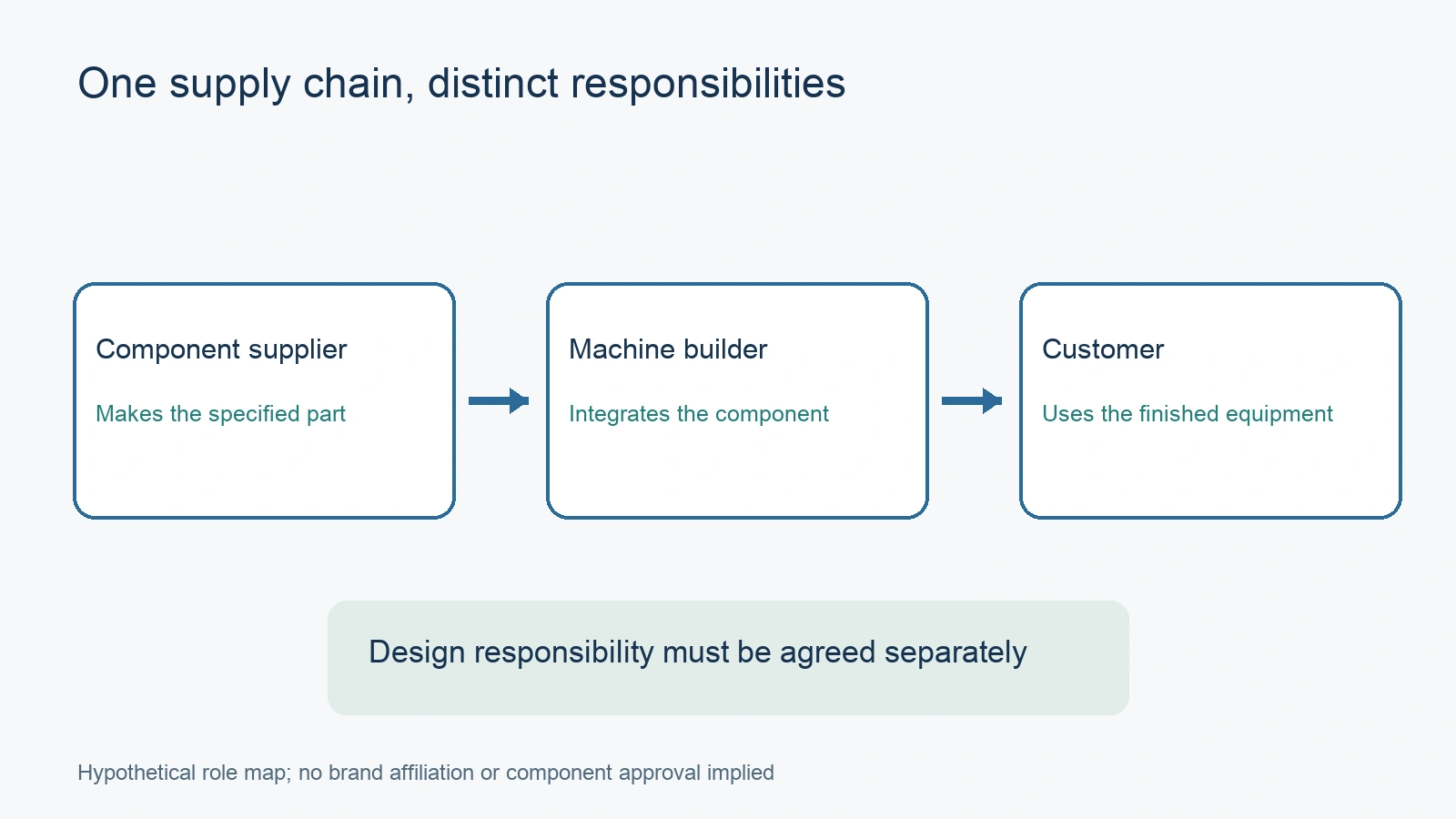
Consider a hypothetical machine builder that buys retaining rings for an assembly. A component supplier makes the rings. The machine builder selects the component for its assembly and sells the finished equipment. A distributor may later supply a service replacement. These are different transactions involving the same general component family.
The component manufacturer can explain what it proposes to make and the production or inspection scope included in its quotation. The equipment builder can identify the application requirement and the part reference used in its equipment documentation. The distributor can explain the product offered, its purchasing source and the documents available with it.
Design responsibility needs a separate question. A buyer might supply a complete controlled drawing, select a standard component or ask for a proposed design. Those starting points create different questions for technical review. Before placing an order, identify who can approve the specification and any requested deviation.
Keep these names visible in the quotation review. If the sales contact answers a drawing question on behalf of a factory, ask whose technical confirmation is being provided. If a distributor offers a replacement, ask which identified item will actually be supplied.
Evaluate the identified item and its evidence before accepting a commercial label. An offer described as OEM, genuine, original, equivalent or aftermarket still needs a precise product reference and an explanation of the claim being made.
If the purchase requires a part from a specified equipment brand or an approved supply channel, ask the seller to identify that source. Do not infer authorisation from familiar packaging, a similar catalogue image or the OEM abbreviation in a listing. Record the evidence required by your own purchasing rules.
If the offer is an alternative component, identify the comparison basis. A shared nominal description does not resolve material condition, dimensional requirements, finish or the function of the part in the assembly. Ask which requirements were compared and which remain unconfirmed.
This distinction is particularly useful when moving from spare-parts buying to drawing-based manufacture. Reproducing an object from a sample and supplying a documented replacement reference are different proposals. A manufacturing quotation should identify the agreed specification; a replacement quotation should identify the offered item and the application information used to select it.
For an actual replacement decision, refer unresolved application questions to the person responsible for the equipment specification. Avoid converting a seller’s description into your own compatibility statement.
Begin with the controlled requirement rather than the word OEM. Suppose a buyer needs a retaining ring for a machine assembly and receives two proposals: a standard catalogue item and a ring made to the buyer’s drawing. This is an illustrative purchasing situation, not a claim about a particular product’s suitability.
For the catalogue item, the buyer needs an identifiable product designation and the relevant published specification. The engineer can then check the component against the assembly requirements. A photograph of a similar ring does not close that review.
For the drawing-controlled item, the buyer needs a quotation against a named drawing revision. Material, finish, critical characteristics and any required inspection records belong in that review. If the manufacturer proposes an alternative, keep it visible as an alternative until the authorised person accepts it.
Now add a distributor to the example. The distributor may offer a useful route to a standard item, while the manufacturer may offer a useful route to a drawing-based component. The correct route depends on the purchasing requirement, not on which quotation uses OEM more prominently.
Keep the sample decision equally specific. A sample from stock may help explain appearance or product type; it should not silently become evidence for a different drawing, material or finished condition. State what the sample is intended to demonstrate and which documents should accompany it.
Use the label to open the right questions, then resolve them with documents or technical confirmation. The table below is an original enquiry aid; it is not a certification scheme or a ranking of suppliers.
| Question left open | Useful clarification |
|---|---|
| Which item will be supplied? | A controlled drawing revision or an exact catalogue/part reference. |
| Who makes it? | The proposed manufacturing entity and site, with relevant outside operations identified. |
| Who can change the specification? | The named technical approval route for drawing changes and deviations. |
| How will acceptance be supported? | Agreed inspection records and any required assembly evaluation. |
| What does the commercial offer include? | Clear treatment of samples, tooling, packaging and the named delivery basis. |
Do not use the abbreviation as evidence of a quality-system certificate, a guaranteed lead time or a particular production capacity. Where one of those matters to the order, ask for the relevant current evidence and check that it covers the proposed entity, site and scope.
The same principle applies to ownership. An OEM description does not give the buyer a complete statement about drawings or dedicated tooling. Put the intended arrangement into the parties’ agreed terms and keep technical approval separate from assumptions about the business model.
Choose the enquiry route from the requirement you actually have. For a replacement purchase, begin with the exact part reference, equipment identification and the evidence needed to verify the offered item. For new component manufacture, begin with the controlled specification and the questions that require supplier review.
A useful drawing-based enquiry identifies the component, drawing revision, material, finish and requested quantity. Explain whether you need feasibility feedback, samples or a production quotation. Mark open technical points so they do not disappear inside a general request for an OEM price.
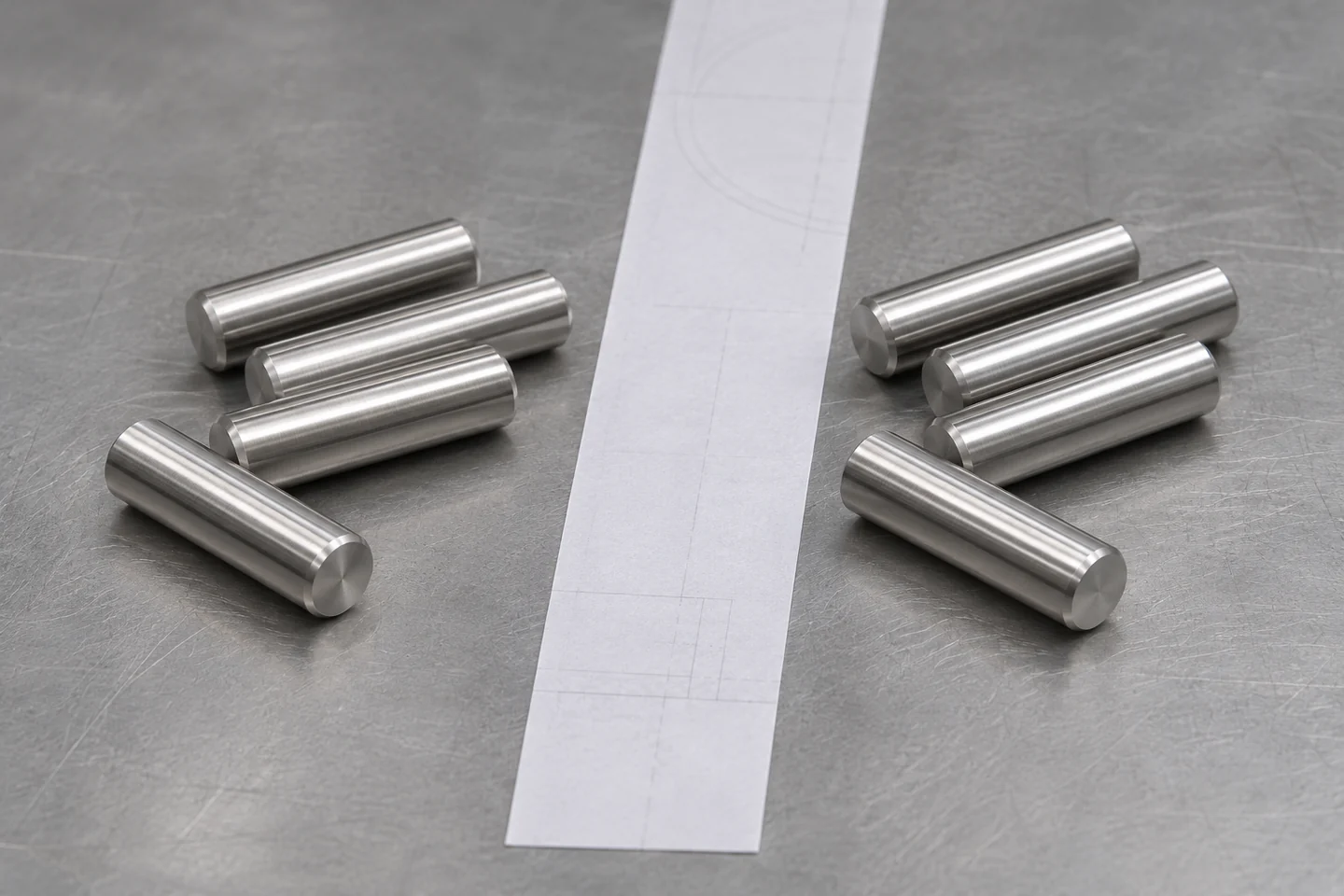
For example, an enquiry for a custom pin can identify the drawing as the quotation baseline and request a written response to an unresolved finish note. That invites a technically meaningful answer. It also makes clear that the supplier’s ability to quote is still being evaluated.
Eugene’s OEM and ODM service page provides the next step for enquiries within its retaining-ring, washer, pin and non-standard fastener scope. Send the requirement and identify what needs confirmation. Use the response to establish the proposed item and responsibilities before discussing an order.
When someone asks what OEM means, the short answer is Original Equipment Manufacturer. When an order depends on that answer, extend it into named companies, an identifiable component and an agreed acceptance basis.