Stainless steel can rust or develop brown staining when its material, surface and exposure conditions do not work together. A stain may come from contamination on the surface, while localized corrosion can damage the stainless component itself. Appearance alone does not establish which mechanism is present or whether the part remains suitable for service.
Buyers asking “does stainless steel rust” need a practical way to assess that difference. Record the grade, location, exposure and observed damage before changing material or cleaning away the evidence. For rings, pins and other small components, the working surface and installed detail can matter as much as the appearance of the exposed face.
Stainless steel resists corrosion through a protective passive film. Outokumpu explains that the environment, surface condition, fabrication and design all affect that protection. Stainless therefore should not be treated as a material that remains unchanged in every liquid, cleaning process or outdoor installation.
Begin with the condition in which the component is actually used. A dry indoor sample and a part that remains wet inside an assembly do not represent the same exposure. A photograph of the sample’s bright surface gives little information about the installed contact area.
Separate three questions when reviewing a complaint. What is the observed discoloration or damage? What material and condition were ordered? What happened to the component between manufacture and inspection? Keeping those questions distinct helps identify missing information without assuming a cause too early.
A useful first report might say that brown marks appeared around a covered contact after washdown, while uncovered areas remained visually unchanged. That describes a location and sequence. Calling the whole lot “rusty stainless” loses the details that could help distinguish handling contamination, retained deposits and attack of the component.
Also separate appearance requirements from functional acceptance. A visible stain may be unacceptable for the product’s intended appearance even when no relevant section loss has been established. Conversely, a small damaged region can require attention if it affects a working edge or locating surface. The drawing and application determine what needs to be checked.
The review should end with evidence that supports a disposition, rather than only a new explanation for the color. Decide who can evaluate the affected function, what records are missing and which inspection is needed before the parts can be accepted, reworked or replaced.
Brown discoloration is an observation, not a complete diagnosis. BSSA identifies foreign-iron contamination as a source of rust staining on stainless surfaces. ASSDA also distinguishes tea staining, a particular cosmetic corrosion issue, from other causes of discoloration. Neither description permits an unexamined damaged part to be declared harmless.
Record what is visible before assigning a mechanism. Note whether the mark lies on an exposed face, beneath a deposit, at a contact or around a working edge. Describe whether the surface appears intact or contains a depression. A photograph can document that appearance, but it cannot establish the depth or material identity of a feature on its own.
| Observation | Question to investigate | Conclusion to avoid |
|---|---|---|
| Brown mark on an otherwise smooth face | Is there contamination, staining or underlying attack? | Color proves the supplied grade is wrong |
| A visible cavity or damaged edge | Does inspection show relevant damage to the part? | A small mark is necessarily cosmetic |
| Marks concentrated under a contact | What is retained there and how does the detail drain? | The exposed face represents the entire assembly |
| Marks appearing after handling | What tools, surfaces and materials contacted the lot? | The original material must be the only cause |
Use this table to guide information collection. It is not an identification test for corrosion mechanisms. If acceptance depends on the condition of a groove, spring section or fitted surface, obtain an inspection that addresses that feature and its permitted condition.
Preserve an affected sample where investigation is needed. Cleaning every part immediately can remove useful information about the original location and deposits. Agree which samples remain untouched, which can be examined further and how they will stay connected to the delivery and assembly records.
For communication, label photographs consistently and include an unaffected comparison from the same relevant condition when available. Avoid comparing an installed component with an unrelated unused sample unless the difference in history is clearly stated. The goal is a traceable comparison, not a dramatic before-and-after image.
Exposure includes the liquid or atmosphere, temperature, duration, deposits and opportunities to drain or dry. Asking only whether a component contacts water leaves much of that environment undefined. This is particularly important when the observed condition exists inside a joint or beneath another part.
Collect the actual exposure information available from the process owner. Identify the water source, cleaning products and operating sequence. Record concentrations and temperatures only when they are known from process records; do not replace missing data with an estimate that later appears to be a measured specification.
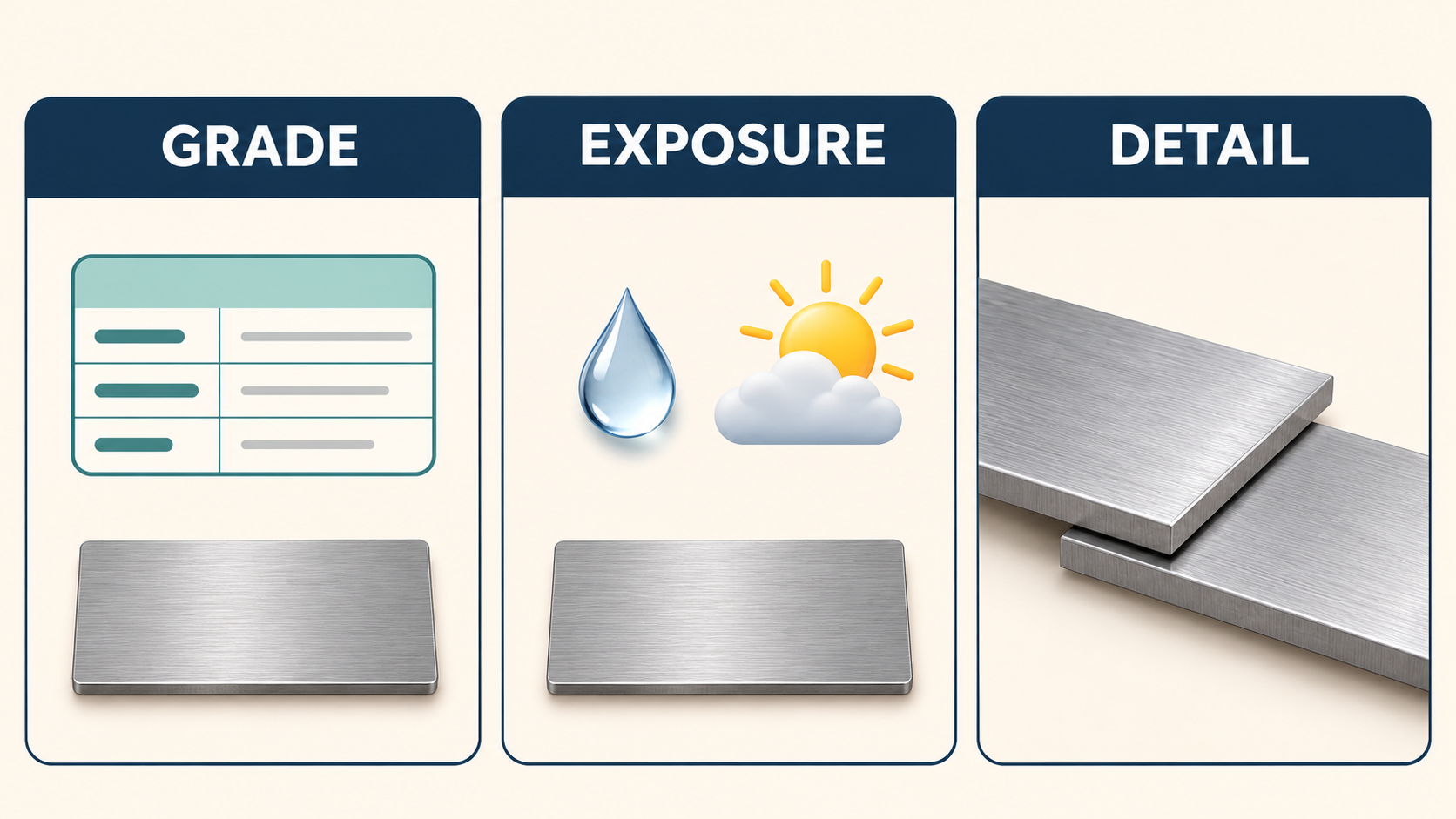
Chloride-containing environments can promote localized corrosion, but a generic chloride number is not a universal acceptance limit for stainless steel. The material, temperature and local conditions still matter. Avoid importing a threshold from another installation simply because both systems use a component described as stainless.
For an outdoor installation, document which surfaces receive rain and which remain sheltered. ASSDA’s coastal guidance explains why deposits, drainage and sheltered details affect staining behavior. A maintenance record should therefore identify the actual component location, not only the site’s general distance from the sea.
For a washdown assembly, describe the full sequence from cleaning to storage or operation. Note whether the part is inspected immediately, after a drying period or after repeated service. An observation at one stage may not represent the condition encountered at another.
Where several exposure inputs are unknown, state that clearly in the enquiry. A useful response can then identify what needs confirmation before material selection proceeds. An unsupported assurance that a grade “works with water” offers much less practical value than a bounded assessment of the recorded service conditions.
Material selection should address the documented environment and mechanical duty together. A more corrosion-resistant option for one exposure does not automatically preserve the component’s required strength, spring behavior, dimensions or manufacturing condition. Treat a proposed change as an engineering review.
Start by checking the actual ordered designation and available lot documentation. If the supplied material does not match the purchase requirement, resolve that identity issue directly. If it does match, investigate whether the original requirement adequately describes the application before concluding that the supplier selected the wrong material.
Separate grade identity from the explanation for a stain. A material document can support traceability, but it does not show every event during handling or service. Likewise, a stained sample does not establish its chemical composition. Each item of evidence should answer the question it can actually address.
A hypothetical buyer might request a replacement ring in a different stainless grade after seeing marks around an installed contact. Before accepting that change, the drawing owner should review the contact detail, exposure and required mechanical condition. Otherwise the replacement may address an assumed material weakness while leaving the original environment unchanged.
Ask a proposed supplier to identify the material and condition being offered, any departure from the drawing, and the basis for the proposed selection. A broad product category is not a commitment to a particular grade or corrosion performance. Keep any special qualification or verification requirement explicit in the order.
Do not use a magnet as a shortcut to the answer. Magnetic response and corrosion suitability are different material questions. A component can attract a magnet and still belong to a stainless family. Material selection for the complaint requires the relevant documentation and service assessment, rather than a single screening observation.
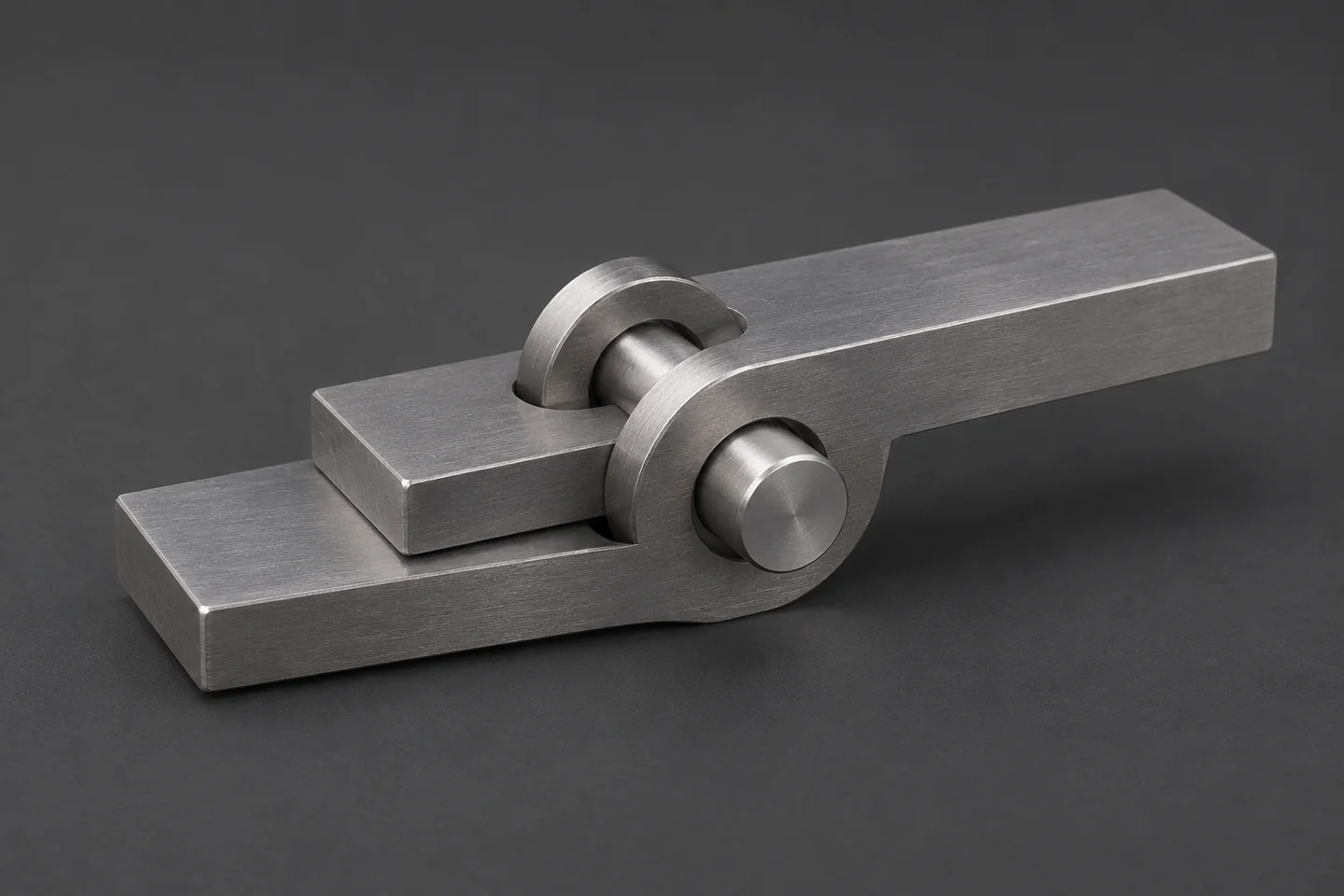
The local installed detail can create conditions that differ from the surrounding exposed surface. Outokumpu and BSSA describe crevice corrosion as associated with confined regions; deposits can also create restricted local conditions. A ring or pin should therefore be reviewed in its assembly context.
Show the mating detail when reporting a complaint. Include the groove, bore, shoulder or covered contact as appropriate. Mark the position where the discoloration appears and explain whether that region is normally accessible for inspection or cleaning. A close-up of the removed component may otherwise omit the feature that matters.
Do not infer a specific mechanism merely because a joint is present. The observation should lead to a review of the geometry and environment, followed by appropriate examination if a diagnosis is required. A joint drawing can explain where to look; it cannot prove what has happened to the metal.
For a hypothetical assembly, suppose marks appear only beneath a retaining feature after repeated wet cleaning. Compare the covered region with the exposed region and document the cleaning sequence. Ask whether the installed detail retains liquid or deposits and whether the specified maintenance process reaches that area.
Also identify dissimilar materials where they are relevant. BSSA explains that galvanic corrosion involves electrically connected dissimilar metals in a common electrolyte. Two different metals being nearby is not enough to establish that mechanism. Record the contact arrangement and the environment before using galvanic corrosion as the explanation.
Possible design or process changes should then follow the evidence. Improved access, drainage, cleaning control or a revised material may be considered by the responsible engineer. Each proposal should be checked against the component’s function, rather than applied as a universal cure for brown marks in every assembly.
A useful complaint record preserves the connection between the affected part, its delivery and its service history. Collect that information before a cleaning or return process mixes samples, removes deposits or separates the component from the installation details.
Record the purchase reference, drawing revision, lot identification and quantity affected. State how the affected pieces were selected. If the report concerns one installed position, do not describe the condition as a lot-wide failure unless the inspection supports that conclusion.
Document the first observation and what happened afterward. Include any cleaning, handling, disassembly or storage that took place before the current photographs were made. These steps do not invalidate the evidence, but they change the condition that an investigator will examine.
| Record field | Information worth preserving |
|---|---|
| Identity | Order, lot, drawing revision and sample identifiers |
| Location | Marked photographs and the mating assembly detail |
| Timeline | Delivery, installation, first observation and subsequent actions |
| Exposure | Known liquids, cleaning products, temperatures and drying conditions |
| Functional concern | The dimension, surface or duty that requires acceptance review |
| Evidence handling | Which samples remain untouched and which have been cleaned or tested |
This is an original reporting worksheet, not a laboratory method. Agree any examination or cleaning procedure with the responsible specialist and the applicable product requirements. Avoid improvising an acid treatment simply to make the sample look suitable for return.
If the part may have damage affecting its function, keep the acceptance decision separate from stain removal. A cleaner appearance does not demonstrate that a working edge, fitted diameter or spring section meets the drawing. The closure record should identify the relevant inspection and the person authorized to decide the disposition.
When sending samples, retain the labels and provide the record with them. A small set of well-identified pieces can support a much clearer investigation than a mixed bag described only as “corroded parts.”
Control the events that the investigation identifies, rather than treating every stain as a reason to change grade. BSSA highlights contamination during storage, handling and fabrication. ASSDA’s guidance also shows why a suitable surface and planned maintenance matter in exposed applications.
Review contact points through the actual workflow. Identify work surfaces, tools, transport containers and assembly operations that touch the components. Where contamination is suspected, ask what evidence supports it and what handling change would prevent the same introduction. A written control should name the relevant operation.
Keep preservation during storage separate from protection in service. A part may leave storage visually unchanged but encounter a different exposure after installation. The maintenance instruction needs to address the installed condition, including accessible surfaces, retained deposits and the approved cleaning process.
Set inspection and cleaning arrangements from the application requirements and qualified advice. This article does not provide a universal interval or chemical recipe. Record the selected arrangement so that later observations can be compared with the same process rather than an undefined expectation of “regular cleaning.”
For recurring orders, retain the investigation outcome with the controlled specification. If the agreed change concerns packaging or handling, make that requirement visible to the supplier. If it concerns installation or maintenance, ensure the receiving and service teams have the applicable instruction.
Verify that the corrective action addresses the original pattern. An illustrative follow-up might compare the same installed locations after an agreed service interval, using the same record fields and approved acceptance criteria. Such a plan describes how evidence will be collected; it is not a prediction of a successful result.
Finally, distinguish a temporary containment action from a lasting correction. Sorting visibly marked parts may contain a delivery issue, but it does not explain the cause. Keep the investigation open until the responsible team has enough evidence to decide what prevents recurrence and how that decision will be checked.
A corrosion enquiry should connect the material requirement to the observed condition and the component’s job. Send the drawing, specified material and delivery condition, lot information and a concise description of the service environment. Add marked photographs and the relevant assembly detail.
State the decision you need. A new design review, a stain investigation and approval of a replacement material are different tasks. Identifying the task helps the supplier distinguish a quotation question from a material discrepancy or an examination that requires specialist input.
For example, an enquiry can explain that a locating component developed marks at a covered contact after a stated cleaning process. It can then ask which material and surface information the supplier can provide, while reserving acceptance of the affected fitted surface for the drawing owner. That keeps commercial and technical responsibilities clear.
For a drawing-based discussion with Eugene, use the OEM and custom-component enquiry route with those inputs. Ask for confirmation of the proposed component material, condition and documentation. Do not assume a particular grade, corrosion test or service-life guarantee from a general description of rings or pins.
Retain the agreed response with the order or investigation record. It should identify any proposed change, the evidence needed before acceptance and who approves the decision. That gives the next delivery a defined basis for review and makes a recurring stain easier to investigate without starting from an unsupported guess about the material.