Minimum order quantity, or MOQ, is the smallest quantity a supplier will accept under its quoted terms. In industrial purchasing, the important question is what that minimum applies to: a part number, material grade, production run, finish batch or delivery. A useful negotiation starts by identifying the constraint behind the quantity, then changing the commercial or production arrangement that creates it.
An MOQ does not necessarily mean that the supplier cannot physically make fewer parts. It may mean that a smaller order does not cover the material commitment, setup work or commercial terms in the quotation. Ask for the basis before treating the number as a fixed technical limit.
Keep quantity and value separate. A minimum order value is a monetary threshold; an MOQ is a quantity threshold. A supplier may apply both. The unit also matters: pieces, weight, strip length and coils are not interchangeable purchasing measures.
For multiple sizes or finishes, confirm whether the minimum applies to each variant or the combined order. An attractive total volume may not satisfy a minimum that is assessed separately for each production setup.
Ask the supplier to distinguish material purchasing, manufacturing and delivery. A raw-material lot may support several production runs. A manufacturing batch may be larger than one scheduled shipment. Negotiating delivery cartons therefore may not change the underlying production commitment.
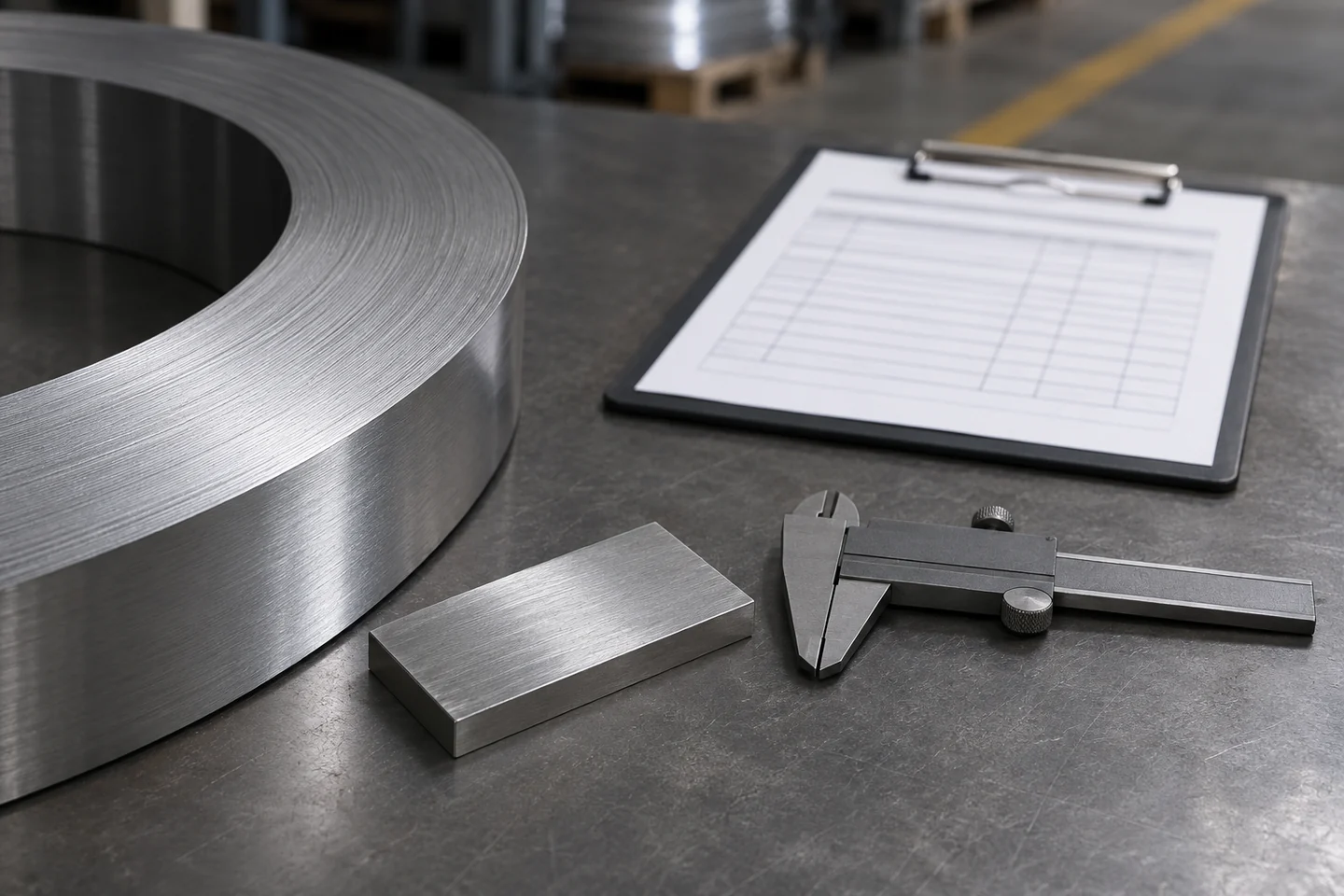
For steel strip, ask whether the requested grade, thickness, condition or width creates the minimum. For a finished component, ask whether tooling, setup, heat treatment or finishing is the main constraint. These are inquiry questions, not assumptions about a particular supplier’s costs.
Request a quotation that makes the constraint visible. Separate nonrecurring charges from unit price where the supplier can do so, and identify whether an alternative specification or order arrangement changes the quoted basis.
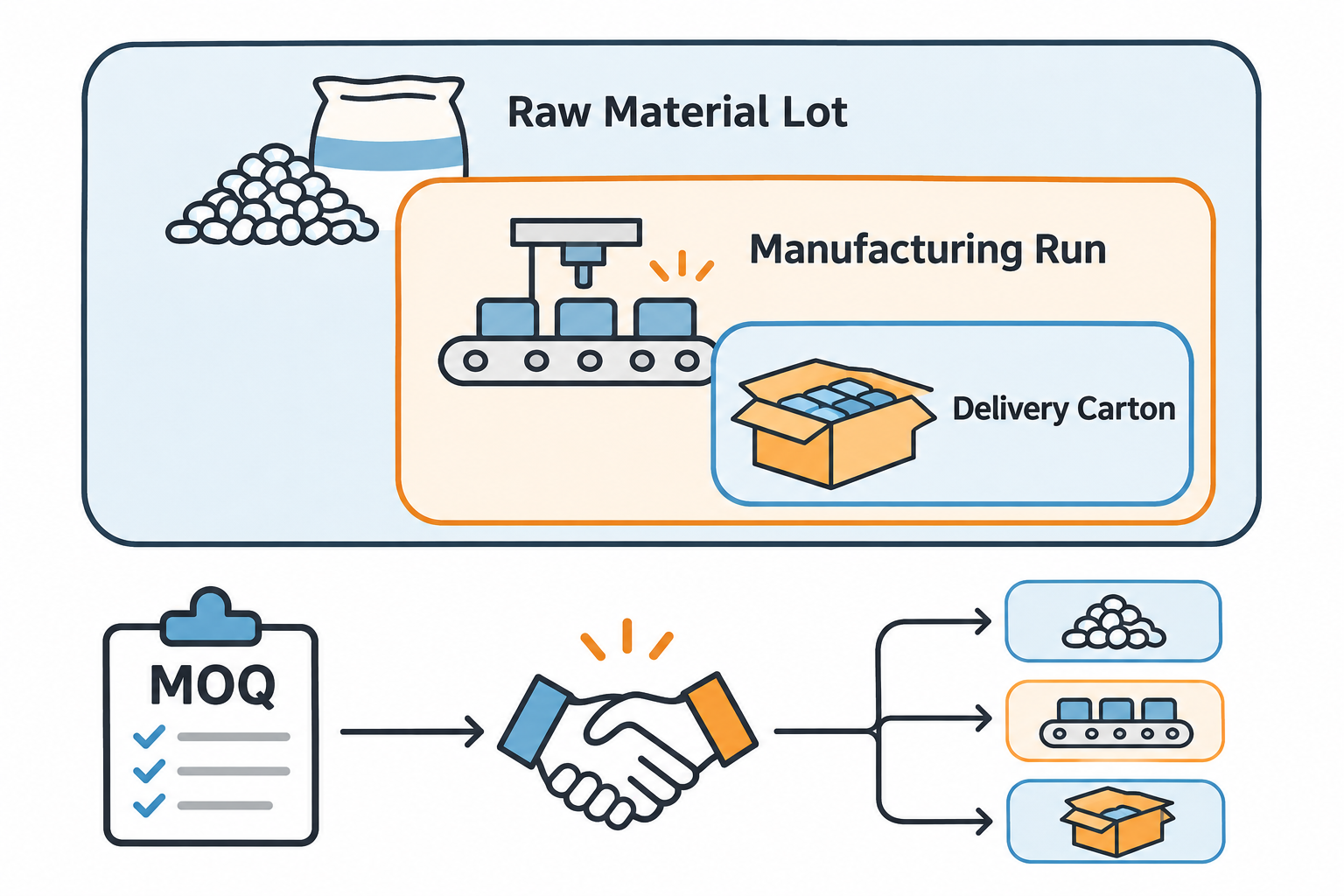
If setup is the main issue, ask whether a separately quoted setup charge allows a smaller run. If special material purchasing creates the commitment, discuss an acceptable available grade or form with the responsible engineer. A specification change needs technical approval, even if it reduces purchasing cost.
If demand is recurring, explore a blanket order with agreed releases. Clarify who owns unused stock, when payment becomes due and what happens if the drawing changes. A smaller shipment does not automatically mean a smaller financial obligation.
For initial development, separate prototype or trial requirements from expected production demand. Give a realistic forecast and request distinct terms. Do not present an uncertain future order as a committed volume merely to obtain a lower initial price.
A lower unit price can accompany a larger inventory exposure. Compare the actual committed quantity, setup charges, freight, storage, payment timing and the risk that a design revision makes stock unusable. Use the same delivery and acceptance scope for each supplier comparison.
Check what happens when production yield or packaging creates over-delivery or under-delivery. Agree any permitted quantity variation and the charging basis in the order. Also identify whether inspection, material certificates and special packaging are included.
A useful comparison shows both the immediate cash requirement and the total obligation. This makes a split-delivery proposal easier to assess and prevents a delivery schedule from hiding a larger purchase commitment.
Provide the part drawing or material specification, requested initial quantity, expected repeat demand, required condition or finish and preferred delivery pattern. Explain whether the order is a trial, replacement purchase or recurring production requirement. Ask which requirement controls the minimum and which changes would permit a different quote.
When sourcing annealed spring-steel strip, include grade, thickness, width, edge condition and quantity unit. Request the actual MOQ and commercial terms for that combination. Avoid assuming that a minimum quoted for one strip specification applies to another grade, width or supplied condition.
Shopify: MOQ definitions, cost drivers and negotiation approaches.